Real Estate Sellers

Home sales slow in January, but median price still hovers near $400k

  • By
  • Posted

January is a slow time for real estate sales, but things were really slow last month. Only 870 homes were sold in New Hampshire, a 15.5 percent fewer Granite State homes were sold than January 2021, according to the latest data from the NH Realtors Association.

by Bob Sanders

Yet, prices rose 14.2 percent from a year ago, although the median price of a single-family home dipped to $399,700 from December 2021, only the second time since last May that the median has dipped below $400,000.

Condos? Pretty much the same thing. Sales went down 17.2 percent, but the median unit price rose 18.8 percent, to $300,000.

As usual, the problem was not the lack of buyers but a lack of sellers. Those homes that do go on sale are on the market for an average of 33 days. There were only 931 homes for sale in January, a 35.4 percent decrease from the previous year, and there were 706 new listings, a 25.3 percent decrease.

Homes were selling for 1.4 percent more than the asking price, the Realtors said.

Homes in Carrol County appreciated the most, at a median price of $445,000, a 33.9 percent increase from a year ago.  Rockingham County homes sold for a median $540,000, a 17.4 percent increase.  The biggest slowdown in sales came in Sullivan, where 28 homes were sold, – a 47.2 percent decrease from 2021.

-------------------

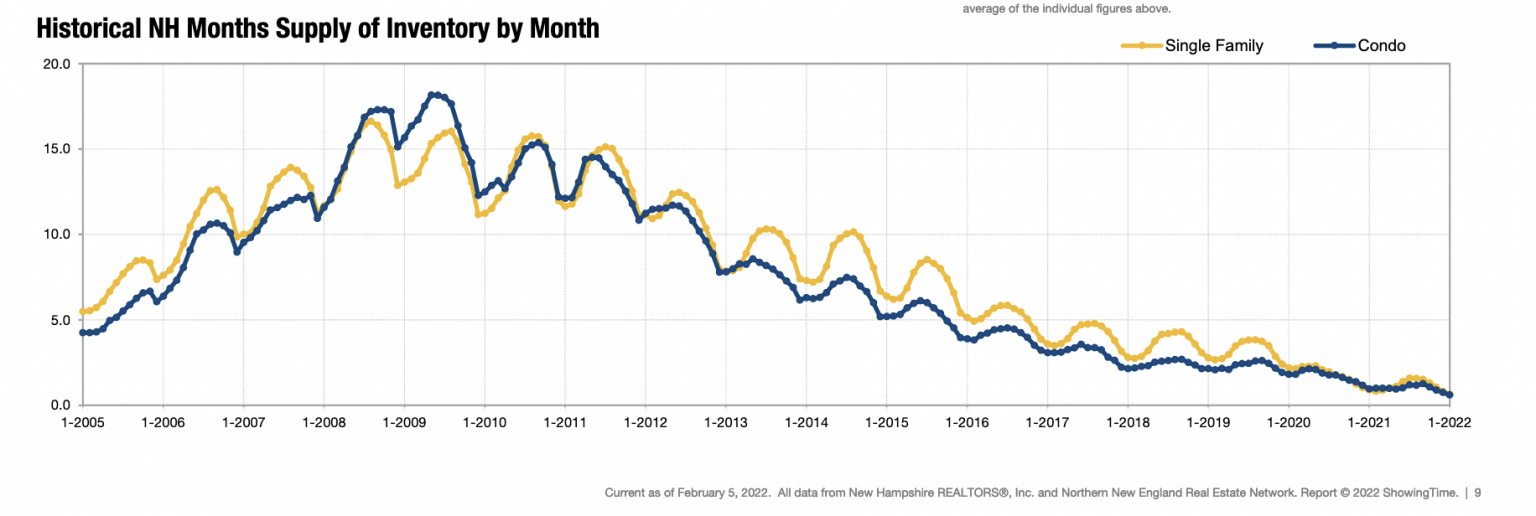
As inventory continues to sink, what next?

Housing remains scarce, and it continues to hit new lows. 

“In terms of inventory, it has been the lowest and it certainly feels that way,” said Adam Gaudet, president of the New Hampshire Association of Realtors board of directors and founder of 603 Birch Realty in Concord.

No crystal ball

Observers and stakeholders say the end of New Hampshire’s housing market spike is impossible to predict. 

The Realtors Association uses one metric above others when assessing the health of the housing market, Director of Communications Dave Cummings said. That measurement is the time it would take to sell all of New Hampshire’s housing inventory if no new houses came on the market. The hypothetical number – which factors in both inventory and demand – can speak volumes, Cummings said. A healthy market would take six months to sell all houses. Currently, New Hampshire sellers would take only 26 days. 

But Cummings argued it was only a matter of time before the pattern must reverse, if only because the state’s housing stock can’t get much lower.

“You know, we’re still just seeing it level, level, level out,” he said. “It can’t get too much lower, because essentially you’d have zero inventory.”

Contributor Ethan Dewitt , New Hampshire Bulletin


Attention Sellers!!!

When you list your property with our team of agents, you are provided with professional, courteous service from beginning to end. These services include, but are not limited to:

A free current market analysis: Determining the value of your property based on other properties, similar in nature that have sold or are currently on the market.

Listing your property: Entering the property in our MLS system, marketing through window displays, local and regional advertisements and various online media sources.

Representing your property personally: Having an agent from our office present at ALL showings.

Negotiating and closing the deal: Representing your requirements in the purchase and sale, while maintaining courteous representation throughout the closing.


So, if you're thinking about selling your home, give us a call at

603-569-4488

At Melanson Real Estate, we'll be happy to assist you with all your real estate needs.


The Middle Class Feels the Sting of the Housing Shortage and High Prices

  • By
  • Posted

The turbocharged housing market is hurting middle-class homebuyers stymied by a double whammy of fast-rising prices and a dearth of properties for sale.

(Getty Images)

By Clare Trapasso 

The analysis looked at how affordable homes listed for sale are for prospective buyers with different household incomes. It also looked at the number of homes for sale.

“In a highly competitive real estate market, the best areas for buyers are areas that have relatively more home available. But in order to truly be available, the home has to be for sale and affordable,” says Realtor.com Chief Economist Danielle Hale. “A homebuyer needs to ask themselves: ‘With my income and what’s on the market right now, where do I have the best shot from an availability perspective?'”

Buyers with a household income between $75,000 and $100,000 could afford only about 51% of the homes listed for sale. (Households include all adults living together, such as spouses and partners, extended families, and roommates.) That was compared with 58% in 2019. Those buyers are competing for just 245,300 homes nationally that are within their budgets.

Meanwhile, there were just 165,280 homes across the country that buyers could afford with household incomes between $50,000 and $75,000.

Even in the few places where housing became cheaper during the pandemic—such as the bigger, more expensive cities that became less desirable over the Past few years—the lack of homes for sale has made it harder for buyers to get an edge.

“Due to rising home prices and the ongoing inventory shortage, homeownership attainment will become especially challenging for middle-class buyers unless significantly more entry-level housing units become available,” Nadia Evangelou, NAR’s senior economist and director of forecasting, said in a statement. “Otherwise, the wealth gap between middle-income and upper-income households may grow even further.”

The 10 best metropolitan areas for buyers with household incomes between $75,000 and $100,000 were mostly in the South in less expensive areas that have had more new construction. These places all had more homes for sale at the right price for these buyers.

Deltona, FL, topped the list, followed by Des Moines, IA; Augusta, GA; Atlanta; McAllen, TX; Baton Rouge, LA; Miami; Virginia Beach, VA; Youngstown, OH; and Scranton, PA. (Metros include the main city and surrounding towns, suburbs, and smaller urban areas.)

“Homes are priced a bit lower so that your housing dollars stretch further,” says Hale. Also, “construction has done a better job of keeping up with demand.”


Clare Trapasso is the deputy news editor of Realtor.com where she writes and edits news and data stories. She previously wrote for a Financial Times publication, the New York Daily News, and the Associated Press. She also taught journalism courses at several New York City colleges.

Planning To Sell This Year? Start Getting Your Home Ready Now

  • By
  • Posted

Yes, it may still be winter but the home buying and selling season has already begun. If you're thinking of putting your home on the market, now's the time to whip it into shape.

Below are the top preparations to address... why not start now!

Update your home

With asking prices at an all-time high, most of today's buyers are looking for turnkey, not a project. You know, all those things you wanted to change in your home but never got around to doing! Well, here's your chance. Consider giving your home a refresh, with new countertops, appliances, and flooring. Change out vanities and plumbing fixtures in your bathrooms and if your cabinets are dated, it might be time to have them painted or refaced along with new hardware. Not only will this give your listing some appeal, it may also aid in increasing what goes in to your pocket.

Declutter, Organize, and Clean

No one wants a messy home. If you're serious about selling this year, now is the time to get rid of any unwanted or unused items sitting around the house taking up valuable storage space. Remember, the goal is to show how much space your home has not how cluttered it feels. You want buyers to be able to come through and focus on the space and not the stuff in it!

Windows and Screens

When was the last time you had the windows and tracks cleaned both inside and out? Are there any windows that appear clogged or are difficult to open and close? Very few sellers take the time to check their windows and screens. So to get a leg up on your competition, by cleaning, repairing and making all of them look and work great, will help you justify asking top dollar.

Landscaping

Overgrown bushes, trees and old plants can hide a homes exterior and make it look tired and unnecessarily worn. Don't forget to give your home as much attention on the outside as you do on the inside. Now is the time to have bushes and trees cut back or removed altogether. And when the weather permits, don't forget to freshen up your ground cover as well with new mulch, pine straw or river rock. In the meantime...

Call us

We offer free market analysis of your home. It will determine the value of your property based on other properties, similar in nature that have sold or are currently on the market. 

List with us 

Our team of agents provide professional, courteous service that you can rely on from beginning to end. We look forward to hearing from you!

Melanson Real Estate

Office: 603-569-4488

Mobile: 603-651-7228


Housing Market Predictions for 2022

  • By
  • Posted

Learn what factors are at play that will influence real estate sales in the year ahead.

2022 housing market predictions

©Urupong - Getty Images

by Rose Morrison

The housing market is a complicated machine with close connections to the U.S. economy. Changes in one will affect the other, and vice versa. Because these two entities are connected so closely, even the slightest shift can have far-reaching implications for home buyers and real estate agents.

Looking for patterns and understanding the relationships between different economic factors can help real estate professionals anticipate where the housing market may go next. As the new year approaches, here’s what experts are saying.

The Housing Market Now

Coinciding with the pandemic in early 2020, supply chain shortages and underbuilding across the nation made it increasingly difficult for Americans to find new homes. Underbuilding has been a growing problem for years, as construction companies have faced more restrictions and obstacles on how they can build.

COVID-19 has compounded this issue and impacted spending and production. Building materials were bought up early in the pandemic as eager homeowners used their extra time for home renovations. Meanwhile, new products could not reach stores—either because they weren’t being produced or because of backups in the supply chain. 

This lack of supply was exacerbated by a rise in demand for homes over 2020 and 2021. Many people changed their lifestyles and moved outside the city. Low supply and high demand created a strong seller's market, which led to higher prices. Even though houses cost more, bidding wars broke out as buyers tried to secure a residence.

High competition meant homes were selling in a matter of days or even hours, giving sellers the upper hand and reducing room for any negotiation from buyers. However, homebuyers kept engaging with the market since lower mortgage rates and remote work made homeownership a possibility for many.

The Future of the Housing Market

Experts agree that the housing market will continue to favor sellers for some time, possibly for years, but with slower growth in home prices and decelerating inflation. The large discrepancy between supply and demand for new homes will take a while to balance out, and the supply chain will need to work smoothly for some time before things can settle.

Market Competition

Although many other factors also create a seller’s market, the power dynamic between supply and demand is the main predictor of how things will turn out. Except in extreme cases, buyers and sellers can reach their goals regardless of who has the upper hand. However, sellers will get a better deal overall.

Seasonally, competition for homes and bidding wars tend to slow down in the winter. However, because competition has been so high overall, lowered levels this season are still high compared to years before the pandemic. Prices are expected to keep rising, so finding a home over the winter is probably wiser than waiting until spring.

Interest Rates

Another factor predicted to cause major shifts moving forward is the adjustment of interest rates by the Federal Reserve. The American housing market is sustained through a complex system of loans and interest rates, flowing down from the federal level. When inflation is high, the Federal Reserve raises interest rates, which affects loans like mortgages in an aim to prevent further growth.

Higher mortgage rates mean buyers will have to pay more for homes, which could slow down the housing boom by discouraging some people. However, investors will benefit from these higher rates since they’ll be making back larger amounts of money from banks and homeowners.

Financial Security

After the pandemic caused many people to lose their jobs and experience financial insecurity, the government and banks responded with loan forbearance programs to protect individuals from being evicted or going into foreclosure. However, most of these will come to an end in early 2022, so experts like National Association of REALTORS® Chief Economist Dr. Lawrence Yun predict some stimulation to the housing market as more homes come up for sale.

Consumer Confidence

Another factor that affects the housing market is consumer confidence. When people are optimistic about the future, they spend more and invest in long-term goals like houses. The early months of the pandemic caused a lot of uncertainty about the future and made many people question their goals and financial stability.

However, according to Kuba Jewgieniew, CEO of Realty ONE Group, consumer confidence and investments are growing as the pandemic era evolves. Looking forward, people will likely continue to move out of high-population areas because they’re seeking more space and homes with a smaller environmental impact.

Supply and Demand

Experts expect demand for homes to outpace supply for some time, so high competition and rising prices will continue to factor into buyers’ decisions. Rising interest rates may preclude some people from buying, which could tone down high competition rates. However, as incomes increase and employment rates move back to normal levels, the market should begin to balance out.

Changes in economic conditions are already affecting buyers. For instance, in 2021, lumber prices skyrocketed as demand for this building material outpaced supply. However, according to Kuba, lumber prices are expected to stabilize over the next year. This will make building new homes a more affordable option for many people. 

Zoom RVs

With the ability to work remotely, some would-be homeowners have decided to hit the road in their RVs, using Zoom to connect to work along the way. This trend could potentially continue due to a combination of the challenging housing market and remote work becoming normal for many people and industries, according to Kuba.

The COVID-19 pandemic has led to a seismic shift in how individuals relate to their jobs. It’s allowed many home buyers to move farther away from their offices. While some companies may decide to bring their employees back to the office, others will likely establish remote work as a permanent option.

Many people are thriving with the increased flexibility, lack of commute, and control over their work environment. The Zoom RV craze may eventually calm down, but working from home will continue to impact real estate in unprecedented ways for years to come.

The Housing Market in 2022 and Beyond

The housing market has been dynamic over the last two years. The pandemic highlighted how even small changes can have a ripple effect on the opportunities available to home buyers and investors.

However, the market’s close connection with the economy also offers hope as 2022 approaches. Over time, supply and demand will balance out, and the tides will eventually turn to favor buyers again in the future. In the meantime, sellers can make the most of this time in history.


Rose Morrison is the managing editor of Renovated, a home living site where she shares the latest home renovation news and market trends. Throughout her writing career, Rose has been a regular contributor to a number of sites, such as the National Center for Construction Education & Research, the American Society of Home Inspectors, and the International Code Council. 

The New Rules for Homebuyers and Sellers in the Age of Omicron: What To Expect in 2022

  • By
  • Posted

The homebuying and selling season typically kicks off right now. Will the newest stage of the COVID-19 pandemic wreck the market? Here’s the scoop.

Omicron and the housing market

(Realtor.com / Getty Images)

By Janet Siroto

Omicron has indisputably put a damper on early 2022 and as COVID-19 infection rates continue to climb, many may wonder whether we’re headed toward another nationwide shutdown of schools, businesses, and other #lifegoals that may have just begun sputtering back to life.

Meanwhile, homebuyers who’ve vowed that this is the year they’ll finally buy a house might feel as if a wrench the size of a Mack truck was thrown into their plans. Will open houses even be allowed? Will home sellers pull their listings, thinking it’s not worth the risk?

In an effort to shed some light on the year ahead, we surveyed real estate experts on what homebuyers and sellers should expect in the coming weeks and months.

How omicron will affect the housing market

Before the omicron variant of COVID-19 appeared on the scene, the 2021 housing market was rebounding healthily from previous waves of the pandemic and turned downright bullish as the end of the year approached. In spring 2021, a Realtor.com® survey found that only 10% of homeowners planned to sell within 12 months. By fall, that number had ballooned to 26%.

These factors had portended a tidal wave of home sales in the new year. And then the new omicron strain hit in November, followed by a December dip in new listings.

Was this sudden drop due to omicron, or just the typical holiday season lull?

George Ratiu, manager of economic research at Realtor.com, isn’t sure, but feels optimistic that omicron won’t halt the housing market’s momentum, particularly since this variant appears milder than its predecessors.

“We are not through it yet, but so far, this virus seems to be a lot more contagious, but also a lot less negatively impactful in terms of sickness and death,” Ratiu says. He also points out that data from epidemics in 1918 and the 1950s have also shown that viruses become more contagious but less severe over time.

Indeed, indications from South Africa, where the COVID-19 strain was first detected, showed a steep surge in cases followed by a rapid decline. So there’s some reason to expect that this latest wave of the pandemic in the U.S. will follow suit.

Omicron doesn’t seem to have hit the economy as hard as previous waves, either.

“The GDP and economy have survived fairly well,” Ratiu explains. “We’re seeing housing weather the variant so far. Retail sales, consumer confidence, and other indicators show guarded optimism in the road ahead.”

Bottom line: Even as COVID-19 infection rates climb, most experts aren’t bracing for a shutdown like we saw during the first wave of the pandemic in spring 2020.

“I do not believe that omicron will have much impact on the selling season,” says Cara Berkeley, a personal financial expert at Penny Polly. “The delta variant did not seem to slow things down here [in Tennessee], so omicron should not either. The number of homes sold in Nashville in November of this year was higher than the number sold in November of last year. The upwards trend both in sales and in the median price per home is continuing.”

Why omicron isn’t stopping home sellers from listing today

Even in the face of high COVID-19 infection rates, many home sellers are still eager to list in the new year because, frankly, they’ve been waiting long enough.

“My husband is already retired, and we’ve been dreaming of moving to Maine for a while,” says Meg Rooney, 63, of Fairfield, CT. “But we’ve felt paralyzed by the pandemic. The time didn’t feel right in the middle of the crisis. But I think omicron will be the last surge, and our real estate agent says people are ready to tour and buy despite this current uptick in cases. So we’ll finally put our house on the market.”

Most listing agents we spoke to see no shortage of buyers in their respective markets—particularly with more people taking on remote jobs than ever before.

“There continues to be huge pent-up demand,” says Tami Bonnell, co-chair of EXIT Realty Corporate International.

The take-home lesson for sellers: Those who list should expect plenty of offers—although only time will tell whether we’ll see a repeat of the frenzied bidding wars of 2021.

Why omicron isn’t scaring off homebuyers

Meanwhile, omicron doesn’t seem to be deterring homebuyers much.

“I will be hitting the open houses hard this month,” says Alison Levine, a mom of a toddler and a 6-year-old in Cleveland. “I know how high the infection rates are. But the pandemic has also shown me that our apartment is too small for remote learning plus working from home—and I need a backyard.”

Many of today’s homebuyers, much like Levine, have put their house hunts on hold for the past two years of the pandemic. By now, they’ve had it with their cramped quarters, and are willing to take a few calculated risks to upgrade to a place that better fits their lives today.

“Younger parents may be having a first or second child and need a bigger house, or a different school district,” explains Ratiu. “I see a bright future for the suburbs in 2022.”

In addition to outgrowing their homes, homebuyers have another urgent reason to hazard some home tours right now even with omicron lurking: Mortgage interest rates are expected to rise soon.

“Buyers are acutely aware that the current mortgage rates are just above 3%,” says Ratiu. “While they have been flat, rates are expected to rise, so people are in a hurry to capitalize on this.”

Homebuyers this year should brace themselves for plenty of competition.

“There is huge demand, [but] there’s still short inventory,” says Bonnell. “I believe the first half of the year will be tighter with more bidding wars than the second half.” 

One reason omicron likely won’t slow down homebuyers is that so much of home touring today is happening virtually rather than in person. In 2020 during the first wave of COVID-19, video and virtual tours were more of a novelty that certain buyers and sellers resorted to when in-person viewing wasn’t safe. By now, though, virtual tours have matured into a far more sophisticated and commonplace experience

“We’ve had a year and a half to practice virtual tours and marketing,” says Norman Miller, a real estate and finance professor at the University of San Diego. “We’ve taken some of the fear out of the process.”

To succeed in early 2022, buyers will need to bring their A-game and start preparing now. This means making sure you have a current mortgage pre-approval (they expire over time), watching interest rates closely, and getting ready to pounce once your dream house appears.

“My agent and I frequently text about what she’s seeing in the market, things like how quickly things are selling and where the winning bid is compared to the asking price,” says Levine. “That way, I know how high to bid.”

Real estate in the wake of omicron: What’s ahead?

While many experts anticipate that omicron will be more of a blip than a bomb on this year’s real estate forecast, the one real wild card is whether more variants are on the horizon.

“It’s hard to project, but on broad balance, we’re likely to see continued variants in 2022,” says Ratiu.

Yet putting our lives on hold forever just isn’t something humans are meant to do, a fact that homebuyer Levine keeps in mind as she forges ahead.

“Omicron isn’t softening things so far,” she says. “So I am getting my ducks in a row.”


Janet Siroto is a journalist, editor, and trend tracker. Her work has appeared in Cosmopolitan, Good Housekeeping, and other publications.

The New Normal of Selling a Home Today

  • By
  • Posted

If you’re selling your home right now—or thinking about doing it soon—you should know that today’s housing market is unlike anything we’ve seen or experienced lately, maybe ever.

Buying or selling your home sign

Getty Images

In the past, home sellers might have waited weeks or months to get an offer that might not be as high as they’d hoped. Buyers may have lowballed, or driven a hard bargain asking sellers to make certain repairs or other concessions before closing the deal.

Today, however, many of these realities are no more: In many areas of the country, homes are getting snapped up fast, sometimes within days of going on the market. Buyers mired in bidding wars are pushing their offers over asking price, and often waiving inspections and other demands to sweeten their offer.

In general, this is all good news for sellers—but it also means that it’s more important than ever to understand the market and play your cards carefully to fetch the best offer and terms for you. Here’s what sellers need to know about the real estate landscape today.

How the COVID-19 pandemic is affecting the housing market today

The COVID-19 pandemic has changed so much of our lives, and real estate is no exception.

“We’ve all been through a hopefully once-in-a-lifetime experience that dramatically changed the way we lived, worked, and went about our daily lives,” says Realtor.com Chief Economist Danielle Hale. “Even as we move forward and get back to living the way we used to, it’s likely that these experiences will stick with us and shape the way we make decisions for years into the future.”

For one, pandemic lockdowns made many people realize that their current living spaces just aren’t working for them anymore.

“One of the major motivations of homebuyers is the desire to have a larger, more functional home,” says Jason Gelios, a real estate agent with Community Choice Realty in Southeastern Michigan.

This is particularly true for people who started working remotely during the pandemic—who, after cramming their desks into dining rooms, “cloffices,” and other corners, are ready to upgrade to a bigger house so they can work at home with more privacy and comfort.

“This allows for people who are permanently remote-working to be more productive in their home,” explains Gelios.

And since remote workers may no longer need to commute to the office often or at all, many are now house hunting in areas that they hadn’t previously considered.

“With remote work flexibility becoming the new normal, buyers sought out areas like South Florida where they could enjoy the outdoors, extra space, and the tax benefits that come with living here,” says Chad Carroll with The Carroll Group at Compass, in South Florida.

Home inventory is low

Although buyers are out in droves, there are many fewer homes on the market than usual—which is creating a highly competitive market for buyers nationwide.

“Sellers are benefiting from the historically low inventory levels and record demand,” Carroll says. “This combination has fueled bidding wars and led to properties going under contract at an insane velocity.”

These low-inventory conditions may improve somewhat over the next year. But Hale warns, “the market is so out of balance that even with improvement, the number of homes for sale will remain low.”

Home prices are high

With fewer homes and high demand for them, many sellers are seeing multiple offers that, in turn, are driving up prices.

“The ongoing increase in housing prices makes it a great time for a home seller to cash out on their homes now,” says Beatrice de Jong, consumer trends expert at online real estate transaction company Opendoor.

Often, buyers are making offers above the listing price.

“Faced with few homes available for sale, buyers intent on owning are pulling out all the stops,” says Hale.

However, this highly beneficial market for sellers comes with a big caveat if selling means you’ll need to buy a new home yourself.

“Sellers searching for their next home will face the same fierce competition,” warns de Jong.

What’s more, home prices are seeing some early signs of leveling off—or at least not be rising at the breakneck pace of the past. So if you want to sell at the top of the market, it may pay to list sooner rather than later.

Interest rates are at record lows

Even though home prices are high, mortgage interest rates have hit record lows. And since even a 1% lower interest rate could lower monthly mortgage payments by up to 20%, it make homes more affordable for buyers, which is driving them into this competitive market.

“While the cost of a home is on the higher side, the cost to obtain the financing is much lower and oftentimes offsets the higher price, spurring a huge demand for buyers to go out and shop for homes,” Gelios says.

It’s a seller’s market

“There are many ways to define a seller’s market,” says Hale. “But a few key hallmarks are limited availability of homes for sale, fast-selling homes, rising home prices, and competitive buyer offers such as offers over asking price, waiving contingencies, and flexible closing terms.”

All that said, most buyers are looking for a new home because it’s the right time for them—not because of market conditions.

“They’re getting married, moving in with a partner, expanding their family or planning to do so,” Hale explains.

And the same wisdom applies to deciding whether to sell your house: Even though market conditions are in your favor, you should make sure it’s the right time to sell your house for you. Weigh your own personal circumstances, including any current or upcoming life changes such as a new job, retirement, the arrival or departure of family members within the home, and more.


Courtesy 


Will Rising Mortgage Rates Make Homebuying More Expensive-or Less?

  • By
  • Posted

It could become a lot more challenging to buy a home in the coming months—or it may have just gotten a whole lot easier.

(Getty / Realtor.com)

By Sharon Lurye for Realtor.com | Nov 3, 2021

After hitting historic lows, mortgage interest rates are creeping up. The U.S. Federal Reserve’s announcement on Wednesday that it will taper its purchases of bonds and mortgage-backed securities is expected to keep pushing mortgage rates higher.

Those higher rates could indeed make homebuying more expensive for many as their monthly mortgage payments get bigger. But in this paradigm-breaking market, higher rates could also prove to be a boon for buyers in some markets by keeping prices in check and lessening competition. That could make homebuying less expensive if buyers aren’t spending as much on their homes and engaging in crazy bidding wars—possibly a welcome lifeline for many first-time buyers who’ve been barred from homeownership by record-high prices.

Confused? Well, today’s COVID-19-fueled housing market is like nothing the U.S. has seen before. There is a dire housing shortage, builders haven’t been able to ramp up, and a massive generation of millennials is champing at the bit to become homeowners. And so depending on a variety of factors, these rising rates could be either a blessing or a curse for prospective homebuyers.

How can you tell which side of the equation you’ll wind up on?

Higher mortgage rates could hurt buyers struggling with high home prices

For some, higher interest rates are a double whammy of bad news. Home prices in most competitive housing markets will still remain high. And after buyers purchase homes, they will be paying more in interest. So buying a home will be more expensive all around.

“It’s going to be less affordable a year from now than where we are today,” warns Leonard Kiefer. He is the deputy chief economist at Freddie Mac, the government-backed organization that helps support the U.S. housing market.

His team forecasts that mortgage rates will reach 3.2% by the end of the year, and go up to 3.7% by the end of 2022 for 30-year fixed-rate loans. At the same time, housing prices will go up 7% in 2022, according to Freddie Mac’s price index—although that’s still better than the explosive 16.9% growth of 2021.

Low rates, which bottomed out at just 2.65% in the first week of January for 30-year fixed-rate loans, helped to fuel the explosion in home prices in the early days of the coronavirus pandemic. Homes could cost more, while monthly mortgage payments stay the same as they were a few years ago when rates were higher.

For example, the monthly mortgage payment on a median-priced home of $380,000 with a 2.65% mortgage rate would be $1,225 a month on a 30-year loan. That payment goes up about $80 a month with a 3.14% rate. Over 30 years, that can equal nearly $29,000. (This is for buyers who have a 20% down payment. It does not include property taxes, home insurance, or homeowners association fees.)

Rates averaged 3.14% in the week ending Oct. 28, according to Freddie Mac data.

But, historically speaking, rates even in the 3% range are still very low. It’s less than the current rate of inflation (5.4% in September, according to the Consumer Price Index). This means that banks aren’t even charging enough in interest to make up for the value that money loses over time due to inflation. With such low rates, there will still be plenty of buyers who want to jump in on a mortgage.

Plus, the majority of millennials are now in their 30s, the prime age to buy a first home. And they are the largest demographic group in the country. But instead of more housing going up to accommodate them, the number of available homes has shrunk with construction declining and investors turning single-family homes into rentals.

That will keep competition high as will the dearth of homes for sale.

“We are living in an unprecedented housing market,” says Jodi Hall, president of Nationwide Mortgage Bankers, a lender. “Housing prices will continue to rise because of the shortage of housing, specifically homes for first-time homebuyers.”

Higher mortgage rates could keep rising home prices in check

Other experts take a sunnier view. They argue that higher mortgage rates will finally cool down some of the cutthroat competition over housing and—eventually—help push down sale prices.

“Prospective homebuyers should actually be praying for rates to start creeping up,” says Katie Gatti, a personal finance consultant and founder of the Money with Katie blog.

The big picture suggests price increases will at least have to slow down. Median incomes have barely grown since 2000—while housing prices have skyrocketed. That means “price growth will almost certainly have to slow,” says Gatti. There just aren’t enough people who can afford current prices.

“As the prices get higher, that potential buyer pool shrinks,” says Gatti. “Simply put, our economy—and the average income— can’t support the cost of a home in most cities.”

Ultimately, homebuyers may still be out of luck if they want to see home prices actually go down.

“With how hot the market is, the rising rates will only slightly affect housing prices,” says Khari Washington, owner of 1st United Realty and Mortgage in Riverside, CA.

Price growth may slow down, meaning prices are still increasing, but at a more gradual, manageable pace. Offers over asking could also decrease, which would help buyers’ bottom lines.

Why mortgage rates matter to homebuyers

Mortgage rates aren’t just an esoteric statistic about the real estate industry. For most Americans, they determine how much it costs to own a home. Rates have been falling in the U.S. since the1980s. But when the pandemic hit, they became almost absurdly low thanks, in part, to the Federal Reserve’s purchases of mortgage-backed securities.

When lenders make mortgages, they typically bundle up the loans into these securities, otherwise known as mortgage bonds, and sell them on the secondary market to investors. This frees up money to make new loans.

When the pandemic struck the nation in March 2020, the Fed announced it would buy bonds to help stabilize the economy and the housing market. That led to a surge in demand, which pushed mortgage interest rates down to record lows. When the bond market is strong, mortgage rates fall.

As a result of these early pandemic moves, the average interest rate for a 30-year fixed-rate mortgage fell below 3% for the first time in July 2020.

Now that the economy has rebounded and unemployment has dropped, the Fed is diminishing its bond purchases. This weakening bond market should lead to rising mortgage rates.

Mortgage rates aren’t the only big factor driving the housing market. The main problem is a lack of homes for sale. Historically low rates encouraged more people to go out and buy a house. But the number of homes for sale, already well below what was needed, dried up even further. And the residential construction industry hasn’t caught up.

Freddie Mac estimates the U.S. needs 3.8 million more homes to fix this shortage. While an average of 418,000 new starter homes a year went up in the 1970s, that number plummeted to just 65,000 in 2020.

“Is there going to be relief? Probably not for some time,” says Freddie Mac’s Kiefer. “Fundamentally, the issue for the housing market is lack of supply. We just haven’t built a lot.”


Sharon Lurye is a freelance journalist based in New Orleans. She graduated from Columbia Journalism School in 2018.


Selling a Haunted House? Disclose With Care, or the Deal Could Die

  • By
  • Posted

You’re probably aware that you have to disclose any known physical issues with your house when you’re selling it—such as termites or a cracked foundation. But did you know you might have to disclose spiritual problems, as well?

(DNY59/iStock)

By Warren Christopher Freiberg

In New York’s Stambovsky v. Ackley (commonly known as the “Ghostbusters” ruling), the court decided that if homeowners have claimed publicly that their home is haunted, they can’t turn around and deny that it’s haunted when they try to sell it.

The bottom line? Be careful if you go mouthing off about things that go bump in the night. Joking or not, you might have to disclose it to prospective buyers—or risk losing the deal or—worse—getting sued. Yes, you can get sued over ghosts... Scary!

Here’s what you need to know about how to make sure you’re legally covered when selling a home you think might just be haunted.

1. Make sure you really live in a haunted house

Naturally, when you tell people your home is haunted, there are going to be some different reactions.

Some people will think you’re nuts. Others will be intrigued and will want to hang out at your place to see if the walls bleed or your refrigerator houses an ancient demon. 

So, if you like company, advertising your home as haunted can actually be a plus.

But more likely, you’re heading down a rabbit hole that’s probably best avoided. Before you start spouting off to friends, family, and random strangers on the street about your place being haunted, rule out every other reasonable possibility first.

News flash: Just because lights turn off and on by themselves, that doesn’t mean you have a ghost.

“Flickering lights can be an electrical problem and potential fire hazard,” says Bonnie Vent, a medium who runs a website with listing of purportedly haunted homes. “I always recommend that a homeowner have an electrician come out and do a full inspection. Electric gates opening and closing by themselves can be a faulty sensor.”

If you’ve had the house inspected and still notice seemingly paranormal activity, Vent recommends keeping a log of it. After a while, you might recognize a pattern that can establish whether something paranormal is really occurring.

2. Keep your mouth shut

Let’s say you keep a record of the weird happenings in your home, and you’re pretty darn sure you have a spirit.

Remember this: Much like the existence of your stockpile of signature edition “Golden Girls” collector plates, there’s no reason to actually tell other people about it.

The reason why the buyer prevailed and was able to back out of the contract in Stambovsky is because the owners had bragged about their home’s supernatural reputation in Reader’s Digest and local newspapers.

Had the owners kept any paranormal happenings to themselves, the buyer would have had to prove in court that the house was haunted and that the sellers knew at the time of closing. You think that’s easy? That’s not easy.

In fact, most judges would have probably laughed that case out of the courtroom. Stambovsky wasn’t really so much about the existence of ghosts, but the importance of disclosing the reputation of a home when selling it.

“In no way does the law make a decision on haunted or not haunted,” Vent says. “It is about the reputation of the property and the potential buyer’s right to know.”

3. Then again, it could be a selling point

If you truly think your house is haunted, but you’re worried that disclosing that fact might kill the deal, keep this in mind: It could work in your favor.

Maybe your prospective buyer ain’t afraid of no ghosts. You could tell them they’re moving into the next Amityville Horror house, and they might laugh it off and move right in. A lot of buyers are just looking to save money, regardless of a home's reputation.

“I would say in New York City, it happens fairly often—anything prewar, and especially downtown in the Village,” says Mike Fabbri, a licensed real estate agent in Manhattan. “[It’s] more just a vibe or energy that can be felt. But I’d say it’s never usually a deterrent.”

In fact, Fabbri (who has a “personal fear of the paranormal”) even refers his clients to a spiritual healer who does sage cleansings of their new homes.

You might ask your real estate agent what reaction they’ve gotten in response to haunted houses in the area. If you’re in an area with a big market for old homes, buyers might accept a little hauntings as part of the deal. It’s important to stay informed and team up with the right agent. Here’s how to find a real estate agent in your area.

4. Deaths on the property have different legal implications

Realistically, few of us will probably ever deal with the issue of buying or selling a haunted home, but that doesn’t mean that the reputation of a home is never an issue in a sale.

The law recognizes “stigmatized properties”—homes where murders, suicides, or criminal activities have occurred in the past.

In some states, such as Alaska and South Dakota, a seller must disclose if a homicide or suicide has occurred in a home in the 12 months prior to sale. California requires disclosing if any deaths occurred in a home within three years of the sale.

Other states, such as Arizona and Indiana, have specific statutes on the books that don’t require the seller to disclose anything about whether the property is stigmatized. The best option? Check with a Realtor® in your state if you’re unsure about what you need to tell prospective buyers about a home’s history.

And leave the lights on tonight. Just in case.


Warren Christopher Freiberg is an attorney and freelance writer living in Chicago. He has previously written for Den of Geek US, TechnoLawyer, and Hustler.

4 Things People Say About Selling a Home Today That Just Aren't True

  • By
  • Posted

It’s no secret that today’s seller's market is wilder and more competitive than it’s been in years, fueling sellers’ hopes of major profits if they list their own home, too. All of which could be true—but only if you gauge your market carefully, and handle your sale with care.

Getty Images

By Erica Sweeney | Aug 19, 2021

You’ve heard the stories: Maybe your neighbors sold their fixer-upper as is for $100,000 over asking price. Or your friends were deluged with crazed homebuyers engaged in a bidding war within 24 hours of putting their house on the market.

“The biggest issue I’m having when I talk to sellers is, they’re seeing stuff in the papers or hearing from their neighbors, ‘Oh, this house just got this absolutely crazy price, or this guy flipped a property for a huge profit,’” says Liz Hogan, vice president of luxury sales at Compass in South Florida. “Those stories are circulating because they’re the anomalies. Nonetheless, a lot of that chatter has made sellers think that even their home—which may just be a regular home and not a super spectacular listing—is going to get some crazy price. That’s not necessarily going to happen.”

For one, this strong seller’s market has started to show signs of softening, with fewer buyers and lower prices. This means sellers may need to reset their expectations.

To help home sellers separate fact from fiction, here’s a look at four myths you’ve probably heard about selling a home today, and why they might not be true for you. Plus, we’ve got some tips to adjust your strategies for the realities of today’s market so you can up the odds that your home actually does become the next success story on the block.

1. ‘You don’t need to renovate—buyers will take anything’

In such a hyperactive market, sellers may get lazy and expect to get a high price for their homes without making any repairs or upgrades. But Jason Gelios, a real estate agent with Community Choice Reality in Southeastern Michigan, says this could set you up for failure.

“Home sellers looking to get top dollar should not sell a home as is, even in this seller’s market,” he says.

Despite the limited housing inventory, high-priced homes that need too much work are a turnoff, since many of today’s buyers expect homes to be mostly move-in ready.

“Buyers today still want to walk into a clean home, one that has nice paint on the wall, that doesn’t have chipped-up countertops or banged-up refrigerators and toilets that aren’t working,” Hogan says.

The truth of the matter is this: A fresh coat of paint, tidying up the landscaping, and a good scrub-down are inexpensive upgrades that bring a return on investment of thousands of dollars when you sell. And don’t neglect minor things like replacing lightbulbs and fixing broken doorknobs. They count.

2. ‘You can price your house sky high and get that amount’

It’s true that home prices have been going up. According to the National Association of Realtors®, the average home price was $363,300 in June (the latest month data is available), 23% higher than a year earlier. That’s quite a rise, but don’t let those dollar signs get to your head.

“The market is hot, which makes sellers think they can just ask for whatever price they want and get it,” says Ruthie Assouline, a real estate broker with Compass in New York City and Miami. “That’s a myth, because it’s all supply and demand.”

Homes need to be priced realistically in line with what the market is asking, the type of home it is, and its condition.

“Just throwing something online and asking for a ridiculous price—you probably have to have the crème de la crème to be able to pull that off,” Assouline says.

Pricing too high also means the home could sit on the market for a while. Plus, Hogan says she’s starting to see buyers push back on the high prices by delaying their home search or not making offers, forcing some sellers to reduce their asking price.

3. ‘Sellers don’t need to market their listing much—it will sell’

Recently, Hogan says a client was interested in a multimillion-dollar home in Miami, but the listing featured only one smartphone photo of the exterior. She called the listing agent to ask if more images would be added; the agent said the owner said they didn’t need more photos since they were certain the home would sell fast.

“I’m like, for a $10 million home, you can’t spend $500 to take professional photos?” she says. “It’s crazy.”

This is a common sentiment these days. Some sellers think putting a lot of effort into online marketing is pointless, since the home is bound to sell quickly regardless of what they do. But consider this: Most homebuyers start their search online—so if your listing falls short, you just won’t get much attention.

Plus, Hogan says sellers aren’t always selling to local buyers who can drive by or are familiar with the area.

“Homes hitting the market without professional pictures, additional pertinent information, and other appealing amenities that could sway a buyer to choose their property is a huge error,” Gelios says.

Photos, videos, floor plans, 3D tours, and other details help homebuyers decide if a home is right for them and if they want to see it in person.

4. ‘In a bidding war, it’s a no-brainer to just pick the highest offer’

Bidding war are common these days, with sellers receiving multiple offers with some over the asking price. Accepting the highest offer may be tempting, but it’s not always the best move.

“It’s terms versus price,” Hogan says. “A smart seller may take a little bit lower price to get much better terms.”

A lower offer that’s all cash, for instance, may be more attractive, since it eliminates the financing hurdle and could mean a quick closing. Or you may need extra time to stay in the home until you find somewhere to move.

Sellers should examine all factors of every offer, including a buyer’s finances, and not focus solely on price, Gelios says.

“Many home sellers have other motivators that could sway them toward choosing an offer,” he explains. “These could include longer occupancy, more flexible closing terms, or other outside-of-the-box offerings, like a credit toward the seller’s moving costs.”


Erica Sweeney is a writer whose work has appeared in the New York Times, Parade, HuffPost, Business Insider, Money, and other publications.

Vaccines, Stimulus Are Fueling Seller Optimism

  • By
  • Posted

Americans are more upbeat about the idea of selling, particularly as the vaccine rollout continues and latest round of stimulus checks are distributed. That could come as hopeful news as many markets face severe housing shortages and buyers are increasingly being left with few choices of homes for sale.

Vaccines, stimulus are fueling seller optimism

Fannie Mae’s Home Purchase Sentiment Index rose by 5.2 points in March to a reading of 81.7. The components on the index that increased the most last month related to home selling and buying, household income, and home prices.

“The significant increase in the HPSI in March reflects consumer optimism toward the housing market and larger economy as vaccinations continue to roll out, a third round of stimulus checks was distributed, and this spring home buying season began—perhaps with even more intensity this year, since 2020’s spring homebuying season was limited by virus-related lockdowns,” says Doug Duncan, Fannie Mae’s senior vice president and chief economist.

The measure over home-selling sentiment moved higher across most consumer segments and reached nearly pre-pandemic levels, Duncan notes. That is “generally indicative of a strong seller’s market,” he notes. “Consumers once again cited high home prices and tight inventory as primary reasons why it’s a good time to sell.”

More Americans also reported it’s a “good time to buy” in the March survey compared to February, likely still being drawn to historically low mortgage rates despite recent upticks. However, that measure on home-buying sentiment still lags behind pre-pandemic levels. The home-buying experience is proving difficult due to rapidly rising home prices and a lack of housing supply, Duncan adds.

Here’s a closer look at indicators from March’s Fannie Mae’s Home Purchase Sentiment Index, reflecting responses from nearly 1,000 consumers over the housing market:

  • 61% of consumers said it’s a good time to sell, up from 55% in February.

  • 53% of consumers said it’s a good time to buy a home, up from 48% in February.

  • 50% of Americans surveyed believe home prices will go up over the next 12 months, up from 47% the month prior.

  • 54% of consumers expect mortgage rates to increase over the next year, up from 47% a month earlier.

  • 82% of Americans say they are not concerned about losing their job over the next 12 months, unchanged from February.

  • 25% of respondents said their household income is significantly higher than it was 12 months ago, up from 17% in February.


Source: “Home Purchase Sentiment Index,” Fannie Mae (April 7, 2021)

The Top Green Features Buyers Seek in New Homes

  • By
  • Posted

Energy efficiency is on many buyers’ minds when they shop for new-home construction, according to a consumer survey from the National Association of Home Buyers. The NAHB surveyed more than 3,000 home buyers—both recent and prospective—on the features they most desire in their new home.

Many buyers said they’d go with the more sustainable option, such as the use of more durable materials in their home, when presented the option.

When the cost savings of these features are pointed out, they may be even more tempted—and they say they are willing to pay up front to help lower their utility bills. On average, buyers would pay up to $9,292 more for a home in order to save $1,000 annually on utility costs, according to the NAHB’s study.

“We’re doing a lot more in our homes now,” Brandon Bryant, founder of Red Tree Builders, a green home building company in Asheville, N.C., said during February’s virtual 2021 International Builders’ Show. But he added education is key. “We’ve got to teach people how to live in green homes, how these homes operate, and even before we build to let them know what we could do because a lot of times we could do so much more for their life.”

The top eco-friendly components and designs consumers said they desired:

  • Energy Star–rated windows and appliances

  • Efficient lighting that uses less energy than traditional bulbs

  • Energy Star rating for the whole house

Other trending features center around health and wellness, such as zone heating, purified air appliances (like UVC fans), indoor air quality sensors, and connections to the outdoors, the NAHB said.

"There are a wide range of green features that buyers feel are desirable," said Paul Emrath, vice president of surveys and housing policy research at the NAHB. "Energy efficiency, though, tops the list of what they most want."


Source: National Association of Home Builders

The Brighter Path Ahead

  • By
  • Posted

More inventory and better access to vaccines are welcome news.

family in front of home for sale

Courtesy of Lawrence Yun

The 2020 pandemic-induced recession was unique in terms of the sudden and massive slashing of jobs. It was also the first recession during which overall income grew. No doubt there are families struggling paycheck to paycheck, but due to the massive stimulus packages—including the initial deposit of $1,200 and enhanced unemployment benefits—the financial condition of many families was better in a recession than before the pandemic.

Total income for the country in late 2020 was 4% higher than a year earlier. This was the figure reported just before the second stimulus checks of $600 per person went out in late December. It also does not include wealth accumulation from the record-high stock market or rising home prices. Also not reflected in the totals are the proceeds from mortgage refinances last year or the relief expected from a new stimulus. Still consumers remain cautious, as spending opportunities have been restricted by COVID-19. For the year, consumer spending fell by 2%. And the savings rate consequently rose to twice the pre-pandemic levels.

The situation translates into the potential for a great unleashing of spending in 2021. The positive impact will be increasingly felt as jobs come around. The full effect will be evident once herd immunity is established with the vaccine, likely in autumn. That is to say, 2021 is a growth year that will take us out of the recession.

The housing market continues to shine brightly. The main frustration is for buyers who find themselves outbid during multiple offer situations. More inventory is needed to give buyers more options and lessen the heat.

It's encouraging to see that builders are ramping up production of homes with backyards, which are now at their highest level in 13 years. Activity has been particularly robust in Southern states where land is more plentiful and building regulations are less onerous.

Moreover, with the wider availability of COVID-19 vaccines, homeowners, especially older Americans, who have been more hesitant about strangers visiting their homes, now may be more ready to list. Many seniors own their homes outright and have sizable housing equity for their next home purchase. They may even need to buy a larger place to accommodate more family visitors. After all, in the new economy, remote-work flexibility may mean more days working from grandma’s house.


Lawrence Yun, Chief Economist and Senior Vice President of Research at the National Association of REALTORS®


Happy Valentine's Day!

From all of us at Melanson Real Estate

Happy Valentine's Day!

What's Your Home Worth?

We can assist you with your no-cost, personalized, current market analysis!

Our Agents have the knowledge and experience of our service area and are happy to assist you with all your real estate needs.


Shhhh! When a Home Is Too Loud

  • By
  • Posted

The ability to work from home during the pandemic has been a blessing for many people, but it’s also made some acutely aware of the absence of one element helpful for productivity: quiet.

By Melissa Dittmann Tracey

With many people working or studying remotely, these strategies may help cut down the noise.

Many have taken to barricading themselves in closets or hiding in their cars to insulate themselves from chatty household members or noisy street sounds. Echo-prone open floor plans have exacerbated the problem as family members concurrently try to do their jobs or attend remote school.

Enter acoustic consultants, armed with sound- proof design techniques and technology to bring some peace and quiet to home environments. Real estate pros can benefit from learning about these enhancements, which can be a valuable amenity for resale, especially for a home on a busy street.

“The pandemic has forced people to look at their home’s acoustics very differently,” says Bonnie Schnitta, founder and CEO of SoundSense, an acoustic consulting company based in Wainscott, N.Y.

Since the start of the pandemic, Schnitta’s firm has been fielding more calls from real estate professionals and homeowners about noisy plumbing, loud traffic, and household sounds amplified by open floor plans. During site visits, they’ll calculate precisely how sound reverberates in a space and offer a range of solutions, such as adding sound-absorbing fabric or foam behind wall hangings or underneath rugs. While these fixes aren’t cheap—consultation fees start at $900—many find the results are worth it.

Real estate professionals are getting help for listings with challenging acoustics. For one hard-to-sell home on a noisy street, Schnitta suggested adding a water feature in the front yard swimming pool, which, combined with a barrier, masked the road noise. The home sold two weeks later. “You can rarely completely erase road noise, but there are ways you can mitigate it,” she says.

Noise can impact resale. A 2017 realtor.com® study showed that sellers of homes within a 2-mile radius of an airport tended to see discounted prices of 13.2% compared to similar homes elsewhere in the same ZIP code. Sellers near train tracks saw average discounts of 12.3%, followed by 11.3% for nearby noisy highways.

The luxury Mozaic at Union Station Apartments in downtown Los Angeles addressed street noise issues by teaming with Veneklasen Associates, an acoustics firm, to work on soundproofing. Because 90% of outside noise entering an apartment comes through windows, behind the existing double-pane windows, they installed secondary, noise-mitigating windows that dampen sound vibrations and prevent sound leaks using recording studio-style soundproofing technology.

Window add-ons from Soundproof Windows Inc. cost $790 to $1,070 apiece, while a sliding glass door insert sells for about $1,600.

Noise reduction can be as simple as adding a $50 door seal or as complex as spending $10,000 or more for full-home soundproofing. Here’s a range of recommendations from acoustic consultants:

  • Cover hard surfaces. Hard, highly reflective surfaces are among the worst sound offenders. Use softer materials, such as area rugs with a sound-absorbing pad underneath and fabric-covered furniture, suggests Audimute, an acoustic design consultation firm.

  • Reduce echoes in open spaces. In open floor plans, sound can bounce everywhere. SoundSense and Audimute offer fabric-covered panels to add onto walls for sound absorption. Or try bookcases—even just half-full—against walls to help absorb sounds. Artwork can also be used as a sound barrier. SoundSense makes a Paradise Foam product, which can be tucked behind canvased art to mitigate noise.

  • Seal doors and windows. Soundproofing companies offer acoustic door seal kits that fit snugly around doors or window edges to reduce sound coming through cracks.

  • Add sound-absorbing shades or drapes. Roman shades, using heavy fabric, can help reduce noise, as can cellular shades and plantation shutters. Heavy drapes and curtains—think suede or velvet—are also effective at absorbing outside noise.

  • Go green. In addition to improving air quality, houseplants can help reduce noise. (They’re most beneficial on hard-surface floors.) Consider a tall, potted Norfolk pine in room corners, Schnitta says. Sound will bounce from the wall onto the foliage instead of throughout the room.

“When [buyers] walk into a home and hear an echo, it can be a turnoff,” Schnitta says. In a listing, “there are several inexpensive things you can do: Put in an area rug with a specialized pad. Put a plant in the corner, even if it’s artificial. Add a bookcase. All of this can make a big difference when it comes to sound.”


Melissa Dittmann Tracey is a contributing editor for REALTOR® Magazine. 

Lumber Takes a Fall

  • By
  • Posted

Builders and home buyers paid the price as supplies dropped, but the outlook for new construction is improving.

Key takeaways:

  • COVID-19 dramatically disrupted the lumber supply chain affecting home building.

  • Lumber prices have been highly volatile since the spring.

  • An uptick in home remodeling has further squeezed the lumber market and contributed to rising prices.


By Daniel Bortz

Last spring, the coronavirus pandemic ground several large lumber mills in the U.S. to a halt—and homebuilders suffered the consequences.

Take Jesse Fowler, for example. Fowler, the president of Tellus Design + Build, a full-service general contractor based in Southern California, said in an interview with REALTOR® Magazine in November that lumber prices for his company had “gone through the roof.” “It’s tough on our business because we have to play the middleman and negotiate lumber prices for our clients,” Fowler said. In one instance, he said, a framer charged one of his clients who was building a new home $90,000 over what was originally estimated to compensate for rising lumber costs.

The COVID-19 crisis and the constraints it has put on the nation’s lumber production aren’t the only factors that have jacked up lumber prices. “Our lumber tariffs with Canada are high, and our domestic lumber industry can’t supply everything that we need,” says Robert Dietz, chief economist at the National Association of Home Builders.

In addition, “the wildfires in the West certainly haven’t helped [lumber production],” says Mike Theunissen, co-owner of Howling Hammer Builders, a custom home builder and remodeler based in Mt. Pleasant, Mich., and chairman of the building materials subcommittee at the NAHB.

Dietz says small homebuilders have had a harder time coping with the price hikes. “Larger builders are feeling less of an impact,” he says.

And optimism is on the rise more broadly. After reaching their peak last September, lumber prices began to fall, according to Monthly Composite Prices reports from industry tracker Random Lengths. “What we had was a shock to the supply system at the start of the pandemic, but now that lumber production has ramped back up, lumber prices have gone back down,” says Mark Rasmussen, a forest economist at Mason, Bruce & Girard, a natural-resources consulting firm, during an interview in early November. Yet just a few weeks later, prices were on the rise again, in response to both favorable building conditions in the fall and suppliers stockpiling materials for an expected busy construction year ahead.

Another bright spot for general contractors: “The remodeling business is busy right now, and you don’t need as many materials when remodeling” as you need to build a new home, Theunissen says.

However, with Americans spending a lot more time at home, many people are taking on home improvement projects themselves. As of mid-August, 61% of U.S. homeowners said they’d taken on a home improvement project since March 1, a NerdWallet survey found. Shawn Church, editor of Random Lengths, says the do-it-yourself remodeling boom contributed to rising lumber prices. “The strong DIY activity generated a demand for wood products that left supply and demand in an acute imbalance,” he says. “Wood products prices surged as a result.”

When lumber costs surged, Theunissen says, his company was forced to make some changes. “We started putting escalation clauses into our contracts for lumber,” he says. “For example, a contract might say that if lumber costs rise by more than 10% before our work is performed, then the customer must pay the difference... We hate to invoke escalation clauses, but there’s only so much we can absorb,” he adds. Howling Hammer’s contracts also started allowing for delays in materials delivery. “If it takes an extra four weeks to do a project because materials arrive later than we expected, then that’s just the way it is,” Theunissen says.

The Impact on New-Home Buyers

Of course, rising lumber prices also affect buyers purchasing new homes. Sales prices of new homes have risen sharply over the past year. As of mid-October, higher lumber prices had added $15,800 on average to the price of a new single-family home, Dietz says. According to Census Bureau data, the average sales price of new single-family houses sold in September 2020 was $403,900, up from $384,000 in January.

Homebuilders are grappling with a number of other challenges, Dietz says, most notably labor shortages and tighter mortgage lending requirements for home buyers and homeowners seeking home equity loans or lines of credit.

There’s little evidence that higher prices have kept large numbers of buyers away. Among affluent buyers, the demand for new construction remains high. Hans Wydler, an associate broker at Compass who works with buyers and builders of custom homes in the greater Washington, D.C., area, says, “Buyers [here] don’t care about lumber prices... That’s just not on their radar.”

Some buyers are being priced out, though. “I have a build job going on right now where the cost went up $50K due to the sudden increases in lumber and other building materials,” says Sheila Smith, an agent with RE/MAX Capital City in Boise, Idaho. “Boise is still being flooded with newcomers from bigger metropolitan areas, mostly California. They can afford the higher-priced homes, and our inventory is down 80% from 2019 overall.”

On a national level, housing starts hit a seasonally adjusted annual rate of 1.53 million last October, up 14.2% from October 2019, according to the Census Bureau. Moreover, homebuilder optimism in November hit its third straight record high, according to the NAHB/Wells Fargo Housing Market Index, which has been tracking homebuilder sentiment for 35 years.

Possible Solutions

Although future lumber prices can be difficult to predict, experts say a couple of actions may be able to curb lumber costs in the U.S. For one, “we need to find ways for the domestic lumber industry to produce more, perhaps through recruiting more workers or through new forest policy,” Dietz says.

Second, the U.S. government must negotiate a better lumber agreement with Canada to address the high lumber tariffs that are currently in place. “That’s been a longstanding issue,” says Dietz, “but I think it can happen sometime in the next two years.”

Lawrence Yun, NAR’s chief economist, sees reason for optimism. “Lumber prices should moderate and decline somewhat in 2021 as a result of more harvesting and a possible reduction in tariffs to foreign products,” he says. “That will help home building and generate local economic growth.”


By Daniel Bortz: Daniel is a freelance writer who specializes in writing about personal finance but also covers real estate, home improvement, travel, careers, small business, and even weddings.

How the Pandemic Is Affecting Where Buyers Move

  • By
  • Posted

In these turbulent times, one thing is for sure: The COVID-19 pandemic has drastically changed the real estate market. Low inventory and high demand continue to drive up home prices as buyers explore new markets and consider new places to call home that previously may have been off the table.

By Kaycee Miller: Kaycee manages marketing and media relations for Rentec Direct and shares industry news, products, and trends within the community.

Trends have emerged in terms of popular destinations as a result of changes brought on by the pandemic. Here are a few factors that are expected to continue influencing buyers in 2021.

Remote Work: The New Normal

While remote and virtual work was a growing trend prior to COVID-19, now, nearly a quarter of the U.S. population is currently working from home because of the pandemic. Many experts predict a substantial percentage of the workforce will continue to work remotely in some capacity even after life returns to normal, which means buyers are looking in locations that previously wouldn’t have been a viable option.

With buyers no longer tied to locations because of their jobs, they’re more often considering a move based on lifestyle and quality of life. And if the trend of remote work continues at its expected pace, more buyers will be willing to live further away from their jobs, foregoing downtown areas and public transportation options because they no longer have a daily commute. As a result, homes with a dedicated office space and other work-friendly features will grow in demand.

In San Francisco, some tech company are now allowing employees to work remote indefinitely. I know one buyer who’s now considering moving across the country to North Carolina. There’s not only a substantial difference in housing prices compared to the Bay Area, but he will also be able to keep his current salary. As you can imagine, this will have a massive impact on his family’s income and savings—and it’s something he never would have considered pre-pandemic.

High Costs Contributing to Migration

With people spending more time at home than ever before, many are weighing the pros and cons of price per square footage and opting for more space in a rural location as opposed to less space in a highly populated area.

A growing number of city-based buyers are also considering moving to the suburbs for the first time in pursuit of lower housing prices. And many people have been forced to move during the pandemic as a result of income or job loss.

The draw of popular downtown areas will not likely disappear completely. Job opportunities and proximity to restaurants, entertainment, and culture will continue to attract buyers. However, 2020 did result in more homeowners and renters moving to the suburbs, especially areas with a high number of COVID-19 cases.

Prioritizing the Great Outdoors

As Americans seek easy access to outdoor recreation options, there have been major increases in the number of people moving into states like Utah, Oregon, New Mexico, and Idaho this year, perhaps looking for more distance from others.

The changes this year have been so abrupt and drastic that we have no precedent for examining these trends. What we do know, however, is that the pandemic is ongoing and its complete impact on the real estate industry remains to be seen. The trends we are tracking may or may not be permanent, but it’s worth keeping a close eye on population movement, as these metrics will definitely influence what the marketplace will look like in 2021.


Thinking About Buying or Selling Your Home?

If you’re looking to buy or sell your home, then look no further!

We’re here to service ALL your real estate needs. Over 30 years of experience, you can trust. We are an extraordinary real estate company located in downtown Wolfeboro in the heart of the Lakes Region.

What's your home worth? One of our real estate experts can assist you with your no-cost, personalized, current market analysis.

Contact us today!

melanson real estate office building wolfeboro


7 Mistakes That Could Keep You From Selling Your Home This Winter

  • By
  • Posted

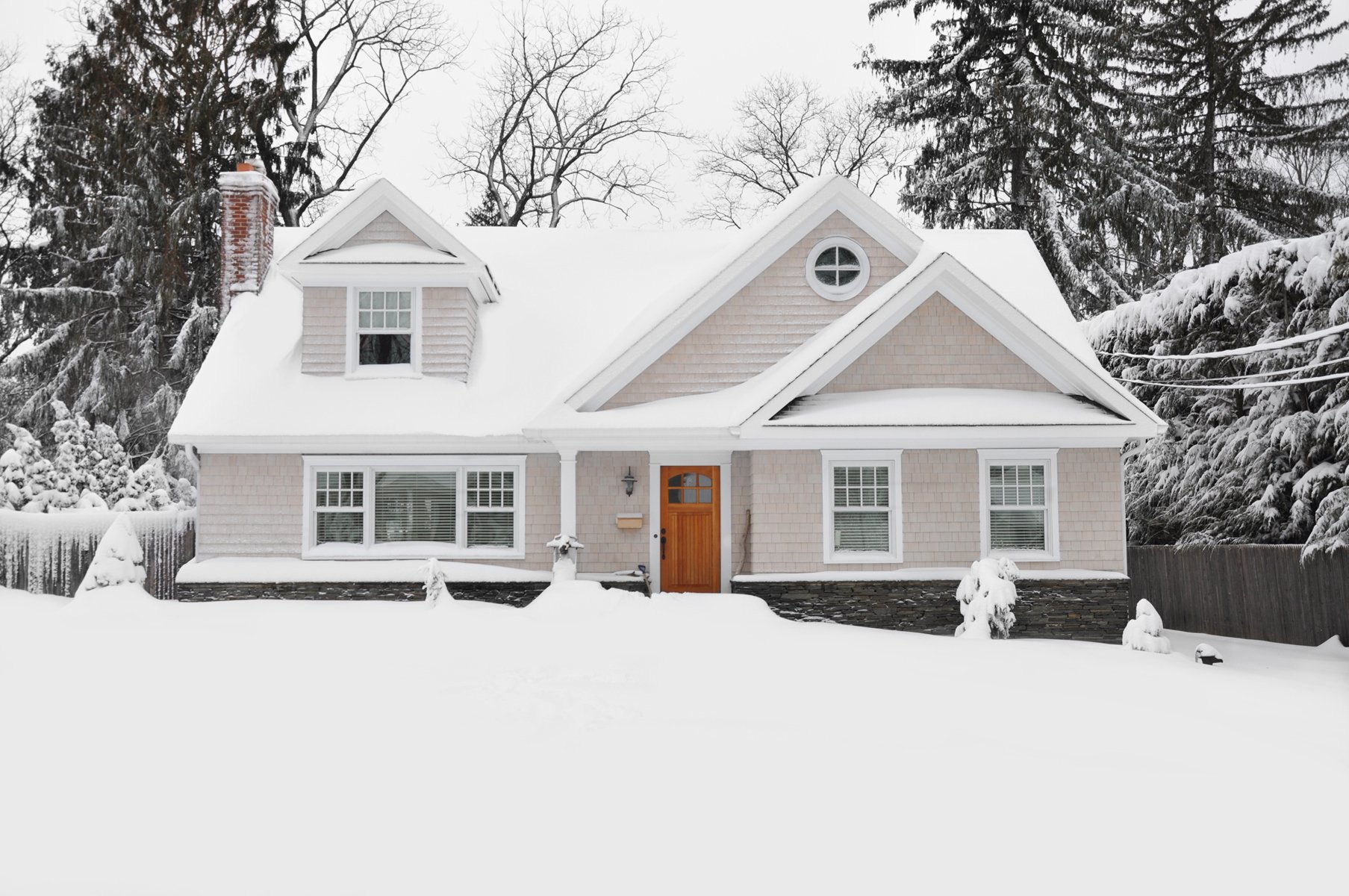
Selling a house during winter comes with its own unique challenges. Snow, for one, can bury your home's best features. Your normally lush landscaping may look drab and lifeless. And truth be told, all you want to do is cozy up at home rather than welcome buyers through your door.

Still, if you're game to sell during winter, it's essential that you put on your snow pants and put some effort into making your house shine. To help, here are some classic mistakes to avoid once the temperature drops, and why they can make such a difference. Just avoid making these all-too-common winter-selling fumbles in order to get top dollar.

log home in winter  house and snow covered yard trees

By Jamie Wiebe, Realtor.com

Mistake No. 1: Setting down the shovel

You cleared off enough of the driveway for your car, but potential buyers won't be entering through the garage like you do.

"Blazing a path through 3 feet of virgin snow makes a lousy first impression," says John Engel, a Realtor® with Halstead Properties, in New Canaan, CT.

Don't put away your snow shovel until you've cleared a path to your front door. Or save your poor back by hiring a snow removal company to keep your paths walkable.

"Not only does it make it more inviting for buyers, but it avoids potential safety and liability concerns," says Massachusetts Realtor John Ternullo. 

Mistake No. 2: Giving in to the winter blahs

Gray skies and barren trees make winter a particularly depressing time to sell. But you don't have to let your home look as doleful as the weather.

"Pops of color by the entryway, like a seasonal wreath and topiaries, can add some interest to the front entrance as well as make it more inviting," Ternullo says.

And don't wait until buyers schedule showings to add some life: Colorful curb appeal transforms your listing photos from drab to dramatic.

Mistake No. 3: Not scrubbing your windows

Colder temps have robbed your trees of their leaves, leaving your home to look a bit sadder in winter's wake. But that's not the only problem. Those full trees previously shielded your home from direct sunlight. And now that it's pouring in your windows, potential buyers will be able to see everything. 

Scuffs, fingerprints, and streaks are "never more apparent" than in the wintertime, Engel says, so you should make sure you're vigilant about keeping windows clean. Alone, that grime might not be enough to turn off a potential buyer, but it might make them wonder what other details you've missed.

Mistake No. 4: Displaying outdated summer photos

Your Tudor looks particularly glorious in the summer, but if your only listing photos were taken in April, buyers will immediately suspect a problem.

"Nothing says 'old, tired listing' more than the photo you took nine months ago," Engel says. Talk to your Realtor about taking new photos that make your home look festive and seasonal. Feel free to keep older photos in the listing—your buyers might want to know what the home looks like when the gardens are in full bloom—but updated photos will make your listing seem fresh.

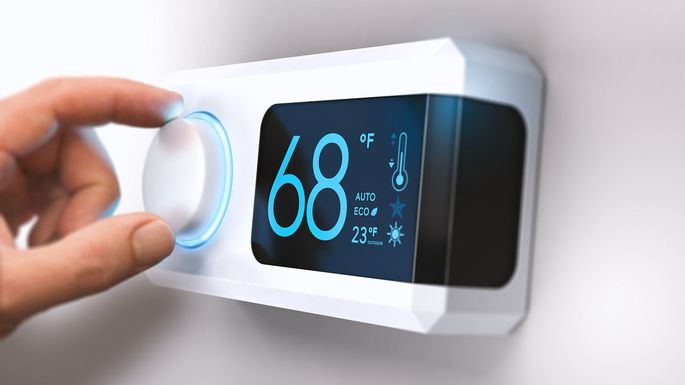
Mistake No. 5: Turning down the heat

thermostat

"Frugality is great, but not when you're trying to sell real estate for top dollar," says Brian Davis, a real estate investor and co-founder of SparkRental.com.

Turn the heat up before you leave for showings, your utility bill be damned. Stick to 68 to 70 degrees Fahrenheit to keep everyone comfy.

"It will make the house feel homier and more welcoming," Davis says. "It also gives the impression that the house is energy-efficient and well-insulated."

Mistake No. 6: Denying access

It's New Year's Eve and a buyer wants to stop by. How dare they! Shouldn't they assume you have a fabulous party to prepare for?

Maybe. But if you want to sell your home in the off-season, the buyer has to come first. You'll need to work with your Realtor to devise a strategy for squeezing in showings, even in between all of winter's holiday events and family gatherings.

"While it may be inconvenient, it's crucial not to deny showings, as that could be a missed opportunity," Ternullo says. "There may be less buyers compared to spring, but winter buyers tend to be serious."

Mistake No. 7: Leaving out your draft stoppers

Your hand-knit draft stopper might look adorable snuggled against your door, but it "sends a clear message to buyers," Davis says. "This house is drafty and loses heat easily."

Not that you should lie. But every home has hidden problems, and it's best to let the buyers make their own assessments and discoveries during the inspection period. Don't leave out little things that could sway their decision.


Ultimate Fall Indoor Cleaning Checklist

  • By
  • Posted

As the days grow shorter, the weather becomes colder and snow is on its way, it's time to begin focusing on the indoor task that you may have been putting off.


1. Sweep and Inspect Chimneys and Fireplaces
chimney and fireplaces

Tzogia Kappatou/ iStock/ Getty Images Plus

A chimney should be cleaned and inspected yearly. A chimney sweep will help protect your home from accidental fires caused by creosote build-up. If you didn't give your interior fireplace surround a good cleaning at the end of last winter, do it now. Waiting another season will just add to the build-up of soot and make cleaning even more difficult.

Gas logs and fireplaces should also be inspected and cleaned so that they are safe and ready for use.

2. Change Smoke Detector Batteries

thermostat

Jul Nichols/ E+/ Getty Images

A change of seasons also signals a time to change batteries in smoke and carbon monoxide detectors. This is one chore that can mean the difference in life and death and thousands of dollars in repair costs.

3. Clean or Replace HVAC Filters
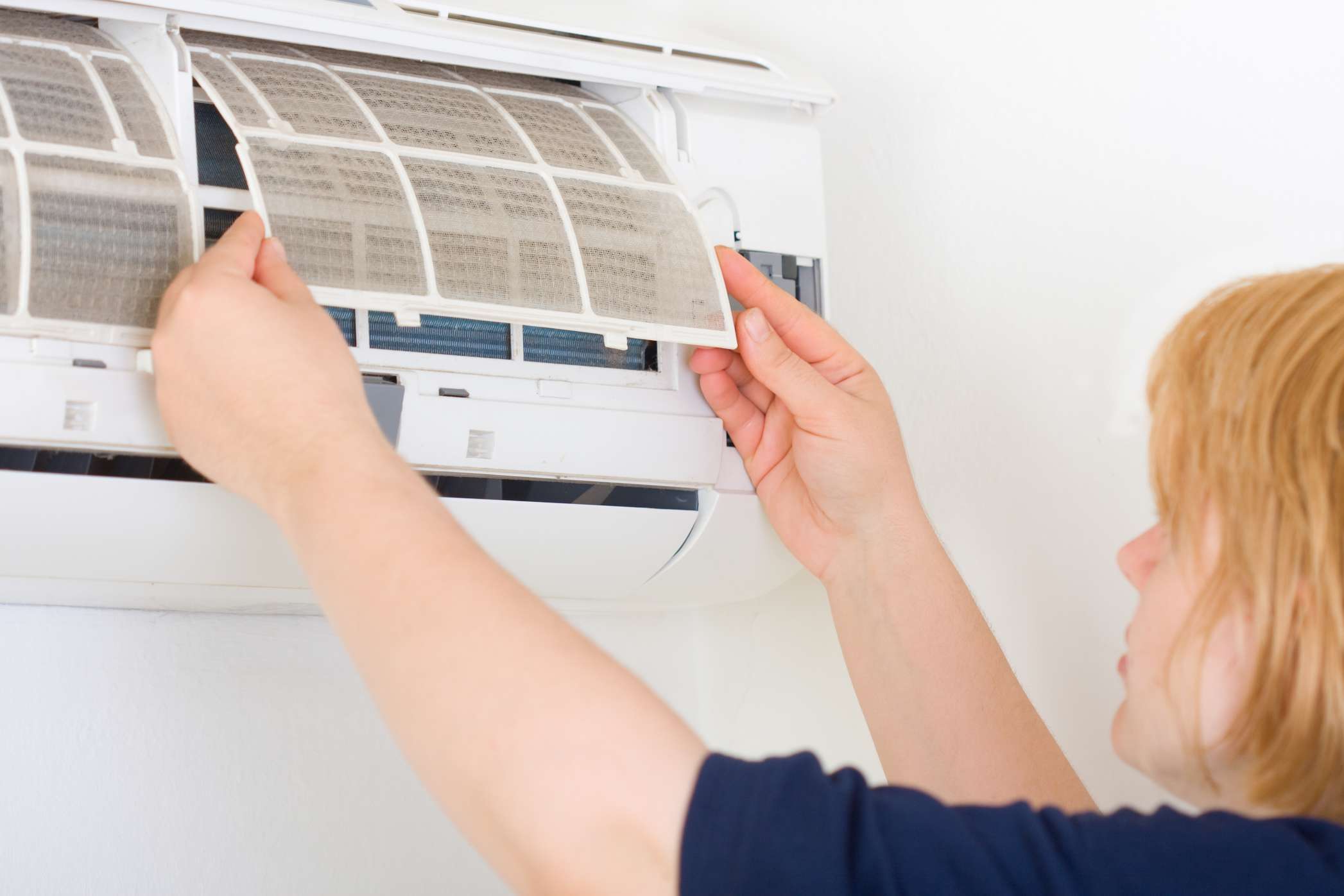
HVAC Filter

firemanYU/ E+/ Getty Images

In addition to having an HVAC technician check your heating system, it is important to regularly change the filters in your heating and air conditioning system. Changing or cleaning filters will improve the air quality of your home and reduce the wear and tear on your furnace.

4. Clean and Reverse Ceiling Fans

ceiling fan

powershot/ iStock/ Getty Images Plus

If the ceiling fans in your home have been running all summer, it's time to turn them off and clean the fan. Then, look for a small switch to reverse the blades so that the heated air will be redirected in a downward flow to keep you warmer during chilly days.

5. Deep Clean Throughout the House

mop pale and cleaning supplies

gilaxia/ iStock/ Getty Images

If you've taken it easy during the summer and only gotten rid of the most visible grime, it's time to do a deeper cleaning including those places that you have been forgetting to clean including your cleaning tools. As you move through the rooms in your home, follow a checklist to make sure everything gets the attention it needs.

6. In the Bedroom

bedroom linens pillows

Oktay Ortakcioglu/ E+/ Getty Images

7. Store Summer Clothes and Inspect Winter Wardrobes

clothes on hangers

I_rinka/ iStock/ Getty Images Plus

While you're cleaning the bedrooms, don't forget your closet and summer clothes. Empty each clothes closet and sort summer clothes before storing them away. Choose clothes that you want to store until next year to be laundered or dry cleaned. The rest should be sold, donated or discarded. 

While the closet is empty, check that no harmful pests that can ruin clothes are lurking by vacuuming it out well.

8. In the Bathroom

bathtub

Remove Soap Scum in Bathroom. hesh photo / Getty Images

9. In the Living Room

lady vacuuming floor

South_agency/ E+/ Getty Images

10. In the Kitchen

kitchen cabinet

Jul Nicholes/ E+/ Getty Images

  • Empty and clean the pantry. Make a list of holiday baking supplies that you will need.

  • Clean the oven and vent hood.

  • Clean the refrigerator and freezer and discard unusable items. Dust and clean the refrigerator coils.

  • Inspect and clean small appliances.

How To Use Home Equity To Your Advantage

  • By
  • Posted

House made of money and coins

Photocredit: Getty

By Tara Mastroeni, Contributor, Forbes

If you're a homeowner or aiming to be one someday soon, you probably know that having home equity is a good thing. However, beyond that, many people start to lose track. That's why we've taken it upon ourselves to solve the mystery of home equity once and for all. Read on to learn what it is, how it works, and how you can use it to your advantage.

What is home equity?

Put simply, home equity is the percentage of your home that you own outright. While you're always considered to be the owner of your home, if you took out a mortgage to buy it, the fact is that your lender also has an interest in the property. Over time, as you pay down your mortgage, the lender's interest in your home shrinks and your home equity grows.

However, you can also grow your home equity in another way. You can do it by increasing the overall value of your home. This can happen by either living in an area with rising property values or by making substantial improvements to the property that will increase its resale value.

How to use your home equity

The good news is that, once you build it up, you can use your home equity to your advantage. When people talk about real estate being an asset, they mean that building home equity is a way to leverage wealth. Here are a few things that you can do with it.

Home equity loan

Home equity loans are often referred to as second mortgages because the two loans function very similarly. A home loan disburses the funds from the loan in one lump sum, much like what happened when you bought your home in the first place. From there, you'll be responsible for making regular, monthly payments to pay back the money you borrowed.

With a home equity loan, you're borrowing against the equity you've built up in your home so the amount that you're allowed to borrow may be limited by how much progress you've made in paying down your mortgage. Typically, lenders will insist that you maintain at least a 15%-20% ownership stake in your home at all times.

One benefit of borrowing against your home equity is that you can often do so at a much lower interest rate than credit cards or personal loans. That's why many people use this option to pay for big-ticket expenses like home remodels, paying off medical debt, or financing a child's college education.

Home equity line of credit

Home equity lines of credit are similar to home equity loans in that you're still borrowing against the equity in your home. However, the disbursement and fee structure couldn't be more different. With home equity lines of credit, the loan is divided into two distinct pay periods: the draw period and the repayment period.

During the draw period, your home equity line of credit acts a lot like a credit card. You can draw on the equity in your home whenever you see fit. During this time, you'll likely only have to make payments on the interest accrued by your purchases.

After a specified amount of time, you'll enter the repayment period. During the repayment period, you'll no longer be able to draw funds from your home equity. You'll also have to start making payments on both the principal and interest of what you've borrowed.

Cash-out refinance

Traditionally, with a refinance, you take out a new loan - usually one with better terms - to pay off and replace your old one. With a cash-out refinance, things work a little differently. In this case, you borrow more than what you owe and receive the difference in funds, which can be used as you see fit.

Here, the amount that you can borrow above what you currently owe is determined by how much equity you have in your home. Usually, you can borrow up to 85% or 90% of your home's value.

Move into something bigger

The most traditional way to use added home equity is to sell your house to buy something bigger. When you sell your home, you'll most likely use some of the proceeds from the sale to pay off the remainder of your mortgage. However, if there is any difference between the sale price on your home and the amount you still owe, it comes to you as profit. That profit can then be used to buy a bigger home and leverage your home equity even further.

How to figure out how much equity you have

Figuring out how much equity you've built up in your home is easy. All you need to know is what your home is worth and what you owe on your mortgage. You can find out exactly how much your home is worth by having an appraisal done or you can get an approximate figure by having a real estate agent prepare a comparative market analysis. Online valuation tools are also an option, but they may not always be accurate.

Once you have that information in hand, subtract the amount that you owe on your mortgage from the value of your home. The remainder is your home equity.


1-20 of 57 Posts

Get in touch!

Do not fill in this field:

I agree to receive marketing and customer service calls and text messages from Melanson Real Estate. To opt out, you can reply 'stop' at any time or click the unsubscribe link in the emails. Consent is not a condition of purchase. Msg/data rates may apply. Msg frequency varies. Privacy Policy.

This site is protected by reCAPTCHA and the Google Privacy Policy and Terms of Service apply.