Things to do

Planning To Sell This Year? Start Getting Your Home Ready Now

  • By
  • Posted

Yes, it may still be winter but the home buying and selling season has already begun. If you're thinking of putting your home on the market, now's the time to whip it into shape.

Below are the top preparations to address... why not start now!

Update your home

With asking prices at an all-time high, most of today's buyers are looking for turnkey, not a project. You know, all those things you wanted to change in your home but never got around to doing! Well, here's your chance. Consider giving your home a refresh, with new countertops, appliances, and flooring. Change out vanities and plumbing fixtures in your bathrooms and if your cabinets are dated, it might be time to have them painted or refaced along with new hardware. Not only will this give your listing some appeal, it may also aid in increasing what goes in to your pocket.

Declutter, Organize, and Clean

No one wants a messy home. If you're serious about selling this year, now is the time to get rid of any unwanted or unused items sitting around the house taking up valuable storage space. Remember, the goal is to show how much space your home has not how cluttered it feels. You want buyers to be able to come through and focus on the space and not the stuff in it!

Windows and Screens

When was the last time you had the windows and tracks cleaned both inside and out? Are there any windows that appear clogged or are difficult to open and close? Very few sellers take the time to check their windows and screens. So to get a leg up on your competition, by cleaning, repairing and making all of them look and work great, will help you justify asking top dollar.

Landscaping

Overgrown bushes, trees and old plants can hide a homes exterior and make it look tired and unnecessarily worn. Don't forget to give your home as much attention on the outside as you do on the inside. Now is the time to have bushes and trees cut back or removed altogether. And when the weather permits, don't forget to freshen up your ground cover as well with new mulch, pine straw or river rock. In the meantime...

Call us

We offer free market analysis of your home. It will determine the value of your property based on other properties, similar in nature that have sold or are currently on the market. 

List with us 

Our team of agents provide professional, courteous service that you can rely on from beginning to end. We look forward to hearing from you!

Melanson Real Estate

Office: 603-569-4488

Mobile: 603-651-7228


11 Steps to Winterize a House

  • By
  • Posted

Keep your house warm and damage-free all winter with these tips. Whether it's for your primary residence or a second home you're leaving vacant, here are tips for winterizing your house. mother lifting baby in living room

Getty Images

By Devon Thorsby

Extreme winter weather can leave neighborhoods and communities without power or other public services for long periods of time, the U.S. Department of Homeland Security warns.

With the risk of damage to your property or personal injury, it's a smart idea to prepare your home for such winter weather emergencies as well as cold weather throughout the season that can cause minor issues or even evolve into larger problems.

Whether it's for your primary residence or a second home you're leaving vacant, here are tips for winterizing your house:

Prepare Your Plumbing

Ensure your plumbing is set up to withstand the cold, and consider utilizing sensors to let you know when there's a problem. "Burst pipes have become one of the most common issues experienced by homeowners in the winter months, and can be very costly to repair due to the extent of water damage that can occur," wrote Steve Wilson, senior underwriting lead for insurance company Hippo, which is headquartered in Palo Alto, California, in an email.

In Northern states where freezing temperatures are expected during a portion of the year, housing codes require insulation and for pipes to be properly protected from the cold. Places that don't see regular frost, however, won't always have a basement for plumbing to stay warmer or effective insulation to keep heat from escaping. As a result, a day or week of freezing temperatures in parts of North Carolina, Georgia and even Texas can cause a lot of damage, says Anne Cope, chief engineer at the Insurance Institute for Business and Home Safety in Richburg, South Carolina. 

If your plumbing runs through a crawl space, consider insulating the pipes or the crawl space itself. "It can be a do-it-yourself project, or it can be a hire-a-handyman project," Cope says.

Wilson also stresses the importance of draining and disconnecting hoses on the exterior of your house to avoid freezing there. "You can purchase a cover for your exterior faucets inexpensively from your local hardware store," he says.

For additional protection, you can get water-leak and pipe-temperature sensors. The former will let you know if pressure inside the pipe suddenly decreases, indicating a burst pipe, while the latter will notify you of dangerously cold pipes so you can prevent a burst pipe.

Additionally, automatic water shutoff valves are becoming more popular in homes. They stop the flow of water should a pipe freeze and burst to reduce the amount of damage to the home.

If the house is vacant: If your home will be vacant for a long period of time, sensors and a remote water shutoff valve could help prevent damage in the house before you can get there.

Clean Out Gutters and Clear the Roof

Leaves, sticks and other bits of nature make their way onto your roof and into your gutters during the fall. Before the first heavy snowfall, be sure to clear debris from your roof and gutters to prevent a buildup of ice and snow, also known as an ice dam, that can get under shingles and cause leaks and water damage inside your house. 

Preventing ice dams and other issues on the exterior of your home should be periodically checked throughout winter as well, Wilson says.

If the house is vacant: Clear as much debris as you can before you close up the house for the winter, but you may need to have a local friend or contractor finish the job when you're away.

Insulate the Attic

Another way to reduce the chances of an ice dam forming is to insulate your attic floor. This helps keep the living areas of your house warmer, Cope explains.

Cope recommends going up
to your attic before the winter weather sets in to examine attic vents, check for leaks and get a look at the insulation. "If your insulation looks terrible, now is a great time of year to get that taken care of," she says.

If the house is vacant: Insulation will help you avoid hefty heating bills during the months that you're not staying in the house. Good insulation that leads to lower heating and cooling bills can also be a plus when you sell the house.

Have Your Heating System Serviced

Have your heating and ventilation system checked and cleaned before the weather gets too cold. If you wait until the first cold snap or snowstorm of the season, many service professionals will be overbooked.

Beyond keeping you warm, a functioning HVAC during the coldest days of the year is key to avoiding frozen pipes, which can burst inside your walls and cause significant damage.

If the house is vacant: Having your HVAC system serviced before you leave for the season is important so cold temperatures don't cause a bigger issue like a burst pipe.

You may be tempted to turn off utilities like gas, power and water if you plan to be away for months at a time. However, a home left to the elements can sustain a lot of damage that you may not see right away. If any water is left in the plumbing, for example, it can easily freeze and cause problems when you return to the home and turn on the utilities, so you would have to be sure all plumbing is thoroughly drained.

Adjust Your Thermostat

The cost of your heating and cooling bills often plays a part in the temperature you stick with during summer and winter – in summer, you may be willing to keep your house at 72 degrees or higher, while in winter you may lower the target temperature to 68 degrees. However, make sure the interior of your home doesn't get too cold as exterior temperatures drop – at the very minimum, the heat should kick on before it dips to 50 degrees Fahrenheit inside.

If the house is vacant: It's important to keep a vacant house at a temperature well above freezing; the standard is between 50 and 60 degrees Fahrenheit.

Call a Chimney Sweep

Whether you have a wood-burning or gas fireplace, make an appointment for your chimney to be inspected annually to see if cleaning or repairs are necessary, according to the Chimney Safety Institute of America. In wood-burning fireplaces, a professional will clean out creosote buildup, which comes from burning wood and can cause a fire hazard inside the chimney if it's not cleaned. In any fireplace, it's important to clear animal nests that might be blocking the chimney and to check for issues in the masonry.

If the house is vacant: Be sure to close the chimney flue as well as any hearth doors. That way you'll keep cold drafts from making your furnace work harder and prevent animals from entering through the chimney and getting into other parts of the house.

Check for Drafts

As the weather cools, walk around the house and check for drafts or air leakage, particularly around windows and doors. Use caulk to seal cracks and weatherstripping to help insulate around door and window frames.

If the house is vacant: Checking for drafts and leakage will help cut down on the work your furnace has to do by keeping cold air out.

Keep Rodents Out

The National Pest Management Association reports that rodents get into an estimated 21 
million U.S. homes each winter. Your work to seal holes and weatherstrip around doors and windows will also help eliminate points of entry for small animals or insects.

Move any upholstered furniture from your patio or garage into the house to keep them from becoming rodent nests. Firewood should be kept elevated and away from the exterior walls of your home.

If your house is vacant: Be sure you've removed all food from your pantry before vacating the place, so pests don't have something to feed on if they do get inside. If you have a friend or hired help checking on the property while you're gone, he or she should check for signs of pests inside your home during visits and contact an exterminator if any are found.

Have a Friend on Call

If you go away for vacation or on a business trip, it's good to have a friend, relative or neighbor on call for your temporarily vacant house. Especially if a winter storm occurs while you're gone, this person can make sure your power stays on and even shovel the sidewalk to prevent slipping hazards.

If the house is vacant: Your HVAC may be in perfect condition with everything insulated, but you still shouldn't leave the house unchecked for the entire winter.

"I wouldn't want someone to think that a property can sit vacant for months at a time without someone coming to check on it. You wouldn't do that with your car," Cope says.

If you have friends or relatives nearby who can check on the house every few weeks, ask them to do so. Otherwise, hire a local handyman to regularly check in and ensure the heat continues to work, the power stays on and no critters manage to break their way into the living space. Even if you have security cameras and sensors, line up someone who can come by on short notice.

Move Plants Elsewhere

If you have outdoor potted plants, fall is a good time to bring them inside if you want to keep them alive during the colder months.

If the house is vacant: Any houseplants you want to keep alive should come with your, unless you're planning to have someone visit the house often enough to water them.

Have Monitoring Devices Installed and Updated

Water-leak sensors and automatic water shutoff can help save your house from massive damage due to a burst pipe, but there are plenty of other tools to help monitor your home to keep it running right throughout the season.

"In the winter months, smart devices will serve as your best friend to ensure your home is adequately protected from intruders and that all systems are working properly while you're away," Wilson says. "Some of the most common smart home devices today can track movement, water leaks, smoke alarms and temperature shifts in and outside the home."

If the house is vacant: Make sure any devices you have installed will be able to continuously monitor for long periods of time. "Before leaving your property, ensure you've checked and changed the batteries in your devices, including smoke alarms," Wilson says.


Devon Thorsby is the Real Estate editor for U.S. News & World Report, and has worked for the company since 2015, reporting and editing on all manner of real estate topics, from homebuying and selling to home improvement, mortgages, tenant rights and the housing market. 

Updated on Nov. 30, 2021: This article has been updated with new information.

7 ‘Design Therapy' Hacks to Improve Your Office

  • By
  • Posted

A well-designed work area can improve your mental and physical health. Here’s how to create your best office space.

well-designed work area can improve your mental and physical health

by Melissa Dittmann Tracey

Could an inviting workspace make you feel better and work smarter? Jessica Shaw, interior design director of Turett Collaborative, believes it can. She offers steps to practice “design therapy” for your office space, factoring in colors, layout, lighting, and more.

Shaw draws from “neuro-architecture,” which explores how art, color, lighting, and design in your office space can affect a person’s mood, productivity, and health.

She offers the following tips for creating an office that boosts mental and physical health, whether it’s your work-from-home area or in-person workplace.

1. Use color smartly.

Color can potentially affect a person’s mood, emotions, concentration, and even physical health, according to a body of science called color psychology. Draw from some of these insights to outfit your workspace.

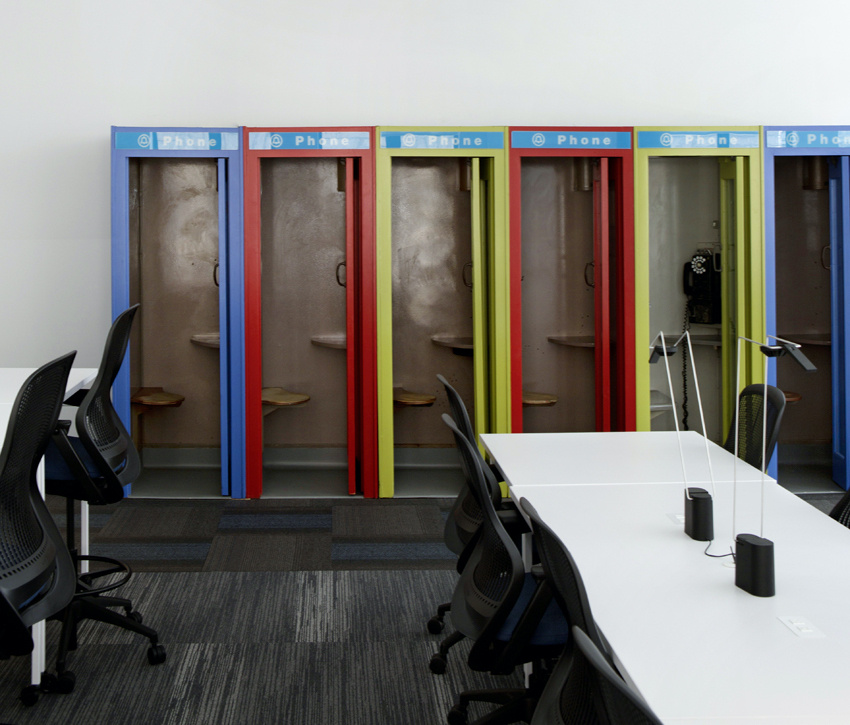
  • When to use brighter hues: For example, bold, bright colors like yellow have been linked to boosting positive thoughts and sparking creativity. Red can stimulate and energize. For detail-oriented work, you may benefit by adding red accessories to keep you focused, Shaw says.

bright colors boost positive thoughts and sparking creativity

©Turett Collaborative

  • When to use softer colors: Lighter shades of blue and green can bring a sense of calmness to a space. These colors tend to work best in lounge spaces and break areas, Shaw says.

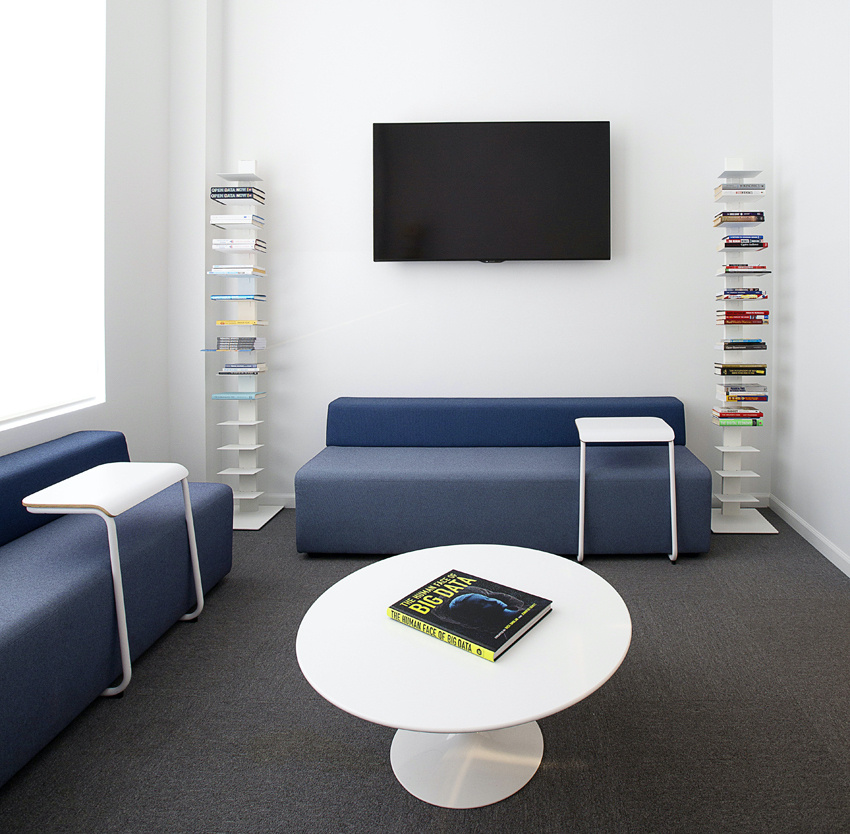
  • When to use white: Use white sparingly in furnishings and accent pieces. Too much white can make a space feel cold and uninviting. Use white more as an accent color or within a more monochromatic color scheme, Shaw recommends. She suggests reserving white for more serious spaces in a workplace, such as conference or meeting rooms.

using white as an accent color or within a more monochromatic color scheme

©Turett Collaborative

A balanced composition of white and color brings visual harmony to the Turett Collaborative’s Civic Hall lounge area.

Use the color wheel for inspiration for the color of your workspace, Shaw suggests.

  • Choose analogous colors: Groups of three colors beside one another on the color wheel (e.g. blue, blue-green, and green)—to create harmony in your office.

  • Reserve complimentary colors: Opposite hues on the color wheel—for a bolder look (e.g. yellow and purple or orange and blue).

  • Consider triadic colors: Three colors equally spaced on the color wheel—for a more energetic, personality-filled space (e.g. red, blue, and yellow). 

  • Use color with intention: Pops of red energize this office space.

balanced composition of white and color brings visual harmony

©Turett Collaborative

Also, Shaw recommends strategically using different hues, tints, tones, and shades to draw attention to certain objects within the workspace.

using different hues, tints, tones, and shades to draw attention to certain objects within the workspace

©Turett Collaborative

An energizing palette of triadic colors adds an element of contrast to the Turett Collaborative Civic Hall dining area.

2. Don’t play it too safe.

You want your workspace to have a sense of harmony, but you also don’t want it to bore you, your agents, or staff. When using interior elements that are too similar, your space can appear dull. But you want a workspace that will visually stimulate. To do that, bring together pieces that juxtapose one another in color, form, or aesthetic to liven up the workspace, Shaw says.

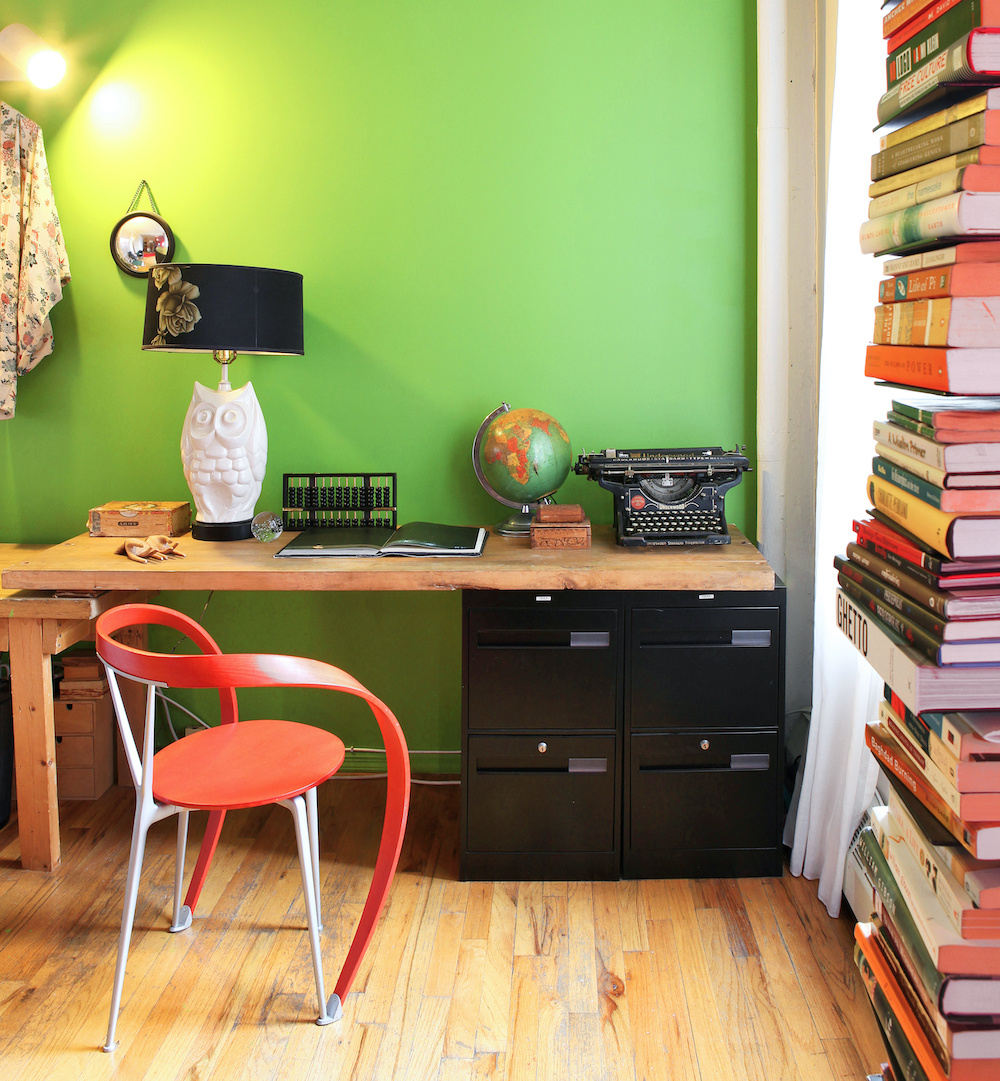
“To break up the rigidity of a grid-based layout often seen in traditional offices, try incorporating organic, soft shapes to add a layer of dimension, dynamism, and visual complexity,” Shaw says. “Balancing masculine and feminine pieces is a great example of creating tension to achieve a cohesive, yet elevated look.”

incorporating organic, soft shapes to add a layer of dimension, dynamism, and visual complexity

©Turett Collaborative

Interior designer Jessica Shaw creates a bold, yet balanced atmosphere with the use of complementary reds and greens in her personal home office.

3. Go abstract with your art.

Abstract artwork could make you feel more creative and spur more innovation in the workplace. “Art is an incredibly influential aspect in impacting moods and the feel of an environment,” Shaw says. “In a sense, it can be a reflection and extension of your company or individual brand.”

Abstract artwork make you feel more creative and spur more innovation in the workplace

©Turett Collaborative

The colorful artwork on the wall of Turett Collaborative’s Civic Hall aim to project visual complexity and stimulation. Large abstract prints can command attention and make a statement.

A gradient tile art piece of geometric patterns composed of sage greens and blues adds texture to the space

©Turett Collaborative

A gradient tile art piece of geometric patterns composed of sage greens and blues adds texture to the space.

4. Maximize the light.

Factor in sunlight when determining the optimal layout for the office. Brighter work environments with natural lighting can help make workers feel more productive, according to a 2018 study conducted by Cornell University Professor Alan Hedge. Natural light also can help reduce eyestrain, drowsiness, and headaches, and even elevate a person’s mood.

Try to locate desks near windows to gain the benefits of natural light, Shaw says.

locate desks near windows to gain the benefits of natural light

©Turett Collaborative

5. Section off with the flooring.

The flooring can greatly enhance the overall look of a room. “Carpeting provides a softer feel to a space while hardwood floors create a strong, polished look,” Shaw says.

In the workplace particularly, different flooring can help section off spaces in the absence of walls. Use a variety of flooring as an alternative to physical dividers like cubicles. It can keep the space feeling more open, too.

“Lines also encourage movement; our eyes are trained to follow lines in the direction they flow,” Shaw says. “For instance, vertical lines promote movement and mobility, whereas horizontal lines create a grounded, secure feeling.”

Try vertical running wood or carpeting along hallways to bring about movement and then use horizontal lines in spaces for relaxation and lounging, Shaw recommends.

vertical running wood or carpeting along hallways to bring about movement and then use horizontal lines in spaces for relaxation and lounging

©Turett Collaborative

Opposing carpet patterns can liven up a monochromatic scheme for a hallway while also creating the perception of two work zones.

6. Minimize visual and noise distractions.

The more objects and items on display on a desk, the more visual and informational processing a person has to do. That can make it difficult to concentrate on work.

Visual clutter hampers organization and productivity. Noisy offices also can be a detriment to your mental health. This also applies to those who work from home, who may face noisy pets or neighborhood construction.

Consider furniture and design elements that can absorb sounds, such as carpeting, acoustic wall paneling, or drapery.

©Turett Collaborative

Pullout drawers allow for discrete organization, keeping the office of this apartment clean and uncluttered. Carpeting provides sound absorption.

7. Follow the principles of proxemics.

Let the law of proxemics be your guide to designing your office space. It states that various distances can serve different forms of interaction.

For example, a distance of 1.5 feet to 4 feet best facilitates friendly, casual conversation, while distances less than 1.5 feet promote a stronger connection between individuals.

“It is important to design a work environment that allows for these varying degrees of physical separation to help promote both individual work and collaborative efforts,” Shaw says. “Alleviating stress and fostering a safe environment contribute to employees’ overall well-being and comfort.”

This may be even more important as more people prepare to return to the workspace after working from home during the pandemic. Open hallways and additional spacing between workstations reduce visual congestion and naturally create social distancing and separation for employees who prefer that, Shaw says.

Turett Collaborative’s Civic Hall design layout includes both up-close and distanced working arrangements to suit the needs and comfort levels of all workers.

©Turett Collaborative


Melissa Dittmann Tracey is a contributing editor for REALTOR® Magazine. 

Why Does Dust Accumulate So Quickly After You Clean?

  • By
  • Posted

No, you're not seeing things—dust really does seem to build up faster on recently wiped-down surfaces. Here's how to slow the course.

woman dusting furniture

CREDIT: VADIMGUZHVA / GETTY IMAGES

By Lauren Wellbank

If you examine your freshly dusted furniture, electronics, and knick-knacks a day after you clean, you might notice some residual debris. You didn't miss a spot: According to Vera Peterson, the president of Molly Maid, dust moves that fast. "On freshly clean, beautiful surfaces, you're more likely to notice dust when it accumulates," she notes. "However, if your dusting method isn't efficient, you might be stirring up more dust than you are trapping." Ahead, her best tips for removing this household nuisance—and keeping it at bay for longer.

To prevent more dust, change your cleaning method and use the right tools. 

The most efficient way to dust is with a top-down approach, notes Peterson. "When dusting, work from top to bottom—dust first, then vacuum, " she says, to prevent having to vacuum twice (before and after you dust). And while feather dusters were once a popular tool to sweep a variety of surfaces, a microfiber cloth is best: "This will gather the dust, instead of just pushing it around," she explains. Working with a cloth will also cut down on the amount of particulate you kick up and into your home—which tends to land on your freshly cleaned tables and appliances, leading to faster accumulation.

Identify any dust-enhancing culprits. 

If you have noticed that your home seems dustier than it should, there may be a surprise culprit: your HVAC filter. "An electrostatic-charged furnace filter attracts and captures dust particles which reduces the amount of dust floating in your home," Peterson explains. "Also, be sure you're dusting and vacuuming often (that's a given!) and regularly grooming your pets."

Dust often. 

Maintaining a dust-free space is so much easier than doing a deep clean after waiting too long. "If you really want to keep your home dust-free, dust at least twice per week, especially if you suffer from allergies," says Witulski. "That's not always feasible for everyone, so at least hit the areas you touch most (like furniture, remotes, and household technologies) once a week. Then, you can focus on those often-overlooked areas (think your ceilings, blinds, and doorways) less frequently. Aim to reach those about once a month!" 

Turn to microfiber. 

Forget that old school feather duster—it only pushes dust around. A simple microfiber cloth and water will get the job done and won't introduce any unnecessary chemicals into your home. Thanks to the cloth's unique structure, fibers are able to grab onto dust, trapping it instead of swirling it around your surfaces. For light dust, you can use a dry cloth; if it's stubborn, a damp rag will work better, especially on glass.

Dust from top to bottom. 

"Always dust your room from top to bottom," adds Witulski. "This seems obvious, but many people forget this step which ultimately duplicates your work (or leaves your home dusty)." First, hit the ceiling, corners, molding, and light fixtures. Can't reach those high-up areas? Wrap a flat-top mop with your microfiber cloth "to get into those high crevices," she explains.

As you work your way down the walls, wipe down any décor or frames before moving on to lampshades, furniture, and objects (be sure to move furniture and objects around so you're getting to untouched areas, such as the space under your television or couch). Don't forget to dust past the edge of a surface as well, if the cloth stops on the edge it will leave a line of dust. Finally, it's time to vacuum. At this point, most of the dust has either been picked up by your microfiber towel or fallen to the floor, which is why you should vacuum last. Take your time, and make sure to move your machine in more than one direction to pick up all of the dust and dirt.

Focus on prevention. 

Want to dust less? Don't let it into the house in the first place. "Most dust is brought into your home through the front the door. Place a wipe-off mat at the entrance of your home to trap the dust before it spreads. These mats should be cleaned or shaken out once a week," says Witulski. "Besides dusting regularly, remove your shoes when you enter your home and change your vacuum bag and filter regularly. But do this outside, so you don't spread more dust!"

Call in the pros if you need to. 

While most homeowners are able (and willing) to stay on top of the maintenance that lowers the amount of dust and debris that accumulates on your furniture, electronics, and knick-knacks, nothing will beat the clean a true professional can provide, says our expert. They can target high-touch areas (which tend to be the dirtiest) and provide you with a fresh canvas. After all, keeping your home tidy and dust-free is a lot easier when you're simply touching up hot spots, as opposed to tackling deep cleans.


Lauren is a freelance writer for MarthaStewart.com.

5 Easy Decor Hacks That'll Brighten Your Home-and Your Mood-This Winter

  • By
  • Posted

If you struggle with seasonal depression, these simple indoor winter decorating ideas can lighten your home and mood.


By Katie Holdefehr | Updated October 13, 2021

As the days get shorter and our homes get darker, it's easy for the dim light and cold weather to put a damper on our moods. If you're determined to beat the fall and winter blues this year, there are some scientifically-backed methods to try, and you can also adjust your home decor to make your space a cheery oasis. 

While there are only so many days you can spend snuggled up on the sofa before you start wishing for springtime, these easy decor tricks will make your home a lighter, brighter, and cozier retreat this winter. According to designer Nicole Gibbons, all it takes is a fresh coat of paint, some carefully chosen window treatments, and a few live plants. Even a simple swap like changing the light bulbs in a room can make your space feel cheerier. Here are five designer-approved ways to design a home that will help you fight the fall and winter blues.

1 Brush on a Bright, Warm Paint Color

Consider the paint color on the walls in the spaces you tend to hang out the most in the winter, like the living room or kitchen. Before winter really hits, think about painting the room a neutral color with warm undertones, like Timeless from Clare. "It will bring a clean, bright feeling to your space and the cozy, almost ivory winter white look adds a soft and relaxed warmth to your home," Gibbons says. If you and your family hang out all winter in the kitchen, this creamy white will make the room feel less sterile and more inviting.

And if you're craving a little more color? "I also love vibrant hues that brighten and uplift a space during a cold, dreary winter and also look great year-round. A bright, airy color like Headspace will reflect light and help open up a room," Gibbons explains.

2 Introduce Live Plants

Even if the trees outside your window are bare, you can still bring leafy greenery into your home this winter. Plants not only add color and life to a room, but Gibbons points out that studies have shown that the presence of nature may lower blood pressure and reduce anxiety. Our advice: start out with some easy-to-care-for house plants so you can get the full stress-busting benefits—without worrying about keeping your new plant babies alive.

3 Switch Out the Light Bulbs

Less hours of sunlight and cloudier skies are a big factor contributing to the fall and winter blues. To make the inside of your home feel bright and sunny, Gibbons suggests switching to LED light bulbs, which emit the most light while using the least amount of energy (bonus: you'll also save money on your utility bill). Look for LED bulbs in soft white, which will brighten the room, without making it look too stark.

4 Let the Light In

Since there's less natural light streaming in the windows in the winter, make sure your decor maximizes what little sunlight there is. Gibbon's recommendation: Opt for sheer curtains that won't block the light, as well as stylish pullbacks. When installing a curtain rod or brackets, make sure to set them slightly outside the window frame, so that when the curtains are pulled open, they won't block the sides of the window.

Check: is there anything blocking the windows, like plants, furniture, or lamps? Relocate these items to let more light in.

5 Add Bursts of Color

When it comes to winter decor, we naturally think of darker, moodier hues. But Gibbons recommends trying something new this year. "Bring in fun pops of color in your throws and pillows to help brighten your space even more," she says. Warm red throw pillows or dish towels will add energy to the space—and a sense of playfulness will make you smile more than decor that takes itself a little too seriously. Buy inexpensive throw pillow covers you can swap out whenever you're craving a change of scenery.


Katie Holdefehr is a senior editor at RealSimple.com, where she writes about everything from decor ideas to dryer balls. 

Vintage Boat Race Regatta in Wolfeboro 2021

  • By
  • Posted

Looking for something fun and different to do this weekend? This fun-filled two-day event takes place on beautiful, historic Wolfeboro Bay in Wolfeboro, New Hampshire.

The event is presented by the New Hampshire Boat Museum and is sanctioned by the Vintage and Historic Division of the American Power Boat Association (APBA). This biennial event is a favorite for visitors to watch and for drivers to show off their spectacular vintage race boats dating from the 1920s – 1980s.

Vintage Boat Race Regatta

When: Friday, September 17, 2021 & Saturday, September 18, 2021

Time: 8:30 am  - 5:00 pm

Where: Wolfeboro Town Docks, Wolfeboro Bay

For more information:
Telephone: 603-569-4554
Web: www.nhbm.org/regatta


Fun Fall Activities to Do With Friends, Kids, or Solo! We've got you covered all season long!

  • By
  • Posted

Looking for fall things to do while the weather's crisp and the foliage is at its peak? Consider this checklist of fall activities the ultimate way to make the most of autumn.

CREDIT: GETTY IMAGES

By Maggie Seaver | Updated September 07, 2021

From enjoying Mother Nature's simple pleasures (hello, leaf-peeping and bird watching) to planning the perfect fall trip with friends (winery tour, anyone?), here are our favorite fall activities for kids, families, and couples, plus tons of things to do with friends or on your own this fall.

Outdoor Fall Activities 

Checklist
  •  


  •  


Fall Activities for Kids and Toddlers 

Checklist


  •  


Fall Activities to Do With Friends 

Checklist


  •  


Indoor Fall Activities 

Checklist


Fall Activities for Couples 

Checklist


Nostalgic Fall Activities 

Checklist


Follow This Fall Garden Checklist to Get Your Yard Ready for Winter

  • By
  • Posted

Changing leaves signal that the growing season is winding down. Here's what you should do to prep every area of your landscape for the colder months.

CREDIT: ELENATHEWISE/GETTY IMAGES


By Megan Hughes | Updated July 29, 2021

As temperatures begin cooling off and daylight hours dwindle, it's time to finish the gardening season strong by preparing all your plants for winter. Essential autumn chores on your to-do list should include giving permanent plantings such as trees, shrubs, and perennials a little TLC, cleaning up your veggie garden, and winterizing your lawn. A little work now means you'll have more time in spring for planting vegetables and colorful blooms rather than being bogged down with clean-up tasks and tracking down garden tools. Check off a couple of tasks a day and you’ll be ready for winter in short order; then you can spend your time browsing seed catalogs while you dream up next year's garden plans.

Getting Your Lawn Ready for Winter

As the weather cools off, autumn lawn care is a combination of clean-up and encouraging new growth. It's also a good time to help your grass recover from being trampled during your backyard games of catch or maybe bocce ball this summer. Pave the way for lush, healthy grass next spring with these timely chores.

Checklist
  • Fall Lawn Care Checklist


CREDIT: JACOB FOX

Prep the Perennial Garden

Perennials are garden workhorses. After a long growing season, they're ready for a winter rest. Stop deadheading in early fall and leave the above-ground parts standing even after frost kills them (unless pests and diseases are an issue). They'll provide both food and shelter for wildlife. Songbirds will enjoy the seed buffet and many pollinators like native bees overwinter in standing stems and brush. Complete the following tasks in your perennial garden in fall:

Checklist
  • Fall Perennial Garden Checklist

CREDIT: KARLA CONRAD

Refresh Your Vegetable Garden for Next Year

Whether you have an elaborate kitchen garden or a small patch for raising edible plants, things will start to slow down in fall as you harvest the last of your tasty bounty. Once a few frosts finally bring the growing season to an end, check off these vegetable garden chores to get ready for next season’s harvest.

Checklist
  • Fall Vegetable Garden Checklist

CREDIT: JAY WILDE

Care for Trees and Shrubs

Did you know fall is an excellent time for planting trees and shrubs? This is when you should start that new hedge or establish a new shade tree in your yard because the soil is still warm enough for roots to grow a little before winter sets in. Plus, a little fall care for your established trees and shrubs will help them weather the colder months better.

Checklist
  • Fall Tree and Shrub Care Checklist

CREDIT: PETER KRUMHARDT

Organize Your Tools and Gardening Gear

As the growing season winds down, don't forget to prep your garden tools for winter. Cleaned and refreshed, your favorite garden helpers will be ready when you are, come spring.

Checklist
  • Fall Garden Tool Care Checklist

CREDIT: MARTY BALDWIN

Clean Up Annuals and Containers

Colorful annuals are often the first plants to succumb to frosty fall weather. Once a hard frost does them in, you'll want to tidy up planting beds and pots to be ready to fill again next spring.

Checklist
  • Fall Annuals and Container Garden Checklist


orticulturist and writer — Better Homes and Gardens

How to Transform Any Room Into a Flexible Space for Multi-Purpose Living

  • By
  • Posted

Learn how to convert an underused area of your home into a customized space that best suits your needs.

By Jessica Bennett 

As lifestyles shifted due to the coronavirus pandemic, our homes had to adapt to new activities and routines. Dining rooms and closets became home offices, kids' bedrooms served as homeschool spaces, and guest rooms were outfitted with workout equipment. These multi-purpose rooms were born out of necessity, but even as we look toward a post-pandemic future, homeowners are increasingly using "flex spaces" as a versatile solution for previously underused areas. "The trend has found staying power as people realize they can more efficiently use their spaces in sustainable ways," says Cameron Johnson, founder and CEO of Nickson, an apartment-furnishing service.

Flex spaces are intended to help your home better accommodate your day-to-day life. Guest bedrooms, for example, can often be reimagined for more frequent and flexible use. "People are realizing that an entire room in their home dedicated to an occasional houseguest may not be the best use of space—a commodity that has become decidedly more precious over the past year," says Los Angeles designer Stefani Stein. To maximize function within your home's existing floorplan, follow these tips for creating a flex space that works with your lifestyle.

CREDIT: EDMUND BARR

1. Think outside a room's assigned function. 

Consider your home's least-used spaces, such as a formal dining room, breakfast nook, sitting room, or extra closet, and how they could be put to better use. Your home's builder might have intended the room for a specific purpose, but feel free to readjust if that doesn't align with your everyday priorities. "Nothing is off-limits for reimagining how a space can be used," says interior designer Shaolin Low of the Honolulu-based Studio Shaolin. 

A flex space should be designed around the activities that will take place there, such as working, exercising, doing homework, and more. "People are surprised by how cohesive they can make a space if they start from 'What should the space facilitate?' versus 'What is supposed to be in this room?'" Johnson says.

CREDIT: NATHAN SCHRODER

2. Consider your long-term needs. 

As you configure your flex space, consider how your needs might change as time goes on and plan for flexibility, Low suggests. "If you have young children at home, think about how it will be utilized as they grow up. If you will host a lot of family or guests in the future, think about how you'll accommodate," she says. Opt for lightweight, easy-to-move furniture to help ensure your setup can be rearranged as needed. "When it comes to exercise, consider alternatives to large and bulky equipment such as tension bands," says Tiffany Piotrowski of Tiffany Leigh Design. "These can be kept in a decorative bin or basket and still provide a full-body workout."

3. Plan for storage. 

Incorporate plenty of storage into your flex room to manage clutter and maximize space. "Add storage that can be closed off—cabinets with doors to hide messes and contain all the items necessary for whatever activities will be taking place in the room," says Austin-based interior designer Killy Scheer. Choose furniture or containers that can stylishly and efficiently accommodate your storage needs, whether that's for workout gear, office supplies, toys, or other items.

CREDIT: DANA GALLAGHER

4. Compartmentalize the flex space. 

If your flex space will serve multiple functions, section off areas of the room for each need, suggests Pramiti Bhargava of BlueGrape, a San Diego staging company. For example, designate one corner for a home office and use the other side of the room as a workout space. Room dividers or shelving units can serve as physical barriers that separate the space and offer added privacy. For a visual cue, lay down rugs or paint an accent wall to specify different sections.

5. Use flexible furniture. 

"If you want to have a multi-purpose space, you need to have multi-purpose furniture," Low says. Outfit your room with pieces that can transform to suit different needs or activities. Look for nesting furniture that can be stacked or separated, tables with extendable leaves or fold-down mechanisms, and armoires that can open up to reveal a workspace, suggests Scheer. Just be sure to measure the room carefully before purchasing furniture.

6. Reflect your personality. 

Customize your flex space to suit your style. Use it as an opportunity to go bold with a dramatic paint color or patterned wallpaper. Or tailor it to a certain hobby or interest. "There are so many creative ways to utilize extra space, so take it as an opportunity to showcase your personality and passions," Bhargava says.


Jessica Bennett, Assistant Home Editor — Better Homes and Gardens

Should You Laminate Your COVID-19 Vaccine Card?

  • By
  • Posted

According to experts, this isn't the best course of action.

COVID-19 Vaccine Card Suggestions

By Jenn Sinrich , Martha Stewart, Health and Wellness

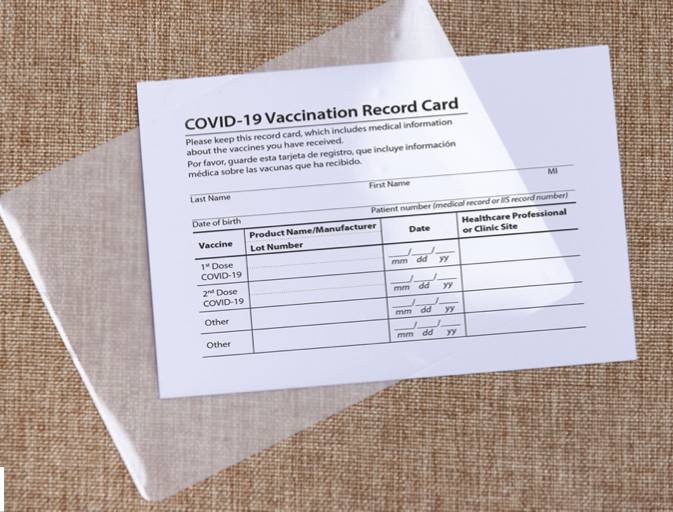
If you have already secured one or both of your COVID-19 vaccinations, you're probably feeling extra grateful for science. You're likely also feeling as if you are seeing the light at the end of the tunnel after a year filled with fear and countless unknowns. Needless to say, your vaccine card—which documents your coronavirus inoculation—is incredibly important, since it marks this moment, proves your vaccinated status, and may be your ticket to traveling internationally or attending large-scale events, like sports games and concerts, down the line. As such, you might be wondering if you should preserve your card to keep it in mint condition, and many people are even asking whether or not it's a good idea to laminate the card.

While Niket Sonpal, M.D., a New York City internist on faculty at the Touro College of Medicine, agrees that keeping the card safe is important, he feels that laminating it is not necessary at this point in time. "The card itself contains valuable information on your two doses, including date, timing, and vaccine name and information; however, the United States has not yet instituted vaccine passports for travel or attendance to gatherings," he tells us. "Additionally, we do not know which way the research will go. Will there be a need for booster shots? They would be placed on that original card." In short, Dr. Sonpal feels that, given data and the current state of the pandemic, permanently sealing your card is premature.

Sharon Nachman, chief of the division of Pediatric Infectious Diseases at Stony Brook Children's Hospital in Long Island, New York, agrees, suggesting instead that people put their vaccine cards in plastic folders or a sealable vinyl pouch and store them in a safe place at home. "I suspect that we may need to get booster shots in the future and will need to record them on the same document," she affirms. "Over time, we will want to look at any differences between the vaccines, including the timing of when the original was given and when a booster should be given." Having a card that is easily accessible and amendable will ensure that all information is stored in one place, she explains.

In the meantime, Dr. Nachman advises taking a picture of your vaccine card and saving it on your phone, so you have two copies of you what were given and when it was administered. "I like the redundancy and having these copies available to you at any time as a precaution to needing that information at the drop of a hat," she adds. In addition to storing your card in a plastic folder and keeping a digital iteration on your phone, Robert Hess III, a public health expert and the CEO of Hess III Communications, a company that advises health and human service providers, also recommends sending a copy of your card to your primary care physician, so that it is stored in your medical record. "This will also make sure it is fully protected and always accessible," he says. "Additionally, individuals can make a photocopy of their vaccine card—and laminate that one if they so choose."


Ice-Out Contest Lake Winnipesaukee

  • By
  • Posted

Join in the fun and enter your chance to win the Ice-Out Contest Lake Winnipesaukee to benefit the Wolfeboro Area Chamber of Commerce!  All entries must be submitted by 3:00 PM, Saturday, March 20, 2021.

See below for more details...

Styling in Place

  • By
  • Posted

The design trends that will dominate in 2021 reflect the ways the COVID-19 pandemic has upended people’s lives, driving them to create a home that’s a safe place to relax, work, study, and socialize. 

Outdoor pool and furniture

By Barbara Ballinger

While the following three enhancements address practical needs, there are plenty of high aesthetics—and a healthy dose of joy—in these new visions for the lives people are living indoors and outdoors. These are the kinds of upgrades that may just have people choosing to stay put, even when it’s safe to venture out more freely.

1. Two-for-one “Layered” Kitchens

layered kitchens and lighting

Even before the pandemic, some homeowners with an open floorplan found that increased exposure and family togetherness posed a downside in the kitchen work area: piles of dirty dishes, cluttered countertops, and other unsightly messes. Leave it to trendsetters to develop a solution for those with ample space and funds: two kitchens in one. Mick De Giulio of de Giulio Kitchen Design in Chicago calls it a “layered kitchen” with separate “work” and “living” zones. Cheryl Kees Clendenon of In Detail Interiors in Pensacola, Fla., refers to it as having a “prep and show kitchen.” In the work area, typically at the back and concealed by a door, wall, or hall, serious cooking and cleanup take place. The area may be part of a large laundry or utility room and might also be used by caterers (when entertaining returns with gusto), Clendenon says.

In contrast, the living or show kitchen at the front remains open, designed to display culinary creations in a clean, uncluttered way. It’s where a golden-brown turkey would come out of the oven before being carried to the back for carving. Some homeowners may also designate one kitchen for special-requirements cooking such as gluten-free prep, which a client of Clendenon’s requested. Or some may want to make space for a dedicated beverage center with a coffee station, refrigerated drawers, and a wine cooler to meet needs from morning to night, De Giulio says.

2. Flexible, Prefabricated Sheds

Outdoor Prefabricated Shed

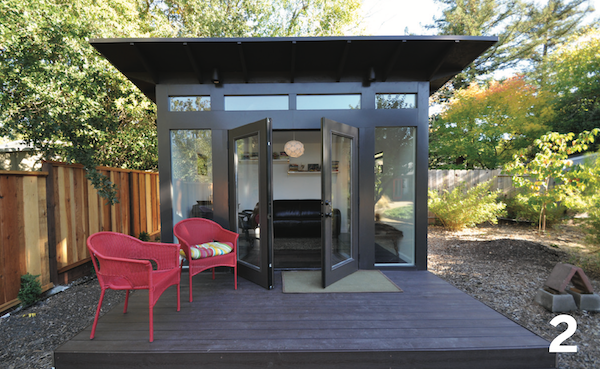
Sheds, once used primarily to store sports equipment and garden paraphernalia, have evolved into a common home addition. Some homeowners use them as overflow storage instead of paying for an expensive off-site facility. Others seek larger and better outfitted models as accessory dwelling units for people because more municipalities are approving ADUs. They’ve become dwellings for returning adult children and short- and long-term renters, quiet work-from-home quarters, and escapes for recouping sanity—hence the new moniker “the sanity shed.”

Rather than have an architect or contractor design and build a shed from scratch—which can be pricey and time-consuming and which often requires a building permit—homeowners can find more affordable, off-the-shelf options on the market, some of which can be customized. Boulder, Colo.–based Studio Shed has experienced explosive growth during the pandemic. The company offers prefabricated, sustainable designs that vary by size (from 64 to 256 square feet), color, door and window placement, finishes, and price ($11,000 and up). Because of the increase in gardening during the pandemic, the company offers its “Studio Sprout” greenhouse ($14,250), while customers’ most popular choice is a functional home office (about $25,000). Some municipalities looking to spur affordable housing in a shorter time frame offer preapproved plans for expanded sheds that can serve as modest dwellings, says architect Brian O’Looney of Torti Gallas + Partners in Washington, D.C., in his new book, Increments of Neighborhood.

3. Outdoor Warming Features

outdoor fire pit and furniture

As temperatures fell, homeowners wanted to extend safe, outdoor socializing with family and friends in the time of COVID-19. “Everybody wanted to turn their backyard into an oasis to be able to eat safely and talk,” says landscape architect Clara Batchelor of CBA Landscape Architects in Cambridge, Mass. Many, including residents of multifamily buildings with shared outdoor space, want to keep doing so throughout winter. Two features that make fresh-air living in chilly evening weather pleasant are fire pits and patio heaters. They offer warmth from infrared electric heat, propane, or real wood-burning fires.

Local authorities are revising codes and ordinances to ease requirements pertaining to fire features, says architect Gary Kane with The Architectural Team in Chelsea, Mass. While fire pits have been popular for years, they’ve become more stylish, now available in different shapes, sizes, materials, weights, and prices. One design that grabbed attention early in the pandemic was Solo Stove’s portable “Bonfire” pit that uses logs but is smokeless. Hybrid models use gas and burning logs, says landscape architect Marc Nissim of Harmony Design in Westfield, N.J. Patio heaters are a newer home addition, inspired by restaurants using them to coax diners to eat outdoors. Using a variety of heating fuels, some are designed to stand alone and others mount on a wall or ceiling, says landscape designer Michael Glassman of Michael Glassman & Associates in Sacramento, Calif.

Barbara Ballinger is a freelance writer and the author of several books on real estate, architecture, and remodeling


How to Get Your Papers Organized Before Tax Time

  • By
  • Posted

A professional organizer offers a manageable plan for tackling those paper piles now to make April a little easier.

As the new year rolls in, so do tax documents and year-end financial statements. What do you do with these documents? If you stack them along with other papers you’ve collected over the year — and vow to be more organized next tax season — you’re not alone. 

That said, now is a great time to start chipping away at your paper piles so it will be easier to find what you need when you’re ready to file. And then you can set up a system to make next year’s tax season less daunting.

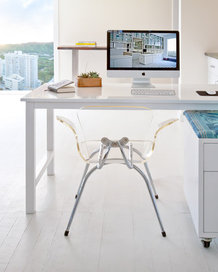
desktop computer desk and chair

By Patricia Lee, Houzz Contributor

Which Types of Papers to Recycle, Shred or Throw Away

I recommend that you keep three bins close by as you sort through your papers: trash, shred and recycle. You may want to check the guidelines of your city’s waste management company as they can vary, but as a general rule photo paper and thermal receipts cannot be recycled and should be considered trash. Similarly, any papers that have glitter, foil accents or plastic or wax coating cannot be recycled. 

Of course, papers with personal information such as your name, address, Social Security number and bank account or credit card numbers should be shredded to prevent fraud and identity theft. 

Most other papers can be safely recycled.

Easy Paper Categories to Tackle First

For most organizing projects, it’s usually easiest to start by decluttering the least important and least sentimental items before moving on to the most significant ones. Taking a first pass to eliminate papers that won’t require too much mental effort is a good warmup before you launch into harder decisions.

1. Junk Mail

In this age of digital advertising, you’d think you would receive less junk mail. However, that doesn’t appear to be the case. 

The good news is that you can usually get rid of these papers without thinking too hard about them. I suggest you recycle unnecessary catalogs, coupons and ads. Shred any credit card offers or other junk mail that may contain personal information. 

If you wish to unsubscribe from unwanted snail mailings, you can contact most company customer service departments to opt out. Alternatively, there are various online services that help you remove your name and address from distribution lists.

soft basket with magazines

2. Irrelevant Papers

Once relevant papers have become irrelevant, it’s time to get rid of them. Some examples would be old magazines and newspapers, unnecessary receipts, old school notes, outdated business cards, utility bills, bank statements and more. 

You may have good intentions to work your way through a backlog of magazines because you feel wasteful discarding them without reading them. But be realistic about what you can finish reading before the next delivery. 

Also, if you don’t need to save your utility bills and bank statements for tax or other purposes, you may be able to discard them after you’ve checked them for accuracy and reconciled them with your payments and bank accounts. 

And most receipts that don’t need to be kept for tax, insurance or resale purposes can be tossed after the return window has closed, the warranty has expired or you know you’ll be keeping the items (like groceries).

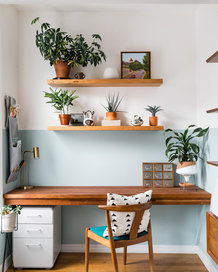
desk with chair and bookshelf

What to Do With Harder-to-Tackle Paper Categories

Once you’ve shaved off the first layer of nonessential papers and are ready to dive a little deeper, think about the main categories that cover what you may need to keep. These vary for each person, but some common categories include:

  • Taxes

  • Action items (bills to pay, cards to reply to)

  • School documents

  • Medical records

  • Property records

You may have additional categories that apply to you. Once you’ve determined your categories, sort remaining papers into them. The idea is to divide your paper organizing into smaller and more focused bites so it’s less overwhelming. Then you can further sort each category to determine what you need to keep and what you can let go. 

For this article, let’s focus on the category of taxes.

The Papers You Need to Keep for Taxes

The first step in organizing your tax-related papers is knowing what you need to keep. You don’t want to keep too few records and not be prepared for a potential audit. Nor do you want to keep excess, space-consuming documents. 

In the broadest of terms, calculating your income taxes requires determining all the income you’ve received during the year minus eligible deductions and credits. So do your due diligence to find out your specific, personal requirements for each part of this work. 

If you have a tax preparer, he or she should be able to provide you with a list of requirements. If not, you may be able to find some guidance on the IRS website, through online tax-preparation resources and in your previous year’s tax return. Here are some examples of information you may need regarding your income, deductions and credits (not an exhaustive list):

Income

  • Wages, salaries, bonuses and tips

  • Interest earned

  • Stock sales and dividend income

  • Rental income

  • Retirement account distributions

  • Unemployment benefits and disability payments

  • Advance commissions

  • Lottery payments


Deductions

  • Contributions to retirement accounts

  • Student loan interest

  • Capital losses

  • Mortgage interest

  • State or local taxes

  • Medical expenses

  • Charitable contributions


Credits

  • Recovery Rebate Credit

  • Child and dependent care credit

  • Adoption credit

  • Residential energy-efficient property credit

  • Health care credits

I recommend you create a checklist of the specific income, deductions and credits that pertain to your situation. 

My own list includes the forms (W-2s, 1099s, 1098s and so forth) and information (charitable contributions, medical expenses and so on) that I need to have for my tax filing. This checklist helps me stay organized each year. I would otherwise not be able to remember the detailed requirements of this once-a-year task, and I’d risk submitting an incomplete tax return. 

Keep in mind that tax requirements do occasionally change, either due to the IRS or personal situations, so it’s wise to update your checklist when that occurs.

6 Common Causes of Clutter and Their Cures

Storing Your Tax Documents

1. Current Tax Year Documents

There’s plenty to sort through at tax time, so the more you can eliminate searching for documents in April the better. To simplify, I recommend you keep all your current-year tax documents corralled in one place. 

I keep two sets of tax documents: personal and business. Neither is exceptionally complicated or document-heavy, so for me two hanging folders (one for personal, one for business) works perfectly. 

Throughout the year, I put anything tax-related (charitable contribution receipts, business receipts) in its correct folder as soon as I receive it. For business expenses, I write the category and purpose (marketing, office supplies, meals and entertainment) on the back of the receipt right away to avoid the chance of forgetting it.

The method that works best for me is to collect all my tax documents in each folder all year and then sort more specifically when it’s time to prepare. But if your taxes are complicated and you must retain many papers, you may want to create smaller subfolders to keep categories sorted throughout the year. 

Whatever method you choose for collecting your tax documents, it will be successful only if you actually use it. Therefore, make sure your document storage is in a spot you can easily access. Otherwise, there will be a strong tendency for documents to pile up on a counter instead of being filed away appropriately.

2. Previous Years’ Tax Returns and Documents

Tax returns and documents that have already been filed with the IRS and state agencies need to be retained in case of an audit. Depending on your situation, the number of years you need to keep your tax documents can vary. 

At the time of this story’s publication, the IRS website stated that the period in which you can amend your tax return or the IRS can assess additional taxes ranges from three to seven years. The period of limitations in my state is four years. Therefore, out of a great abundance of caution, I keep my physical tax returns and documents for seven years.

Personally, I keep my past tax returns in a portable file box. I store the box in my office, but it doesn’t get a prime spot, since I take it out only once a year to add the newest set of documents and remove the oldest set. (I then relabel the empty folder from the oldest set for the following year’s tax documents.)

I also save digital copies of my tax returns, which I can keep indefinitely. Some recommend keeping tax returns and W-2s forever, in case the IRS ever claims you either didn’t file a return or filed a fraudulent one. I recommend you consult with a tax professional to confirm the safest route for you.


Patricia Lee, Houzz Contributor is a professional home organizer in the San Francisco Bay Area. 

Weekend Outdoor Activities 2/12 - 2/14/21

  • By
  • Posted

Looking for something fun to do outside this weekend?  Well, search no more, there's plenty of outdoor activities in the area for the whole family to enjoy!

Alton Bay Winter Carnival 2021

Although things will look a bit different this year, the fundraising cause remains the same. Due to the pandemic, the Alton Business Association (ABA) will not be able to host a large-scale winter carnival event in the way the group normally would. With that said, the ABA is committed to bringing some winter fun to the community. There will be smaller (in the interest of safety) sponsored events featuring an Ice Sculpture Walking Tour, Bob House Decorating Contest and the Virtual Fundraising RAFFLE. The Raffle includes amazing products, services and gift certificates donated from members of the surrounding businesses.

Ice Sculpture Walking Tour:

The generous businesses sponsors have enabled the ABA to hire Ice Designs by Jeff Day to carve three unique ice sculptures for the community to enjoy. The sculptures will be on display in Alton Bay at the land bandstand, gazebo and in front of the community center. Be sure to bundle up and go for a walk in the bay to check them out! If you take pictures with the ice sculptures, be sure to tag ABA @altonbusinessassociation and use #altonwintercarnival. The sculptures will be on display starting late afternoon February 12 thru February 14 or until they melt!

Bob House Decorating Contest:

Sponsored by Dockside Restaurant - email ABA at info@altonbusinessassociation.com to enter by February 12. They will post pictures of the bob houses on their Facebook page.

Winter Carnival Raffle:

The Virtual Fundraising Raffle is already underway and closes February 13th at 11:59 pm. They have amazing prizes donated from ABA members and local businesses. The list of sponsors is growing and the ABA lists thus far, Alton Circle Grocery, Alton Excavation, Alton Home & Lumber, Catchpenny, Gunstock Mountain Resort, Hannaford, Inspiration for Organization, Irwin Marine, K-9 Kreations, Katie's Kitchen, Northeast Security Agency, Lake Life Brand, Seacoast Spine & Sports Clinic, Shibley's at the Pier, Simple Beautiful Nails and the Little Christmas Cottage. Don't miss this opportunity to win prizes.  Head over to ABA's website, www.altonbusinessassociation.com where you can purchase tickets. Winners will be announced on the ICE, February 14 at 11 am!

Virtual events may be added, so stay tuned to the ABA Facebook Event Page @altonbusinessassociation and website.

Although Winter Carnival events may look different this year, it's a chance to embrace all the outdoor fun that winter season brings!


Wolfeboro Cross Country Ski Association 

Since 1972, The Nordic Skier and Wolfeboro XC have joined as partners in the pursuit of a top notch nordic ski center. Click here for more information.



The 2021 Great Meredith Rotary Ice Fishing Derby is this weekend!

  • By
  • Posted

February 13-14, 2021

Online ticket sales have ended. You can still purchase tickets at local retailers for the remainder of this week and at Derby Headquarters beginning tomorrow, Friday, February 12.

Vendors Selling Tickets

 Every ticket purchased (online or otherwise) is entered into each cash drawing throughout the weekend.
You can win over $5,000 without even baiting a hook!

Alton Circle Grocery
10 Main Street
Alton, NH 03809
603-875-2861

Bryant & Lawrence Hardware
270 Main Street
Tilton, NH 03276
603-286-4322

Case 'N Keg
5 Mill Street
Meredith, NH 03253
603-279-7443

Coyote Creek Outfitters
22 Farmington Road
Rochester, NH 03867
603-332-3270

Dive Winnipesaukee
4 N. Main Street
Wolfeboro, NH 03894
603-569-8080

E.M. Heath Hardware
318 Whittier Highway
Center Harbor, NH 03226
603-253-4381

Green's Corner Store (Formerly Murphy's Mobil)
246 Whittier Highway
Moultonborough, NH 03254
603-253-9300

Newfound Sales & Trading Post
381 Lake Street
Bristol NH 03222
603-744-8658

Skelley's Market
374 Gov. Wentworth Highway (Route 109
Moultonborough, NH 03254
603-476-8887

The Tackle Shack (formerly AJ's Bait and Tackle)
NOTE NEW LOCATION
54 NH Route 25, Unit C    
Meredith, NH 03253
(603) 279-3152

The Tackle Shack (Newbury) 
894 Route 103
Newbury, NH 03255
603-763-5508

Wildlife Taxidermy & Sports
2188 Candia Road
Manchester, NH 03109
603-625-9958

Winnisquam Country Store & Deli
1021 Laconia Road
Tilton, NH 03276
603-527-8110

For more information:

The Meredith Rotary Club
PO Box 1210, Meredith, NH 03253
603-279-7600 / info@meredithrotary.com


Small Business Day, presented by Bangor Savings Bank

  • By
  • Posted

Courtesy of Wolfeboro Chamber of Commerce


This online webinar will provide you, the small business owner, with critical information needed to thrive in the COVID-19 landscape. Small Business Day panels, featuring experts in their field, will focus on financing options for small businesses; tax implications of COVID-19 stimulus acts;  liability and other COVID-19 concerns for small businesses; and legislative issues affecting employers.

There is no fee to participate, but advance registration is required. For more information, please contact Lora McMahon at 603-224-5388 x101.

Event Item Name          Expires                   Pricing

Small Business Day        Feb 12, 2021             $0.00

Register


Bangor Savings Bank, Presenting Sponsor


McLane Middleton, Professional Association, Sponsor

Bigelow & Company, Partner

Maloney & Kennedy, Sponsor

Mason + Rich CPAs, Sponsor

Nathan Wechsler & Co., PA, Sponsor

Tufts Health Freedom Plan, Virtual Exhibitor

U.S. Small Business Administration, Virtual Exhibitor

NH Small Business Development Center, Partner

NH Small Business Development Center


Preliminary Agenda
8:00 am:  Legislative Leadership Panel
A special panel featuring legislative leaders who will identify top small business issues they’ll be addressing during the 2021 legislative session. Panelists include: Senate President Chuck Morse, Speaker of the House Sherman Packard, Senate Democratic Leader Donna Soucy, and House Democratic Leader Renny Cushing. This interactive session will allow you to get the latest information on key legislative proposals impacting the small business community.

9:00 am:  Financing Options for Small Business
Learn about traditional and alternative (non-traditional) options for financing your small business from a panel of experts. Panelists: Amy Bassett, district director, NH Small Business Administration; Julie Glosner, Merrimack Valley regional director, NH SBDC; John Hamilton, acting president of economic opportunity, NH Community Loan Fund/Vested for Growth; and Mary Mattson, senior vice president, commercial banking team lead Manchester/Concord, Bangor Savings Bank. Moderated by Michael O’Reilly, senior vice president and commercial team lead, Bangor Savings Bank in NH.

10:00 am:  The Bottom Line: Tax Implications of COVID-19 Stimulus Acts
This will be an interactive presentation allowing you to get answers to your specific issues from three of New Hampshire’s top CPAs. Topics to be discussed will include PPP loan forgiveness, deductibility of expenses, payroll tax credits, how Main Street Relief funds will be treated and more. Panelists: Kevin Kennedy, CPA, CFE, Maloney & Kennedy; Marie McKay, CPA and principal, Bigelow & Company; Leslie Walker, CPA and director, Mason + Rich; and Steve Lawlor, principal, Nathan Wechsler. Moderated by Dave Juvet, senior vice president of public policy, BIA.

11:00 am:  Liability and other COVID-19 Concerns for Small Businesses
This panel will explore pressing issues the pandemic has raised for small businesses like legal liability, and changes to paid family leave and paid sick time in the recently passed federal COVID-19 stimulus legislation. Panelists: Patrick Closson, director and chair of Corporate Department and Healthcare Group, McLane Middleton; Steven Dutton, director, Litigation Department, McLane Middleton; and Jennifer Parent, director and chair of the Litigation Department, McLane Middleton. Moderated by David Creer, director of public policy, BIA.
Thank you to our promotional partners:

Cohase Chamber of Commerce
Exeter Area Chamber of Commerce
Franconia Notch Regional Chamber of Commerce
Greater Claremont Chamber of Commerce
Greater Dover Chamber of Commerce
Greater Hudson Chamber of Commerce
Greater Merrimack Souhegan Valley Chamber of Commerce
Greater Nashua Chamber of Commerce
Greater Ossipee Chamber of Commerce
Greater Keene and Peterborough Chamber of Commerce
Greater Salem Chamber of Commerce
Greater Rochester Chamber of Commerce
Hampton Area Chamber of Commerce
Lakes Region Chamber of Commerce
Lakes Region Tourism Association
Lake Sunapee Region Chamber of Commerce
Meredith Area Chamber of Commerce
Mt. Washington Valley Chamber of Commerce
NH Association of Insurance Agents
NH Dept. of Business & Economic Affairs
NH Lodging & Restaurant Association
NH Small Business Development Center (SBDC)
NH Automobile Dealers Association
North Country Chamber of Commerce
Ski New Hampshire
Upper Valley Business Alliance
U.S. Small Business Administration
Western White Mountains Chamber of Commerce
Wolfeboro Area Chamber of Commerce


Show Your Home a Little Love This Valentine's Day

  • By
  • Posted

Valentine's Day is a time to celebrate the ones we love, but this year, besides celebrating it with flowers, chocolates, and a candle-lit dinner, be sure to show your home a little love too.

By Christopher Kelly 

New Decorations

Adding some new decorative items, whether they’re temporary, like a bouquet of flowers on the dining room table, or more permanent, like a fresh coat of paint, are a great way to show your home a little love and help yourself fall in love with your home all over again. 

Clean Up

Get a head start on your spring cleaning by washing the windows, cleaning the carpets, and dusting the fans now. The fresh feeling you create is a great way to show your home some love.

Minor Renovations

Looking to save water? Consider a new showerhead. Want to upgrade the fixtures in your home? Consider something as simple as new outlet covers. Home renovations don’t have to be big and expensive; even small upgrades can have a big impact on your home.

Make Repairs

If you have a loose banister in the stairwell, need to replace caulk in your bathroom, or a light switch that doesn’t work, go ahead and repair it yourself or bring someone in to repair those items.


Christopher Kelly, RE/MAX Bayside


Watching the big game this Sunday? Host a watch party with friends!

  • By
  • Posted

Watching the Super Bowl might look different this year thanks to the pandemic, with football fans opting for virtual celebrations instead of houses packed with guests chowing down on snacks. 

There's still time to plan a fun game day event -- even if it's virtual. The big game between Kansas City Chiefs and Tampa Bay Buccaneers is this Sunday, Feb. 7 at 6:30 p.m. ET at the Raymond James Stadium in Tampa. A sparse 22,000 fans will be in the stands, including 7,500 vaccinated health care workers. But just because you can't gather around the same TV together eating wings doesn't mean you can't watch the Bucs versus the Chiefs -- or, for some, the commercials and halftime show -- alongside friends and family in a virtual space. Super Bowl Sunday can still be fun, even if you're hanging out with your friends virtually or in a socially distanced fashion.

Here are a few ways for you to safely see your fellow football fans virtually!

Host a watch party 

What app you choose to use depends on how you and your virtual friends and family plan on watching the game, which is streaming free on CBSSports.com. You can watch the game virtually with friends using Sling TV or by using the Chrome extension Teleparty -- you might also know it as Netflix Party, its former name. While you can't watch the game on Netflix, Hulu Plus with Live TV will air the game and Hulu supports Teleparty. Find out more about how to host a watch party with Teleparty here. Or...

We've all had time to get used to socializing on Zoom over the last year. If you're planning to gather the gang on a Zoom call there are a lot of options for a good time.

Big Game Bingo:

Here's a fun game idea that would definitely help spice up a watch party. Use these free printable Super Bowl commercial bingo cards for fun during the biggest game of the year! Print a card, find the items during the commercials, and win – a fun Super Bowl bingo game for everyone! 

The bingo cards have the names of brands and celebrities that are scheduled to appear in the 2021 Super Bowl commercials. Everything on the cards has been confirmed as of publish date on this post but if someone pulls out last minute, sorry!

There are about 35 different commercial options that could be on each card so that the chances of people getting bingo at the exact same time are low!

Click here to download the 2021 Big Game Commercial Bingo

Food, food, food

There's nothing like the food that crowds a counter at a party for the big game. Create a makeshift potluck if you're planning on hosting a watch party, dialing in with your group on Zoom or whatever app you choose to participate.

Even if you're planning on watching the game solo, why not share the couch with great food? Perhaps some Buffalo chicken dip?

A socially distanced in-person party

This should be for those folks who live in warmer areas -- given the wintery conditions, gathering outside would be a bit uncomfortable. If you're hosting or attending an outdoor watch party the Centers for Disease Control and Prevention have guidelines for staying safe, including wearing masks and standing at least six feet apart. If you're planning on watching the big game indoors, try to keep it limited to those in your household.

Have fun and be safe!


6 Common Causes of Clutter and Their Cures

  • By
  • Posted

If you have clutter in your home, you’re certainly not alone. Most of us hang on to unneeded things and struggle to keep our homes clutter-free. But if we could identify the root causes of the clutter, could we make it go away? Identifying the cause of clutter is definitely a great first step. Clutter may have one of several root causes. 

Life changes, decision avoidance and a lack of efficient systems can be contributing factors.

By Jeanne Taylor

1. Your Life Circumstances Have Changed

A change in life circumstances — a new baby or job, a move to a new home, an illness or injury — can be stressful and lead to a typically tidy home becoming cluttered. Eventually, this type of clutter resolves when the baby starts sleeping through the night or the moving boxes are unpacked. The question is how long adjusting will take and how much your clutter will bother you in the interim. 

If you’re frustrated by your chaos and you lack time or bandwidth to address it, you may want to seek help from family, friends or a professional home organizer to get you through this stressful phase. 

2. You Lack Habits for Keeping Your Home Tidy

Some people are not in the practice of hanging up their jackets or putting away their beauty supplies. Patterns like these can cause a state of disarray at home. But it’s not impossible to establish new habits. 

I recommend trying an approach called “the habit loop,” from the bestselling book The Power of Habit: Why We Do What We Do in Life and Business, by Charles Duhigg, which I outlined in this story. Essentially, it involves three steps: cue, routine and reward. The cue is a reminder that initiates a new behavior. The routine is the behavior itself. The reward is the benefit you get from doing the new behavior. It’s a method that has worked well for me as well as for some of my organizing clients.

3. You Lack Systems for Handling Your Stuff

Not having systems in place to handle items we touch every day can lead to a lot of clutter buildup. Here are a few of the big culprits.

  • Paper and mail are the No. 1 source of clutter in many homes. If you’re unsure how long to keep old bank statements, bills, tax returns and other records, or if you lack an efficient system for handling pending paperwork such as unpaid bills, the mess tends to mount. The good news is that you can take some simple, straightforward steps to address your paper pile and create a system for sorting mail. If you need help sorting the old items and setting up a new system, I recommend scheduling an appointment with a professional home organizer.

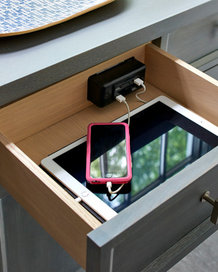
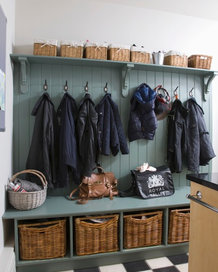
  • Cellphones, keys, glasses, wallets and laptops. Lacking a designated location to store these items can lead not only to clutter but to endless frustration. The solution is to simply designate a location so that you don’t have to search for these items every time you leave the house. A kitchen drawer with a charging station is ideal, but if you don’t have one, then simply corral these items in a small basket near an electrical outlet where you can easily grab them when you leave the house.
  • Purses, computer bags, backpacks, sports bags and outerwear. Closets and coat racks can fill up quickly with these bulky items, with extras ending up on the backs of chairs or draped over bannisters. Often, there are just too many of these items, so consider winnowing your collection. For example, if your child receives a new backpack each year, consider donating the old one. Sort through coats and donate any that no longer fit or you no longer use. Hang everyday bags and outerwear on a coat rack or in a closet near the front door. Store ski jackets and special-occasion purses in a different location.

  • Children’s art supplies, toys and homework. Children generate a large amount of clutter, with the most intense period of disarray beginning in babyhood and continuing through elementary school. Taming this mess can be challenging for even the most organized person — especially when it comes to toys that pile up as friends and family members offer gifts. If your child will agree, consider donating some toys to a charity to cut down on the mess.

As for the rest of children’s belongings, because young children like to be near their parents, you’d be wise to set up storage in or near the spaces where the family is most likely to spend time. Typically, this is the kitchen or great room.

4. You Own Too Many Items Used for the Same Purpose

I commonly help clients who have collected an overabundance of pens, pencils, reusable grocery bags, notepads, serving bowls and platters, kitchen tools, sunscreen, binders and coffee mugs. Fortunately, this is a relatively straightforward decluttering challenge. Simply reduce your collection of these items to an amount that will reasonably fit into your storage space and that you will realistically be able to use. Going forward, consider what you already own before buying. Be realistic about whether you have room to store a new item.

5. You Avoid Making Decisions About Your Things

Some people avoid deciding what to do with their clutter by placing items in a basement, garage or closet not visible from the main living spaces. This is a common tactic when quickly cleaning up before a party. However, this type of clutter weighs on people’s minds because they know it has to be dealt with sometime.

I often work with clients to sort through boxes and bags of stashed belongings that have been left in place for years. Usually the contents end up in the recycling bin or the landfill. If you know you have such boxes lurking, consider enlisting the help of a friend or a professional to help you sort through them and get them out of your life.

6. Your Health Gets in the Way 

A long-term health problem can sometimes result in household clutter as schedules are upset by medical appointments and free time becomes scarce. In these circumstances, a person may lack energy or mobility. Similarly, clutter can accumulate as we age and lose energy, balance or mental capacity for making decisions.

In such cases, it may be necessary to get outside help. A family member might need to attend to the clutter once a week. A professional organizer may need to create systems to more easily keep the home tidy.

On the other hand, extreme clutter or hoarding is usually caused by underlying issues that may require the help of a psychologist or other professional.

For most of us, clutter is simply a part of modern life. If you struggle with it, you’re certainly not alone. But take heart: With determination and a little help — whether moral support from friends or the guidance of a professional — you can overcome it and live a more organized life.

Jeanne Taylor, Houzz Contributor, is a home organizer in the San Francisco Bay Area.

1-20 of 112 Posts

Get in touch!

Do not fill in this field:

I agree to receive marketing and customer service calls and text messages from Melanson Real Estate. To opt out, you can reply 'stop' at any time or click the unsubscribe link in the emails. Consent is not a condition of purchase. Msg/data rates may apply. Msg frequency varies. Privacy Policy.

This site is protected by reCAPTCHA and the Google Privacy Policy and Terms of Service apply.