Blog :: 11-2021

Welcome to our blog! Here you will find information regarding market, local and Lakes Region information and events! Along with DIY projects and more! Come back often to see what's new and leave us a comment if there's something you'd like to see.

11 Steps to Winterize a House

  • By
  • Posted

Keep your house warm and damage-free all winter with these tips. Whether it's for your primary residence or a second home you're leaving vacant, here are tips for winterizing your house. mother lifting baby in living room

Getty Images

By Devon Thorsby

Extreme winter weather can leave neighborhoods and communities without power or other public services for long periods of time, the U.S. Department of Homeland Security warns.

With the risk of damage to your property or personal injury, it's a smart idea to prepare your home for such winter weather emergencies as well as cold weather throughout the season that can cause minor issues or even evolve into larger problems.

Whether it's for your primary residence or a second home you're leaving vacant, here are tips for winterizing your house:

Prepare Your Plumbing

Ensure your plumbing is set up to withstand the cold, and consider utilizing sensors to let you know when there's a problem. "Burst pipes have become one of the most common issues experienced by homeowners in the winter months, and can be very costly to repair due to the extent of water damage that can occur," wrote Steve Wilson, senior underwriting lead for insurance company Hippo, which is headquartered in Palo Alto, California, in an email.

In Northern states where freezing temperatures are expected during a portion of the year, housing codes require insulation and for pipes to be properly protected from the cold. Places that don't see regular frost, however, won't always have a basement for plumbing to stay warmer or effective insulation to keep heat from escaping. As a result, a day or week of freezing temperatures in parts of North Carolina, Georgia and even Texas can cause a lot of damage, says Anne Cope, chief engineer at the Insurance Institute for Business and Home Safety in Richburg, South Carolina. 

If your plumbing runs through a crawl space, consider insulating the pipes or the crawl space itself. "It can be a do-it-yourself project, or it can be a hire-a-handyman project," Cope says.

Wilson also stresses the importance of draining and disconnecting hoses on the exterior of your house to avoid freezing there. "You can purchase a cover for your exterior faucets inexpensively from your local hardware store," he says.

For additional protection, you can get water-leak and pipe-temperature sensors. The former will let you know if pressure inside the pipe suddenly decreases, indicating a burst pipe, while the latter will notify you of dangerously cold pipes so you can prevent a burst pipe.

Additionally, automatic water shutoff valves are becoming more popular in homes. They stop the flow of water should a pipe freeze and burst to reduce the amount of damage to the home.

If the house is vacant: If your home will be vacant for a long period of time, sensors and a remote water shutoff valve could help prevent damage in the house before you can get there.

Clean Out Gutters and Clear the Roof

Leaves, sticks and other bits of nature make their way onto your roof and into your gutters during the fall. Before the first heavy snowfall, be sure to clear debris from your roof and gutters to prevent a buildup of ice and snow, also known as an ice dam, that can get under shingles and cause leaks and water damage inside your house. 

Preventing ice dams and other issues on the exterior of your home should be periodically checked throughout winter as well, Wilson says.

If the house is vacant: Clear as much debris as you can before you close up the house for the winter, but you may need to have a local friend or contractor finish the job when you're away.

Insulate the Attic

Another way to reduce the chances of an ice dam forming is to insulate your attic floor. This helps keep the living areas of your house warmer, Cope explains.

Cope recommends going up
to your attic before the winter weather sets in to examine attic vents, check for leaks and get a look at the insulation. "If your insulation looks terrible, now is a great time of year to get that taken care of," she says.

If the house is vacant: Insulation will help you avoid hefty heating bills during the months that you're not staying in the house. Good insulation that leads to lower heating and cooling bills can also be a plus when you sell the house.

Have Your Heating System Serviced

Have your heating and ventilation system checked and cleaned before the weather gets too cold. If you wait until the first cold snap or snowstorm of the season, many service professionals will be overbooked.

Beyond keeping you warm, a functioning HVAC during the coldest days of the year is key to avoiding frozen pipes, which can burst inside your walls and cause significant damage.

If the house is vacant: Having your HVAC system serviced before you leave for the season is important so cold temperatures don't cause a bigger issue like a burst pipe.

You may be tempted to turn off utilities like gas, power and water if you plan to be away for months at a time. However, a home left to the elements can sustain a lot of damage that you may not see right away. If any water is left in the plumbing, for example, it can easily freeze and cause problems when you return to the home and turn on the utilities, so you would have to be sure all plumbing is thoroughly drained.

Adjust Your Thermostat

The cost of your heating and cooling bills often plays a part in the temperature you stick with during summer and winter – in summer, you may be willing to keep your house at 72 degrees or higher, while in winter you may lower the target temperature to 68 degrees. However, make sure the interior of your home doesn't get too cold as exterior temperatures drop – at the very minimum, the heat should kick on before it dips to 50 degrees Fahrenheit inside.

If the house is vacant: It's important to keep a vacant house at a temperature well above freezing; the standard is between 50 and 60 degrees Fahrenheit.

Call a Chimney Sweep

Whether you have a wood-burning or gas fireplace, make an appointment for your chimney to be inspected annually to see if cleaning or repairs are necessary, according to the Chimney Safety Institute of America. In wood-burning fireplaces, a professional will clean out creosote buildup, which comes from burning wood and can cause a fire hazard inside the chimney if it's not cleaned. In any fireplace, it's important to clear animal nests that might be blocking the chimney and to check for issues in the masonry.

If the house is vacant: Be sure to close the chimney flue as well as any hearth doors. That way you'll keep cold drafts from making your furnace work harder and prevent animals from entering through the chimney and getting into other parts of the house.

Check for Drafts

As the weather cools, walk around the house and check for drafts or air leakage, particularly around windows and doors. Use caulk to seal cracks and weatherstripping to help insulate around door and window frames.

If the house is vacant: Checking for drafts and leakage will help cut down on the work your furnace has to do by keeping cold air out.

Keep Rodents Out

The National Pest Management Association reports that rodents get into an estimated 21 
million U.S. homes each winter. Your work to seal holes and weatherstrip around doors and windows will also help eliminate points of entry for small animals or insects.

Move any upholstered furniture from your patio or garage into the house to keep them from becoming rodent nests. Firewood should be kept elevated and away from the exterior walls of your home.

If your house is vacant: Be sure you've removed all food from your pantry before vacating the place, so pests don't have something to feed on if they do get inside. If you have a friend or hired help checking on the property while you're gone, he or she should check for signs of pests inside your home during visits and contact an exterminator if any are found.

Have a Friend on Call

If you go away for vacation or on a business trip, it's good to have a friend, relative or neighbor on call for your temporarily vacant house. Especially if a winter storm occurs while you're gone, this person can make sure your power stays on and even shovel the sidewalk to prevent slipping hazards.

If the house is vacant: Your HVAC may be in perfect condition with everything insulated, but you still shouldn't leave the house unchecked for the entire winter.

"I wouldn't want someone to think that a property can sit vacant for months at a time without someone coming to check on it. You wouldn't do that with your car," Cope says.

If you have friends or relatives nearby who can check on the house every few weeks, ask them to do so. Otherwise, hire a local handyman to regularly check in and ensure the heat continues to work, the power stays on and no critters manage to break their way into the living space. Even if you have security cameras and sensors, line up someone who can come by on short notice.

Move Plants Elsewhere

If you have outdoor potted plants, fall is a good time to bring them inside if you want to keep them alive during the colder months.

If the house is vacant: Any houseplants you want to keep alive should come with your, unless you're planning to have someone visit the house often enough to water them.

Have Monitoring Devices Installed and Updated

Water-leak sensors and automatic water shutoff can help save your house from massive damage due to a burst pipe, but there are plenty of other tools to help monitor your home to keep it running right throughout the season.

"In the winter months, smart devices will serve as your best friend to ensure your home is adequately protected from intruders and that all systems are working properly while you're away," Wilson says. "Some of the most common smart home devices today can track movement, water leaks, smoke alarms and temperature shifts in and outside the home."

If the house is vacant: Make sure any devices you have installed will be able to continuously monitor for long periods of time. "Before leaving your property, ensure you've checked and changed the batteries in your devices, including smoke alarms," Wilson says.


Devon Thorsby is the Real Estate editor for U.S. News & World Report, and has worked for the company since 2015, reporting and editing on all manner of real estate topics, from homebuying and selling to home improvement, mortgages, tenant rights and the housing market. 

Updated on Nov. 30, 2021: This article has been updated with new information.

The New Normal of Selling a Home Today

  • By
  • Posted

If you’re selling your home right now—or thinking about doing it soon—you should know that today’s housing market is unlike anything we’ve seen or experienced lately, maybe ever.

Buying or selling your home sign

Getty Images

In the past, home sellers might have waited weeks or months to get an offer that might not be as high as they’d hoped. Buyers may have lowballed, or driven a hard bargain asking sellers to make certain repairs or other concessions before closing the deal.

Today, however, many of these realities are no more: In many areas of the country, homes are getting snapped up fast, sometimes within days of going on the market. Buyers mired in bidding wars are pushing their offers over asking price, and often waiving inspections and other demands to sweeten their offer.

In general, this is all good news for sellers—but it also means that it’s more important than ever to understand the market and play your cards carefully to fetch the best offer and terms for you. Here’s what sellers need to know about the real estate landscape today.

How the COVID-19 pandemic is affecting the housing market today

The COVID-19 pandemic has changed so much of our lives, and real estate is no exception.

“We’ve all been through a hopefully once-in-a-lifetime experience that dramatically changed the way we lived, worked, and went about our daily lives,” says Realtor.com Chief Economist Danielle Hale. “Even as we move forward and get back to living the way we used to, it’s likely that these experiences will stick with us and shape the way we make decisions for years into the future.”

For one, pandemic lockdowns made many people realize that their current living spaces just aren’t working for them anymore.

“One of the major motivations of homebuyers is the desire to have a larger, more functional home,” says Jason Gelios, a real estate agent with Community Choice Realty in Southeastern Michigan.

This is particularly true for people who started working remotely during the pandemic—who, after cramming their desks into dining rooms, “cloffices,” and other corners, are ready to upgrade to a bigger house so they can work at home with more privacy and comfort.

“This allows for people who are permanently remote-working to be more productive in their home,” explains Gelios.

And since remote workers may no longer need to commute to the office often or at all, many are now house hunting in areas that they hadn’t previously considered.

“With remote work flexibility becoming the new normal, buyers sought out areas like South Florida where they could enjoy the outdoors, extra space, and the tax benefits that come with living here,” says Chad Carroll with The Carroll Group at Compass, in South Florida.

Home inventory is low

Although buyers are out in droves, there are many fewer homes on the market than usual—which is creating a highly competitive market for buyers nationwide.

“Sellers are benefiting from the historically low inventory levels and record demand,” Carroll says. “This combination has fueled bidding wars and led to properties going under contract at an insane velocity.”

These low-inventory conditions may improve somewhat over the next year. But Hale warns, “the market is so out of balance that even with improvement, the number of homes for sale will remain low.”

Home prices are high

With fewer homes and high demand for them, many sellers are seeing multiple offers that, in turn, are driving up prices.

“The ongoing increase in housing prices makes it a great time for a home seller to cash out on their homes now,” says Beatrice de Jong, consumer trends expert at online real estate transaction company Opendoor.

Often, buyers are making offers above the listing price.

“Faced with few homes available for sale, buyers intent on owning are pulling out all the stops,” says Hale.

However, this highly beneficial market for sellers comes with a big caveat if selling means you’ll need to buy a new home yourself.

“Sellers searching for their next home will face the same fierce competition,” warns de Jong.

What’s more, home prices are seeing some early signs of leveling off—or at least not be rising at the breakneck pace of the past. So if you want to sell at the top of the market, it may pay to list sooner rather than later.

Interest rates are at record lows

Even though home prices are high, mortgage interest rates have hit record lows. And since even a 1% lower interest rate could lower monthly mortgage payments by up to 20%, it make homes more affordable for buyers, which is driving them into this competitive market.

“While the cost of a home is on the higher side, the cost to obtain the financing is much lower and oftentimes offsets the higher price, spurring a huge demand for buyers to go out and shop for homes,” Gelios says.

It’s a seller’s market

“There are many ways to define a seller’s market,” says Hale. “But a few key hallmarks are limited availability of homes for sale, fast-selling homes, rising home prices, and competitive buyer offers such as offers over asking price, waiving contingencies, and flexible closing terms.”

All that said, most buyers are looking for a new home because it’s the right time for them—not because of market conditions.

“They’re getting married, moving in with a partner, expanding their family or planning to do so,” Hale explains.

And the same wisdom applies to deciding whether to sell your house: Even though market conditions are in your favor, you should make sure it’s the right time to sell your house for you. Weigh your own personal circumstances, including any current or upcoming life changes such as a new job, retirement, the arrival or departure of family members within the home, and more.


Courtesy 


7 Credit-Building Myths First-Time Homebuyers May Hear (and Believe) Today

  • By
  • Posted

People love to dole out unsolicited advice. Some of it is actually useful. Other tips you hear, though, may do more harm than good—particularly when it comes to your credit score.

Young girl on cell phone examining her credit score

(Getty Images)

By Erica Sweeney | Nov 16, 2021

Establishing credit and maintaining a good credit score (also known as a FICO score) is essential if you hope to get a mortgage to buy a home someday.

“Good credit proves to lenders that you’re a reliable and trustworthy person who will pay back the money you owe,” says Ace Watanasuparp, national director of strategic sales at Citizens Home Mortgage.

Having good credit helps you not only get a mortgage, but one with a low interest rate, which will lower your monthly payments and the overall amount you pay for the home. And even if your credit score isn’t stellar right now, Watanasuparp says it’s never too late to start repairing it.

Yet this is where bad advice from uninformed yet well-meaning friends and family could lead you astray. Want some guidance separating fact from fiction? Here’s a look at some of the worst credit-building advice floating around out there that actually isn’t true.

1. To build credit, you’ve got to use credit—lots of it!

Many may insist that the only way to establish good credit is to use it—liberally. While it’s true that utilizing some level of credit is important, more is definitely not better.

“Carrying a high balance on your credit card has the potential to hurt your score,” says Stephen Rosen, head of sales at the mortgage company Better. “And on top of that, you will end up paying more each month, due to interest.”

Credit utilization, or the amount of credit you’re using, makes up 30% of your FICO score. The higher your credit card balance, the higher your utilization rate, which hurts your credit score. So pay as much as you can on your credit card bill each month.

That said, keeping a modest credit card balance can help, Watanasuparp says. A good rule is to use only 30% to 40% of your maximum credit line. So, for a credit card with a $10,000 limit, keep the balance to no more than $3,000 or $4,000.

2. Close your credit cards once you pay them off

Closing a credit card once you’ve paid it off may seem like a logical thing to do—that way, no more debt! Yet in reality, closing cards is a bad idea.

“Closing recently paid off accounts can shorten your credit history, especially if it’s one of your oldest accounts to date,” Rosen says.

Credit history, or how long you’ve had credit accounts, makes up about 15% of your credit score.

Instead of closing the cards, Watanasuparp suggests keeping them open and using them from time to time—and always paying off the balance whenever possible.

3. The occasional late or missed payment is no big deal

Late or missing bill payments happen to just about everyone, and therefore may seem like NBD. On the contrary! Paying your bills on time has a huge effect on your credit, accounting for 35% of your FICO score.

It doesn’t matter how much credit you have, as long as you can manage it, meaning you have enough money to pay your bills and that you’re paying them on time, Watanasuparp says.

“It becomes a problem when you are not able to responsibly manage these lines of credit, and you start falling behind on payments, and you no longer have the funds to back your credit,” he says.

Consistently paying late or not at all suggests that you might not be able to make your mortgage payments either, so it could be tough to get a home loan. Setting up automatic payments or calendar reminders will help you avoid missing payments.

4. You can boost your credit score by adding your spouse to your accounts

If your spouse has excellent credit—but yours is subpar—you may have heard that adding your upstanding partner to your own credit accounts will help raise your own score. Sorry, but it’s not that simple.

Credit scores are unique to each individual, Rosen says, so merging accounts won’t boost your credit. However, there isone way a high-scoring partner does work in your favor.

“When it comes to applying for new credit with your partner, such as filling out a joint application for a mortgage, each partner’s credit score is taken into consideration by the lenders,” he says.

Lenders will often average out a couple’s scores to determine your overall creditworthiness as a team. So in this sense, your partner could help you get a loan with good terms.

Once you’ve got a loan together—and if it gets paid on time—this will start reflecting positively on both your credit reports. This takes time, however, so don’t expect any miracles overnight.

5. You should constantly check your credit report

These days, sites like CreditKarma.com make it easy (and free) to check your credit score and report on a daily basis. But that doesn’t mean you should.

Watanasuparp says you only need to check your credit score and report once a year—or every three to six months before getting a mortgage—to make sure there are no errors or late payments that you’re not aware of.

6. Getting a credit report will lower your score

The good news is that checking your credit yourself through an official report from one of the primary reporting agencies is a soft inquiry, which won’t affect your credit score.

However, loan applications for new credit cards or mortgages are considered hard inquiries, and will show up and stay on the report for up to two years, briefly lowering your score.

“My advice is to avoid loan applications for at least six months before you apply for a mortgage. This will ensure your best possible credit score is on file,” Rosen says.

Then, you can shop around with multiple lenders to find the one offering the best rate.

7. You need to hire a credit repair agency to clean up your credit

Credit repair agencies promise to repair your credit for a fee, by checking your credit report for errors and disputing them for you. However, it’s usually unnecessary.

You can dispute information on your credit report yourself for free, using AnnualCreditReport.com, a federally authorized site.

Furthermore, no one can remove accurate information, such as a history of late payments, from the report, Rosen says.

“There’s nothing that a credit repair company can do for you that you can’t do yourself,” he says. “The only legitimate way to enhance your credit score is to practice good credit management.”


Erica Sweeney is a writer whose work has appeared in the New York Times, Parade, HuffPost, Business Insider, Money, and other publications.

7 ‘Design Therapy' Hacks to Improve Your Office

  • By
  • Posted

A well-designed work area can improve your mental and physical health. Here’s how to create your best office space.

well-designed work area can improve your mental and physical health

by Melissa Dittmann Tracey

Could an inviting workspace make you feel better and work smarter? Jessica Shaw, interior design director of Turett Collaborative, believes it can. She offers steps to practice “design therapy” for your office space, factoring in colors, layout, lighting, and more.

Shaw draws from “neuro-architecture,” which explores how art, color, lighting, and design in your office space can affect a person’s mood, productivity, and health.

She offers the following tips for creating an office that boosts mental and physical health, whether it’s your work-from-home area or in-person workplace.

1. Use color smartly.

Color can potentially affect a person’s mood, emotions, concentration, and even physical health, according to a body of science called color psychology. Draw from some of these insights to outfit your workspace.

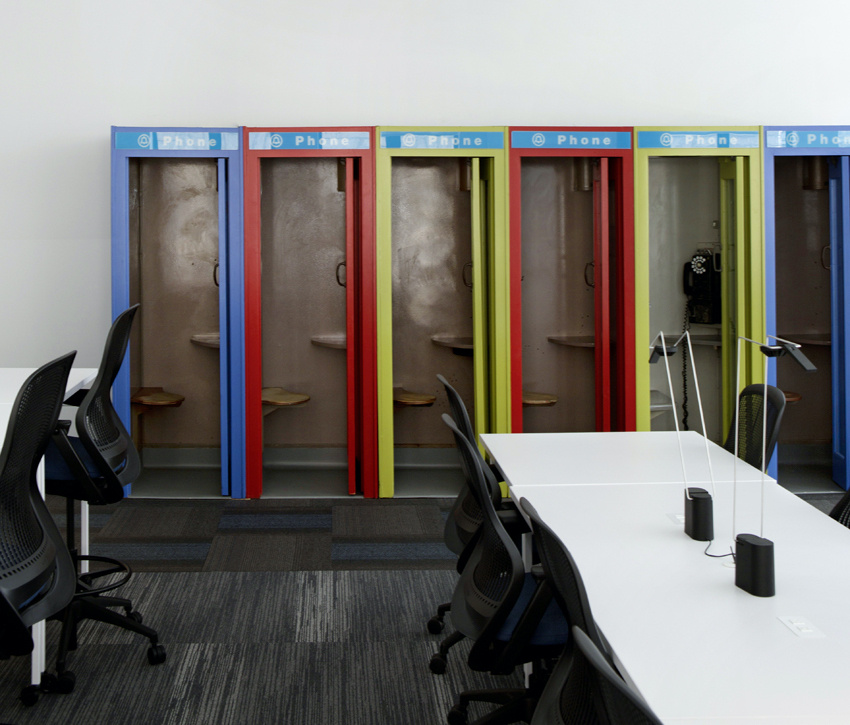
  • When to use brighter hues: For example, bold, bright colors like yellow have been linked to boosting positive thoughts and sparking creativity. Red can stimulate and energize. For detail-oriented work, you may benefit by adding red accessories to keep you focused, Shaw says.

bright colors boost positive thoughts and sparking creativity

©Turett Collaborative

  • When to use softer colors: Lighter shades of blue and green can bring a sense of calmness to a space. These colors tend to work best in lounge spaces and break areas, Shaw says.

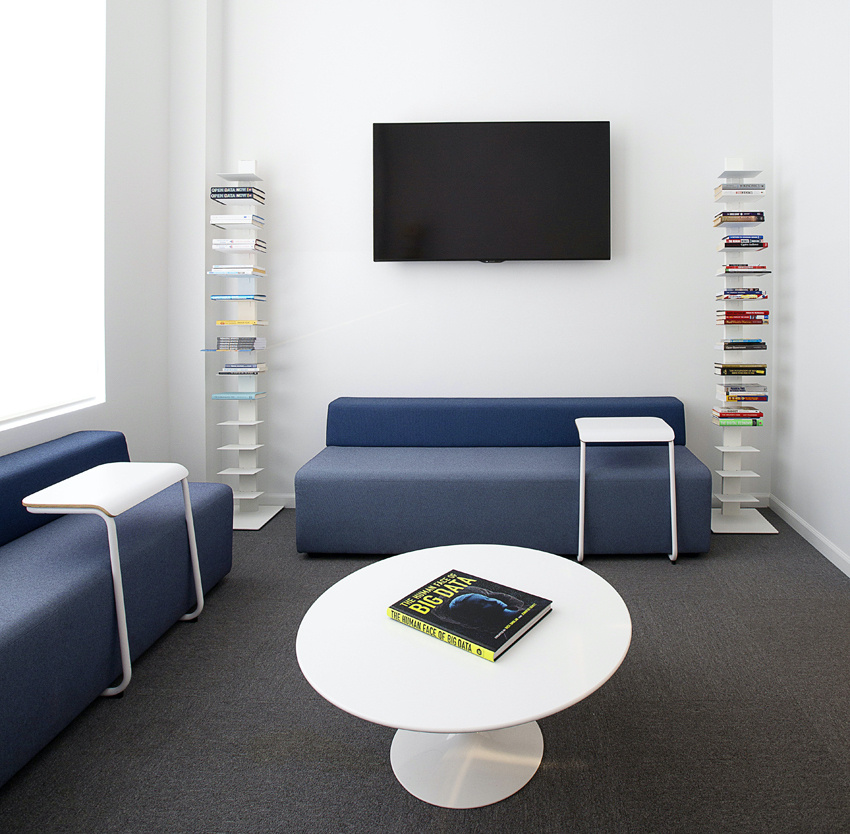
  • When to use white: Use white sparingly in furnishings and accent pieces. Too much white can make a space feel cold and uninviting. Use white more as an accent color or within a more monochromatic color scheme, Shaw recommends. She suggests reserving white for more serious spaces in a workplace, such as conference or meeting rooms.

using white as an accent color or within a more monochromatic color scheme

©Turett Collaborative

A balanced composition of white and color brings visual harmony to the Turett Collaborative’s Civic Hall lounge area.

Use the color wheel for inspiration for the color of your workspace, Shaw suggests.

  • Choose analogous colors: Groups of three colors beside one another on the color wheel (e.g. blue, blue-green, and green)—to create harmony in your office.

  • Reserve complimentary colors: Opposite hues on the color wheel—for a bolder look (e.g. yellow and purple or orange and blue).

  • Consider triadic colors: Three colors equally spaced on the color wheel—for a more energetic, personality-filled space (e.g. red, blue, and yellow). 

  • Use color with intention: Pops of red energize this office space.

balanced composition of white and color brings visual harmony

©Turett Collaborative

Also, Shaw recommends strategically using different hues, tints, tones, and shades to draw attention to certain objects within the workspace.

using different hues, tints, tones, and shades to draw attention to certain objects within the workspace

©Turett Collaborative

An energizing palette of triadic colors adds an element of contrast to the Turett Collaborative Civic Hall dining area.

2. Don’t play it too safe.

You want your workspace to have a sense of harmony, but you also don’t want it to bore you, your agents, or staff. When using interior elements that are too similar, your space can appear dull. But you want a workspace that will visually stimulate. To do that, bring together pieces that juxtapose one another in color, form, or aesthetic to liven up the workspace, Shaw says.

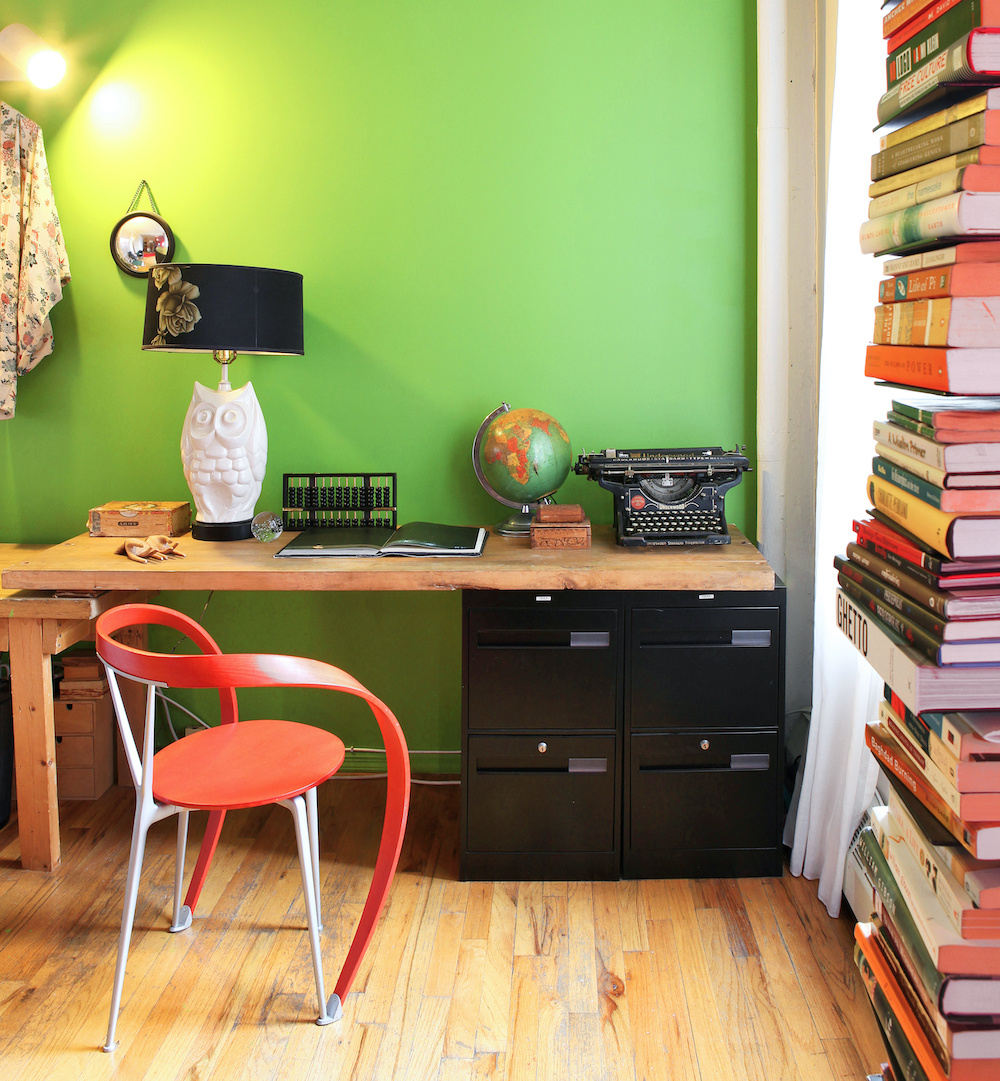
“To break up the rigidity of a grid-based layout often seen in traditional offices, try incorporating organic, soft shapes to add a layer of dimension, dynamism, and visual complexity,” Shaw says. “Balancing masculine and feminine pieces is a great example of creating tension to achieve a cohesive, yet elevated look.”

incorporating organic, soft shapes to add a layer of dimension, dynamism, and visual complexity

©Turett Collaborative

Interior designer Jessica Shaw creates a bold, yet balanced atmosphere with the use of complementary reds and greens in her personal home office.

3. Go abstract with your art.

Abstract artwork could make you feel more creative and spur more innovation in the workplace. “Art is an incredibly influential aspect in impacting moods and the feel of an environment,” Shaw says. “In a sense, it can be a reflection and extension of your company or individual brand.”

Abstract artwork make you feel more creative and spur more innovation in the workplace

©Turett Collaborative

The colorful artwork on the wall of Turett Collaborative’s Civic Hall aim to project visual complexity and stimulation. Large abstract prints can command attention and make a statement.

A gradient tile art piece of geometric patterns composed of sage greens and blues adds texture to the space

©Turett Collaborative

A gradient tile art piece of geometric patterns composed of sage greens and blues adds texture to the space.

4. Maximize the light.

Factor in sunlight when determining the optimal layout for the office. Brighter work environments with natural lighting can help make workers feel more productive, according to a 2018 study conducted by Cornell University Professor Alan Hedge. Natural light also can help reduce eyestrain, drowsiness, and headaches, and even elevate a person’s mood.

Try to locate desks near windows to gain the benefits of natural light, Shaw says.

locate desks near windows to gain the benefits of natural light

©Turett Collaborative

5. Section off with the flooring.

The flooring can greatly enhance the overall look of a room. “Carpeting provides a softer feel to a space while hardwood floors create a strong, polished look,” Shaw says.

In the workplace particularly, different flooring can help section off spaces in the absence of walls. Use a variety of flooring as an alternative to physical dividers like cubicles. It can keep the space feeling more open, too.

“Lines also encourage movement; our eyes are trained to follow lines in the direction they flow,” Shaw says. “For instance, vertical lines promote movement and mobility, whereas horizontal lines create a grounded, secure feeling.”

Try vertical running wood or carpeting along hallways to bring about movement and then use horizontal lines in spaces for relaxation and lounging, Shaw recommends.

vertical running wood or carpeting along hallways to bring about movement and then use horizontal lines in spaces for relaxation and lounging

©Turett Collaborative

Opposing carpet patterns can liven up a monochromatic scheme for a hallway while also creating the perception of two work zones.

6. Minimize visual and noise distractions.

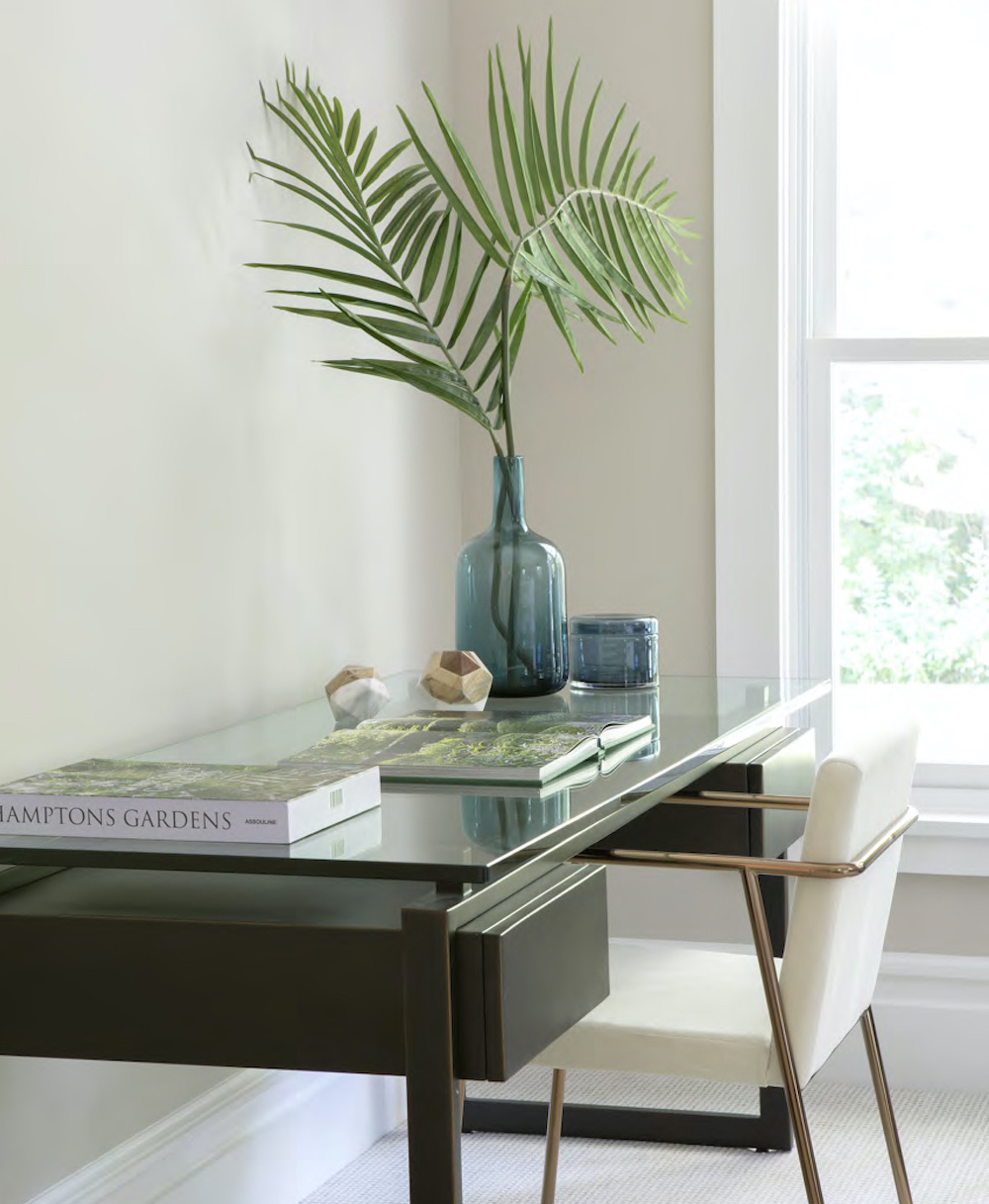
The more objects and items on display on a desk, the more visual and informational processing a person has to do. That can make it difficult to concentrate on work.

Visual clutter hampers organization and productivity. Noisy offices also can be a detriment to your mental health. This also applies to those who work from home, who may face noisy pets or neighborhood construction.

Consider furniture and design elements that can absorb sounds, such as carpeting, acoustic wall paneling, or drapery.

©Turett Collaborative

Pullout drawers allow for discrete organization, keeping the office of this apartment clean and uncluttered. Carpeting provides sound absorption.

7. Follow the principles of proxemics.

Let the law of proxemics be your guide to designing your office space. It states that various distances can serve different forms of interaction.

For example, a distance of 1.5 feet to 4 feet best facilitates friendly, casual conversation, while distances less than 1.5 feet promote a stronger connection between individuals.

“It is important to design a work environment that allows for these varying degrees of physical separation to help promote both individual work and collaborative efforts,” Shaw says. “Alleviating stress and fostering a safe environment contribute to employees’ overall well-being and comfort.”

This may be even more important as more people prepare to return to the workspace after working from home during the pandemic. Open hallways and additional spacing between workstations reduce visual congestion and naturally create social distancing and separation for employees who prefer that, Shaw says.

Turett Collaborative’s Civic Hall design layout includes both up-close and distanced working arrangements to suit the needs and comfort levels of all workers.

©Turett Collaborative


Melissa Dittmann Tracey is a contributing editor for REALTOR® Magazine. 

Why Does Dust Accumulate So Quickly After You Clean?

  • By
  • Posted

No, you're not seeing things—dust really does seem to build up faster on recently wiped-down surfaces. Here's how to slow the course.

woman dusting furniture

CREDIT: VADIMGUZHVA / GETTY IMAGES

By Lauren Wellbank

If you examine your freshly dusted furniture, electronics, and knick-knacks a day after you clean, you might notice some residual debris. You didn't miss a spot: According to Vera Peterson, the president of Molly Maid, dust moves that fast. "On freshly clean, beautiful surfaces, you're more likely to notice dust when it accumulates," she notes. "However, if your dusting method isn't efficient, you might be stirring up more dust than you are trapping." Ahead, her best tips for removing this household nuisance—and keeping it at bay for longer.

To prevent more dust, change your cleaning method and use the right tools. 

The most efficient way to dust is with a top-down approach, notes Peterson. "When dusting, work from top to bottom—dust first, then vacuum, " she says, to prevent having to vacuum twice (before and after you dust). And while feather dusters were once a popular tool to sweep a variety of surfaces, a microfiber cloth is best: "This will gather the dust, instead of just pushing it around," she explains. Working with a cloth will also cut down on the amount of particulate you kick up and into your home—which tends to land on your freshly cleaned tables and appliances, leading to faster accumulation.

Identify any dust-enhancing culprits. 

If you have noticed that your home seems dustier than it should, there may be a surprise culprit: your HVAC filter. "An electrostatic-charged furnace filter attracts and captures dust particles which reduces the amount of dust floating in your home," Peterson explains. "Also, be sure you're dusting and vacuuming often (that's a given!) and regularly grooming your pets."

Dust often. 

Maintaining a dust-free space is so much easier than doing a deep clean after waiting too long. "If you really want to keep your home dust-free, dust at least twice per week, especially if you suffer from allergies," says Witulski. "That's not always feasible for everyone, so at least hit the areas you touch most (like furniture, remotes, and household technologies) once a week. Then, you can focus on those often-overlooked areas (think your ceilings, blinds, and doorways) less frequently. Aim to reach those about once a month!" 

Turn to microfiber. 

Forget that old school feather duster—it only pushes dust around. A simple microfiber cloth and water will get the job done and won't introduce any unnecessary chemicals into your home. Thanks to the cloth's unique structure, fibers are able to grab onto dust, trapping it instead of swirling it around your surfaces. For light dust, you can use a dry cloth; if it's stubborn, a damp rag will work better, especially on glass.

Dust from top to bottom. 

"Always dust your room from top to bottom," adds Witulski. "This seems obvious, but many people forget this step which ultimately duplicates your work (or leaves your home dusty)." First, hit the ceiling, corners, molding, and light fixtures. Can't reach those high-up areas? Wrap a flat-top mop with your microfiber cloth "to get into those high crevices," she explains.

As you work your way down the walls, wipe down any décor or frames before moving on to lampshades, furniture, and objects (be sure to move furniture and objects around so you're getting to untouched areas, such as the space under your television or couch). Don't forget to dust past the edge of a surface as well, if the cloth stops on the edge it will leave a line of dust. Finally, it's time to vacuum. At this point, most of the dust has either been picked up by your microfiber towel or fallen to the floor, which is why you should vacuum last. Take your time, and make sure to move your machine in more than one direction to pick up all of the dust and dirt.

Focus on prevention. 

Want to dust less? Don't let it into the house in the first place. "Most dust is brought into your home through the front the door. Place a wipe-off mat at the entrance of your home to trap the dust before it spreads. These mats should be cleaned or shaken out once a week," says Witulski. "Besides dusting regularly, remove your shoes when you enter your home and change your vacuum bag and filter regularly. But do this outside, so you don't spread more dust!"

Call in the pros if you need to. 

While most homeowners are able (and willing) to stay on top of the maintenance that lowers the amount of dust and debris that accumulates on your furniture, electronics, and knick-knacks, nothing will beat the clean a true professional can provide, says our expert. They can target high-touch areas (which tend to be the dirtiest) and provide you with a fresh canvas. After all, keeping your home tidy and dust-free is a lot easier when you're simply touching up hot spots, as opposed to tackling deep cleans.


Lauren is a freelance writer for MarthaStewart.com.

As Boomers Downsize, Competition Grows for Simpler-but Not Always Smaller-Homes

  • By
  • Posted

Older buyers seeking smaller or easier-to-maintain homes are crashing into younger buyers in a housing market where the competition is fierce.

Red, white and green shutter houses

(Getty Images / Realtor.com)

By Julia Carpenter | Nov 1, 2021

Soaring home prices and new construction favoring bigger builds have interrupted traditional patterns of homeownership for buyers across the country. Smaller houses, desired by aging seniors and young couples alike, are among the toughest to find. The supply of homes up to 1,400 square feet is near a five-decade low, according to data from Freddie Mac.

In 2020, about 28% of real-estate transactions could be characterized as downsizing, said Lawrence Yun, chief economist at the National Association of Realtors. The majority of these transactions are made by buyers 55 or older.

“We have a housing shortage,” Mr. Yun said. “Clearly from the age patterns, young people want to upsize, and the older generation is looking to downsize, but not greatly—only 100 or 200 square feet smaller than where they’d been living.”

The typical housing cycle for many families—kids go off to school, household sizes shrink, empty-nesters hand off their family homes to new households raising their own children—has been disrupted in recent years, said Len Kiefer, deputy chief economist at the mortgage giant Freddie Mac. The large baby boomer population outnumbers the rising Gen X-ers, who would be the ones to traditionally take over the family homes.

Many boomers want to “age in place,” meaning living in their original home independently into their later years. A 2018 survey of 2,287 adults from the AARP shows seniors would prefer to stay in the communities where they already live.

“They like their grocery store, they like their doctor, they like their local options,” said Karan Kaul, senior research associate at the Urban Institute.

Once they decide to move to a smaller home, they end up competing with first-time buyers and limited supply, Mr. Kiefer said. Price growth has been strongest for smaller, less-expensive homes. “That works against you in terms of what you can get for your buck,” Mr. Kiefer said.

If they haven’t paid off their mortgage, older buyers might find they could sell their current home at a high price but then pay more in mortgage payments on a smaller place. The share of older homeowners with debt has steadily increased over the past decade, rising to 55.4% in 2019 from 33.2% in 2007. This rise is driven in large part by mortgage debt, according to data from the Urban Institute.

After retiring from working at the New York Department of Education for 33 years, Enid Maldonado-Salgado started to make a plan to move from her current home in Flushing, in New York City’s Queens borough, to further east on Long Island, where she and her husband can be closer to family.

The 60-year-old worked with a Realtor for a year before retirement. Ms. Maldonado-Salgado said her goal was to find a home valued at 80% of her current home’s worth. She found the house-hunting process difficult, even with the money she had saved from refinancing her existing home and the substantial profit she expects from selling it.

For Ms. Maldonado-Salgado, downsizing meant finding an affordable home that wouldn’t require too much maintenance or upkeep. She wanted the freedom to travel and to be closer to her grandchildren.

Ms. Maldonado-Salgado is now in the process of closing on a new house in Smithtown. The new house is nearly equal in square footage to her house in Queens.

“It wasn’t about finding something smaller, it was about finding something that benefited my budget,” she said. “We wanted to make things simpler for ourselves.”


Courtesy: 

Will Rising Mortgage Rates Make Homebuying More Expensive-or Less?

  • By
  • Posted

It could become a lot more challenging to buy a home in the coming months—or it may have just gotten a whole lot easier.

(Getty / Realtor.com)

By Sharon Lurye for Realtor.com | Nov 3, 2021

After hitting historic lows, mortgage interest rates are creeping up. The U.S. Federal Reserve’s announcement on Wednesday that it will taper its purchases of bonds and mortgage-backed securities is expected to keep pushing mortgage rates higher.

Those higher rates could indeed make homebuying more expensive for many as their monthly mortgage payments get bigger. But in this paradigm-breaking market, higher rates could also prove to be a boon for buyers in some markets by keeping prices in check and lessening competition. That could make homebuying less expensive if buyers aren’t spending as much on their homes and engaging in crazy bidding wars—possibly a welcome lifeline for many first-time buyers who’ve been barred from homeownership by record-high prices.

Confused? Well, today’s COVID-19-fueled housing market is like nothing the U.S. has seen before. There is a dire housing shortage, builders haven’t been able to ramp up, and a massive generation of millennials is champing at the bit to become homeowners. And so depending on a variety of factors, these rising rates could be either a blessing or a curse for prospective homebuyers.

How can you tell which side of the equation you’ll wind up on?

Higher mortgage rates could hurt buyers struggling with high home prices

For some, higher interest rates are a double whammy of bad news. Home prices in most competitive housing markets will still remain high. And after buyers purchase homes, they will be paying more in interest. So buying a home will be more expensive all around.

“It’s going to be less affordable a year from now than where we are today,” warns Leonard Kiefer. He is the deputy chief economist at Freddie Mac, the government-backed organization that helps support the U.S. housing market.

His team forecasts that mortgage rates will reach 3.2% by the end of the year, and go up to 3.7% by the end of 2022 for 30-year fixed-rate loans. At the same time, housing prices will go up 7% in 2022, according to Freddie Mac’s price index—although that’s still better than the explosive 16.9% growth of 2021.

Low rates, which bottomed out at just 2.65% in the first week of January for 30-year fixed-rate loans, helped to fuel the explosion in home prices in the early days of the coronavirus pandemic. Homes could cost more, while monthly mortgage payments stay the same as they were a few years ago when rates were higher.

For example, the monthly mortgage payment on a median-priced home of $380,000 with a 2.65% mortgage rate would be $1,225 a month on a 30-year loan. That payment goes up about $80 a month with a 3.14% rate. Over 30 years, that can equal nearly $29,000. (This is for buyers who have a 20% down payment. It does not include property taxes, home insurance, or homeowners association fees.)

Rates averaged 3.14% in the week ending Oct. 28, according to Freddie Mac data.

But, historically speaking, rates even in the 3% range are still very low. It’s less than the current rate of inflation (5.4% in September, according to the Consumer Price Index). This means that banks aren’t even charging enough in interest to make up for the value that money loses over time due to inflation. With such low rates, there will still be plenty of buyers who want to jump in on a mortgage.

Plus, the majority of millennials are now in their 30s, the prime age to buy a first home. And they are the largest demographic group in the country. But instead of more housing going up to accommodate them, the number of available homes has shrunk with construction declining and investors turning single-family homes into rentals.

That will keep competition high as will the dearth of homes for sale.

“We are living in an unprecedented housing market,” says Jodi Hall, president of Nationwide Mortgage Bankers, a lender. “Housing prices will continue to rise because of the shortage of housing, specifically homes for first-time homebuyers.”

Higher mortgage rates could keep rising home prices in check

Other experts take a sunnier view. They argue that higher mortgage rates will finally cool down some of the cutthroat competition over housing and—eventually—help push down sale prices.

“Prospective homebuyers should actually be praying for rates to start creeping up,” says Katie Gatti, a personal finance consultant and founder of the Money with Katie blog.

The big picture suggests price increases will at least have to slow down. Median incomes have barely grown since 2000—while housing prices have skyrocketed. That means “price growth will almost certainly have to slow,” says Gatti. There just aren’t enough people who can afford current prices.

“As the prices get higher, that potential buyer pool shrinks,” says Gatti. “Simply put, our economy—and the average income— can’t support the cost of a home in most cities.”

Ultimately, homebuyers may still be out of luck if they want to see home prices actually go down.

“With how hot the market is, the rising rates will only slightly affect housing prices,” says Khari Washington, owner of 1st United Realty and Mortgage in Riverside, CA.

Price growth may slow down, meaning prices are still increasing, but at a more gradual, manageable pace. Offers over asking could also decrease, which would help buyers’ bottom lines.

Why mortgage rates matter to homebuyers

Mortgage rates aren’t just an esoteric statistic about the real estate industry. For most Americans, they determine how much it costs to own a home. Rates have been falling in the U.S. since the1980s. But when the pandemic hit, they became almost absurdly low thanks, in part, to the Federal Reserve’s purchases of mortgage-backed securities.

When lenders make mortgages, they typically bundle up the loans into these securities, otherwise known as mortgage bonds, and sell them on the secondary market to investors. This frees up money to make new loans.

When the pandemic struck the nation in March 2020, the Fed announced it would buy bonds to help stabilize the economy and the housing market. That led to a surge in demand, which pushed mortgage interest rates down to record lows. When the bond market is strong, mortgage rates fall.

As a result of these early pandemic moves, the average interest rate for a 30-year fixed-rate mortgage fell below 3% for the first time in July 2020.

Now that the economy has rebounded and unemployment has dropped, the Fed is diminishing its bond purchases. This weakening bond market should lead to rising mortgage rates.

Mortgage rates aren’t the only big factor driving the housing market. The main problem is a lack of homes for sale. Historically low rates encouraged more people to go out and buy a house. But the number of homes for sale, already well below what was needed, dried up even further. And the residential construction industry hasn’t caught up.

Freddie Mac estimates the U.S. needs 3.8 million more homes to fix this shortage. While an average of 418,000 new starter homes a year went up in the 1970s, that number plummeted to just 65,000 in 2020.

“Is there going to be relief? Probably not for some time,” says Freddie Mac’s Kiefer. “Fundamentally, the issue for the housing market is lack of supply. We just haven’t built a lot.”


Sharon Lurye is a freelance journalist based in New Orleans. She graduated from Columbia Journalism School in 2018.


5 Easy Decor Hacks That'll Brighten Your Home-and Your Mood-This Winter

  • By
  • Posted

If you struggle with seasonal depression, these simple indoor winter decorating ideas can lighten your home and mood.


By Katie Holdefehr | Updated October 13, 2021

As the days get shorter and our homes get darker, it's easy for the dim light and cold weather to put a damper on our moods. If you're determined to beat the fall and winter blues this year, there are some scientifically-backed methods to try, and you can also adjust your home decor to make your space a cheery oasis. 

While there are only so many days you can spend snuggled up on the sofa before you start wishing for springtime, these easy decor tricks will make your home a lighter, brighter, and cozier retreat this winter. According to designer Nicole Gibbons, all it takes is a fresh coat of paint, some carefully chosen window treatments, and a few live plants. Even a simple swap like changing the light bulbs in a room can make your space feel cheerier. Here are five designer-approved ways to design a home that will help you fight the fall and winter blues.

1 Brush on a Bright, Warm Paint Color

Consider the paint color on the walls in the spaces you tend to hang out the most in the winter, like the living room or kitchen. Before winter really hits, think about painting the room a neutral color with warm undertones, like Timeless from Clare. "It will bring a clean, bright feeling to your space and the cozy, almost ivory winter white look adds a soft and relaxed warmth to your home," Gibbons says. If you and your family hang out all winter in the kitchen, this creamy white will make the room feel less sterile and more inviting.

And if you're craving a little more color? "I also love vibrant hues that brighten and uplift a space during a cold, dreary winter and also look great year-round. A bright, airy color like Headspace will reflect light and help open up a room," Gibbons explains.

2 Introduce Live Plants

Even if the trees outside your window are bare, you can still bring leafy greenery into your home this winter. Plants not only add color and life to a room, but Gibbons points out that studies have shown that the presence of nature may lower blood pressure and reduce anxiety. Our advice: start out with some easy-to-care-for house plants so you can get the full stress-busting benefits—without worrying about keeping your new plant babies alive.

3 Switch Out the Light Bulbs

Less hours of sunlight and cloudier skies are a big factor contributing to the fall and winter blues. To make the inside of your home feel bright and sunny, Gibbons suggests switching to LED light bulbs, which emit the most light while using the least amount of energy (bonus: you'll also save money on your utility bill). Look for LED bulbs in soft white, which will brighten the room, without making it look too stark.

4 Let the Light In

Since there's less natural light streaming in the windows in the winter, make sure your decor maximizes what little sunlight there is. Gibbon's recommendation: Opt for sheer curtains that won't block the light, as well as stylish pullbacks. When installing a curtain rod or brackets, make sure to set them slightly outside the window frame, so that when the curtains are pulled open, they won't block the sides of the window.

Check: is there anything blocking the windows, like plants, furniture, or lamps? Relocate these items to let more light in.

5 Add Bursts of Color

When it comes to winter decor, we naturally think of darker, moodier hues. But Gibbons recommends trying something new this year. "Bring in fun pops of color in your throws and pillows to help brighten your space even more," she says. Warm red throw pillows or dish towels will add energy to the space—and a sense of playfulness will make you smile more than decor that takes itself a little too seriously. Buy inexpensive throw pillow covers you can swap out whenever you're craving a change of scenery.


Katie Holdefehr is a senior editor at RealSimple.com, where she writes about everything from decor ideas to dryer balls. 

Get in touch!

Do not fill in this field:

I agree to receive marketing and customer service calls and text messages from Melanson Real Estate. To opt out, you can reply 'stop' at any time or click the unsubscribe link in the emails. Consent is not a condition of purchase. Msg/data rates may apply. Msg frequency varies. Privacy Policy.

This site is protected by reCAPTCHA and the Google Privacy Policy and Terms of Service apply.