Blog :: 2022

Welcome to our blog! Here you will find information regarding market, local and Lakes Region information and events! Along with DIY projects and more! Come back often to see what's new and leave us a comment if there's something you'd like to see.

How Homeowners Can Make the Most of Their Yards-Even in Winter

  • By
  • Posted

After almost two years of pandemic life, homeowners understand the significant value of having a yard. Here are 8 ideas for getting creative with outdoor space.

©Trevor Tinker - Getty Images

by Barbara Ballinger

Spending time outdoors at the height of the pandemic was a way to get fresh air, exercise safely, and expand living quarters. Now, nearing two years later, an outdoor retreat has become even more sought after, causing homeowners and design professionals to get creative in maximizing square footage.

Whether homeowners have a big suburban yard, rural acreage, or a small urban balcony, there are multiple ways to take advantage of the space, even in winter. They can pile on layers or follow the Swedish mantra of Friluftsliv, which translates to “open-air living and the value of spending time in remote locations for spiritual and physical well-being.”

The key isn’t the size of their space, or which activities homeowners do, but taking advantage of Mother Nature’s gifts—air, sky, clouds, sun, and greenery.

Millennials and other new homeowners have become particularly adept at using their yards for almost everything—from camping out with a tent and fire pit to organizing a staycation, or setting up an alternative office when they need a break from their indoor space, says Kris Kiser, president and CEO of TurfMutt Foundation, the education arm of the Alexandria, Va.-based Outdoor Power Equipment Institute, which encourage enjoyment of nature.

Kiser says there’s even a new term for this trend, which doesn’t need translation: Backyarding!

©AleksandarNakic - Getty Images

Here are eight ideas to help make the right investments in furnishings, landscaping, appliances, and more for your yard.

1. Link the indoors and outdoors by blurring lines. The most common way to do this is to add more windows and doors to connect the spaces and make the glazing bigger to achieve better views. It can also be done by using more colors and textures found in nature inside the home and bringing in plants. Homeowners can also decorate outdoors as they do inside, according to the online design resource, Houzz. The company’s search data shows that people want their backyards to be relaxing extensions of their interiors, which can be handled with stylish, durable materials, as well as by adding a fireplace or fire pit, outdoor TV, sound system, and comfortable seating, pillows, and rugs.

2. Set up an outdoor office. Many people made do with cramped makeshift offices during the pandemic. Others created separate indoor spaces but working outdoors can literally offer a breath of fresh air to ramp up creativity. Flowers, bushes, and trees can become the living backdrop on conference calls instead of the kitchen counters or office bookcases. Essentials to make it work include strong Wi-Fi, an electrical outlet or two for equipment that’s not wireless, a sturdy table for a laptop, a comfortable chair, lighting for night-time work, and a rug to add warmth underfoot. Some may want a small portable generator to keep power running, Kiser says.

3. Dine al fresco. Homeowners shouldn’t limit themselves to only eating dinner outdoors. Any meal—breakfast, brunch, lunch, cocktails, and snacks—can be enjoyed plein air. They should have a nice flat area, whether a balcony, terrace, or deck, to set up a table and chairs with enough space to navigate around them. Homeowners also should choose a material that won’t need frequent repainting—many closely resemble real wood and stone and are sustainable. Add the right equipment—a grill, pizza oven, running water from a spigot that won’t freeze (or a sink), and firepit—to make the experience more enjoyable. They can hang some lights, maybe a curtain, and if there’s room and funds, construct a pergola for an overhead cover. If the homeowners like the sound of running water, they can add a recirculating fountain so the water won’t freeze in the winter.

4. Add entertainment. All work and no play isn’t fun, and the outdoors is a perfect place for classic games like croquet and badminton, and board games such as Monopoly and Clue, or jigsaw puzzles. Many families are also investing in large-screen outdoor TVs and movie projectors. And then there are all the pools being built. If there is no room or funds, they might consider a less costly above-ground pool or smaller hot tub. Suggest they position it close enough to the house so they’re not trekking far in the cold or snow.

5. Establish a wildlife habitat. Attract pollinators such as bees, butterflies, and birds by planting the right flowers and plants. Add a greenhouse if there’s room, which will allow homeowners to garden all year. A birdhouse and feeder or two, are great additions; even a chicken coop is becoming more commonplace.

6. Make a yard pet friendly. Dog owners could add a fence of some type, maybe a sandpile for digging, a doghouse that’s large enough so Fido doesn’t feel cramped, and perhaps an agility course so he or she gets good exercise. Hardscape like bricks, concrete pavers, or stone can be an alternative spot to urinate that won't ruin your lawn. Also, homeowners can consider some faux lawn choices—many look authentic—and avoid planting things that are toxic to dogs and people, according to The Spruce.

7. Store neatly. Even outdoor spaces can become cluttered. A shed or closet in a garage can be set up with shelves, bins, and hooks to hang rakes, bicycles, helmets, and more. This will also keep tools out of reach of young children, and provide a place to store fuel safely, too, says Kiser.

8. Create some privacy. While homeowners may want to have a friendly relationship with their neighbors, they may also want some privacy at times, especially when working from home or throwing parties. Fences work well, but so can living screens of greenery—rows of trees, bushes, or vines. They should choose native materials that don’t require a lot of watering and consider materials that provide color or texture year-round. Start small with plantings that will grow over time, which is less costly than investing in big, mature plants.

While many of the tips on this list can be undertaken by a skilled DIYer, homeowners should also consider contacting a contractor, landscape designer, or architect sooner rather than later since many are booked far in advance.


Courtesy Barbara Ballinger is a freelance writer and the author of several books on real estate, architecture, and remodeling
 

Home sales slow in January, but median price still hovers near $400k

  • By
  • Posted

January is a slow time for real estate sales, but things were really slow last month. Only 870 homes were sold in New Hampshire, a 15.5 percent fewer Granite State homes were sold than January 2021, according to the latest data from the NH Realtors Association.

by Bob Sanders

Yet, prices rose 14.2 percent from a year ago, although the median price of a single-family home dipped to $399,700 from December 2021, only the second time since last May that the median has dipped below $400,000.

Condos? Pretty much the same thing. Sales went down 17.2 percent, but the median unit price rose 18.8 percent, to $300,000.

As usual, the problem was not the lack of buyers but a lack of sellers. Those homes that do go on sale are on the market for an average of 33 days. There were only 931 homes for sale in January, a 35.4 percent decrease from the previous year, and there were 706 new listings, a 25.3 percent decrease.

Homes were selling for 1.4 percent more than the asking price, the Realtors said.

Homes in Carrol County appreciated the most, at a median price of $445,000, a 33.9 percent increase from a year ago.  Rockingham County homes sold for a median $540,000, a 17.4 percent increase.  The biggest slowdown in sales came in Sullivan, where 28 homes were sold, – a 47.2 percent decrease from 2021.

-------------------

As inventory continues to sink, what next?

Housing remains scarce, and it continues to hit new lows. 

“In terms of inventory, it has been the lowest and it certainly feels that way,” said Adam Gaudet, president of the New Hampshire Association of Realtors board of directors and founder of 603 Birch Realty in Concord.

No crystal ball

Observers and stakeholders say the end of New Hampshire’s housing market spike is impossible to predict. 

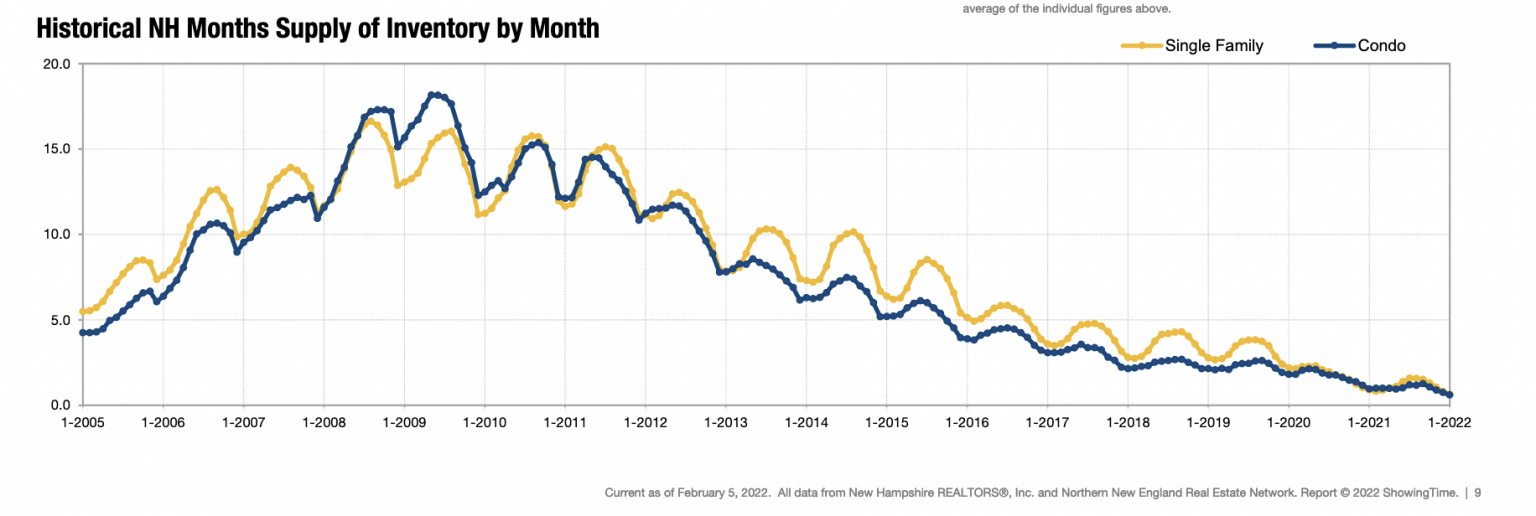
The Realtors Association uses one metric above others when assessing the health of the housing market, Director of Communications Dave Cummings said. That measurement is the time it would take to sell all of New Hampshire’s housing inventory if no new houses came on the market. The hypothetical number – which factors in both inventory and demand – can speak volumes, Cummings said. A healthy market would take six months to sell all houses. Currently, New Hampshire sellers would take only 26 days. 

But Cummings argued it was only a matter of time before the pattern must reverse, if only because the state’s housing stock can’t get much lower.

“You know, we’re still just seeing it level, level, level out,” he said. “It can’t get too much lower, because essentially you’d have zero inventory.”

Contributor Ethan Dewitt , New Hampshire Bulletin


Attention Sellers!!!

When you list your property with our team of agents, you are provided with professional, courteous service from beginning to end. These services include, but are not limited to:

A free current market analysis: Determining the value of your property based on other properties, similar in nature that have sold or are currently on the market.

Listing your property: Entering the property in our MLS system, marketing through window displays, local and regional advertisements and various online media sources.

Representing your property personally: Having an agent from our office present at ALL showings.

Negotiating and closing the deal: Representing your requirements in the purchase and sale, while maintaining courteous representation throughout the closing.


So, if you're thinking about selling your home, give us a call at

603-569-4488

At Melanson Real Estate, we'll be happy to assist you with all your real estate needs.


How Much Does Air Duct Cleaning Cost, and Is It Worth It?

  • By
  • Posted

You might be thinking about getting your house’s air ducts cleaned after watching a TV commercial that flashes pictures of dusty, moldy, dirty vents. It’s definitely enough to make you wonder what’s lurking in your ductwork. But is it worth it?

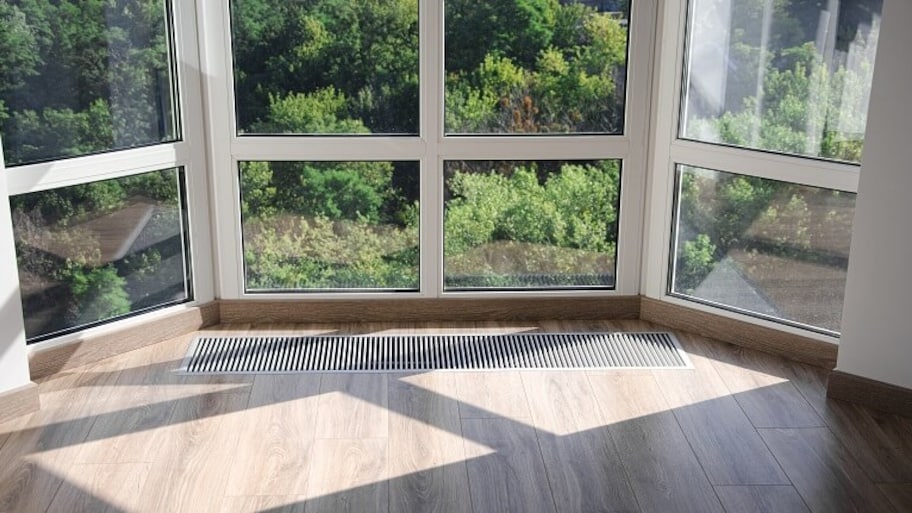
Picture Windows

Photo: Nataliia / Adobe Stock

Written by Dawn M. Smith

The average amount to clean your air ducts is $370 

The typical cost to get air ducts cleaned is between $270 and $490.  But, depending on the duct’s condition, fees can climb to $1,000.

Is Air Duct Cleaning Worth It?

When you search the pros and cons of hiring a local air duct cleaners, you’ll find conflicting advice. 

The Environmental Protection Agency (EPA) says that from their studies, standard duct cleaning does not prevent health problems or reduce dust levels in your home. But they do recommend professional cleaning if there is visible (and confirmed by a lab) mold growth inside the vents or within the heating and cooling system. Wet insulation is a typical cause of a mold outbreak.

They also recommend cleaning your ducts if they’re infested with rodents and insects or clogged with excessive amounts of dust and debris that hampers your HVAC system and blows nasty particles through your home. If you have asthma or other respiratory issues, you might breathe better with clean ducts. You’ll have to think about your health situation to decide if you need air duct cleaning and if it's worth your money.

How Much Does It Cost To Clean Air Ducts?

Air duct cleaning costs an average of $400. But the price is affected by several factors like the size of the house, the total number of ducts, and how complicated the ducting system is. You could pay between $700 and $1,000 for a large home. 

The good news is you only need to have your ductwork cleaned every two to seven years unless you notice an issue with pests, allergenic mold reactions, or have breathing problems that improve after a cleaning.

Correct Air Duct Cleaning Costs More 

The air duct cleaning company you hire should spend between three and four hours inspecting and cleaning all system parts, including the heat exchanger, blower, drain pan, plenum, and coils. Be cautious of companies that finish fast, especially if you chose a discount special. They may only clean some of the vents for a low price. 

Be sure to ask if they use outdoor vented equipment. Most top air duct cleaning companies use this equipment, so all of the debris they capture is vented and contained outside the house. Inferior techniques used by cost-cutting companies could worsen the situation by damaging the ductwork or setting off more dust and dirt into the air inside your home. 

Don’t be surprised if your vetted professional suggests repairs or upgrades to your furnace or blower motor. It’s common to find other issues during the cleaning process. 

Here’s an idea of the costs of common repairs.

  • Furnace repairs: $130–$500

  • AC repairs: $160–$550


What Factors Influence The Cost to Clean Your Air Ducts? 

Don’t expect your costs to add up exactly like your neighbor's, even if they let you use their coupon. In addition to the size of the house and the number of vents, several other factors impact your final invoice.

The Number of Vents 

Vent cleaning costs can be broken down in various ways by your service provider. If the contractor charges per vent, expect to pay about $25 to $50 per vent. Other companies charge a flat fee in addition to the cost per vent. 

To total the average amount, count your vents, grab your calculator, and multiply by $35. This figure takes into account that each vent connects to the central system through each room and the amount of work it takes to clean.

The Appearance of Rodents 

There’s not much you can do to avoid air duct cleaning fees if you have rodents. This is one scenario where the EPA says to seek help from professionals because droppings in the ductwork can cause breathing problems. Note, you’ll probably have to hire an exterminator first. Extermination costs run between $150 to $500. No doubt, it’s money well spent for a peaceful night’s sleep. 

Vent and Duct Accessibility

If your home has hard-to-reach crawl spaces and attics to access your central HVAC system, you could pay more for the extra work involved. Your cleaning crew will let you know of their additional fees. 

Mold and Mildew Removal

Another situation where the EPA recommends duct cleaning is after you’ve verified mold growth. Although mold removal in your ductwork costs more money, likely between $600 and $2,000, it could save you thousands if you stop the mold before it spreads further. Depending on the level of contamination, there’s a good chance your contractor will suggest a mold specialist do the cleanup if it's out of their realm of expertise. 

Custom Designed Ducts

Cleaning and repairing custom ductwork is typically more expensive because the specific sizing is challenging to work with, and it’s harder to find replacement parts. After the initial inspection, your air duct cleaning contractor will tell you to either clean or replace the air ducts. If your pro has to work longer or hire a bigger crew to do custom work, expect to pay 25% to 30% more.  


The Middle Class Feels the Sting of the Housing Shortage and High Prices

  • By
  • Posted

The turbocharged housing market is hurting middle-class homebuyers stymied by a double whammy of fast-rising prices and a dearth of properties for sale.

(Getty Images)

By Clare Trapasso 

The analysis looked at how affordable homes listed for sale are for prospective buyers with different household incomes. It also looked at the number of homes for sale.

“In a highly competitive real estate market, the best areas for buyers are areas that have relatively more home available. But in order to truly be available, the home has to be for sale and affordable,” says Realtor.com Chief Economist Danielle Hale. “A homebuyer needs to ask themselves: ‘With my income and what’s on the market right now, where do I have the best shot from an availability perspective?'”

Buyers with a household income between $75,000 and $100,000 could afford only about 51% of the homes listed for sale. (Households include all adults living together, such as spouses and partners, extended families, and roommates.) That was compared with 58% in 2019. Those buyers are competing for just 245,300 homes nationally that are within their budgets.

Meanwhile, there were just 165,280 homes across the country that buyers could afford with household incomes between $50,000 and $75,000.

Even in the few places where housing became cheaper during the pandemic—such as the bigger, more expensive cities that became less desirable over the Past few years—the lack of homes for sale has made it harder for buyers to get an edge.

“Due to rising home prices and the ongoing inventory shortage, homeownership attainment will become especially challenging for middle-class buyers unless significantly more entry-level housing units become available,” Nadia Evangelou, NAR’s senior economist and director of forecasting, said in a statement. “Otherwise, the wealth gap between middle-income and upper-income households may grow even further.”

The 10 best metropolitan areas for buyers with household incomes between $75,000 and $100,000 were mostly in the South in less expensive areas that have had more new construction. These places all had more homes for sale at the right price for these buyers.

Deltona, FL, topped the list, followed by Des Moines, IA; Augusta, GA; Atlanta; McAllen, TX; Baton Rouge, LA; Miami; Virginia Beach, VA; Youngstown, OH; and Scranton, PA. (Metros include the main city and surrounding towns, suburbs, and smaller urban areas.)

“Homes are priced a bit lower so that your housing dollars stretch further,” says Hale. Also, “construction has done a better job of keeping up with demand.”


Clare Trapasso is the deputy news editor of Realtor.com where she writes and edits news and data stories. She previously wrote for a Financial Times publication, the New York Daily News, and the Associated Press. She also taught journalism courses at several New York City colleges.

Planning To Sell This Year? Start Getting Your Home Ready Now

  • By
  • Posted

Yes, it may still be winter but the home buying and selling season has already begun. If you're thinking of putting your home on the market, now's the time to whip it into shape.

Below are the top preparations to address... why not start now!

Update your home

With asking prices at an all-time high, most of today's buyers are looking for turnkey, not a project. You know, all those things you wanted to change in your home but never got around to doing! Well, here's your chance. Consider giving your home a refresh, with new countertops, appliances, and flooring. Change out vanities and plumbing fixtures in your bathrooms and if your cabinets are dated, it might be time to have them painted or refaced along with new hardware. Not only will this give your listing some appeal, it may also aid in increasing what goes in to your pocket.

Declutter, Organize, and Clean

No one wants a messy home. If you're serious about selling this year, now is the time to get rid of any unwanted or unused items sitting around the house taking up valuable storage space. Remember, the goal is to show how much space your home has not how cluttered it feels. You want buyers to be able to come through and focus on the space and not the stuff in it!

Windows and Screens

When was the last time you had the windows and tracks cleaned both inside and out? Are there any windows that appear clogged or are difficult to open and close? Very few sellers take the time to check their windows and screens. So to get a leg up on your competition, by cleaning, repairing and making all of them look and work great, will help you justify asking top dollar.

Landscaping

Overgrown bushes, trees and old plants can hide a homes exterior and make it look tired and unnecessarily worn. Don't forget to give your home as much attention on the outside as you do on the inside. Now is the time to have bushes and trees cut back or removed altogether. And when the weather permits, don't forget to freshen up your ground cover as well with new mulch, pine straw or river rock. In the meantime...

Call us

We offer free market analysis of your home. It will determine the value of your property based on other properties, similar in nature that have sold or are currently on the market. 

List with us 

Our team of agents provide professional, courteous service that you can rely on from beginning to end. We look forward to hearing from you!

Melanson Real Estate

Office: 603-569-4488

Mobile: 603-651-7228


Supply-Chain Issues Leave New Homes Without Garage Doors and Gutters

  • By
  • Posted

Pandemic-related factory closures, transportation delays and port-capacity limits have stymied the flow of many goods and materials critical for home building.

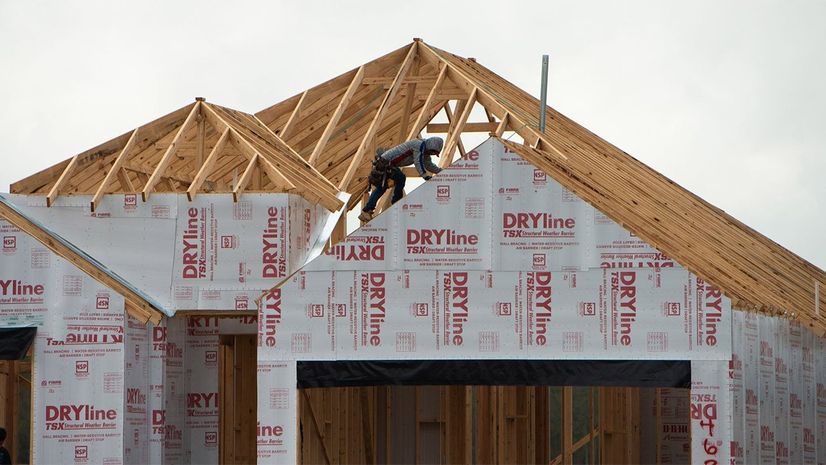
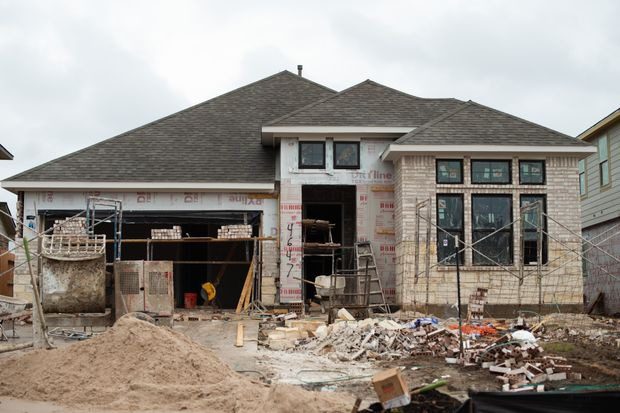
House under construction with home wrap

(Brandon Thibodeaux for The Wall Street Journal)

By Nicole Friedman

Supply-chain backlogs are roiling the new home market, upending efforts to accelerate construction, limiting home-buyer choices, and causing some new owners to move into unfinished homes.

Home builders have increased activity in the past year in response to robust home-buying demand and a shortage of homes in the existing-home market. In many cases, the surge in demand in late 2020 and early 2021 overwhelmed builders, forcing many to halt sales in some markets while they caught up.

Now the industry is struggling with global supply-chain woes. Pandemic-related factory closures, transportation delays and port-capacity limits have stymied the flow of many goods and materials critical for home building, including windows, garage doors, appliances and paint. Freezing weather and power outages in Texas in February led to a shortage of resin, which is used in many home-building products.

While supply-chain delays for some products showed signs of easing at the end of last year, builders say it is still taking weeks longer than normal to finish homes. About 90% of home builders surveyed by housing-market research firm Zonda in November said they were experiencing supply disruptions, up from 75% in January 2021.

Delivery delays can cause a domino effect of rescheduling work crews, which is worsened by a shortage of skilled tradespeople in many markets.

Many builders so far have been able to pass increased material costs along to home buyers. But with home prices higher than ever—the median price of a newly built home in November rose 18.8% from a year earlier to a record $416,900—some builders are concerned about pricing out potential buyers.

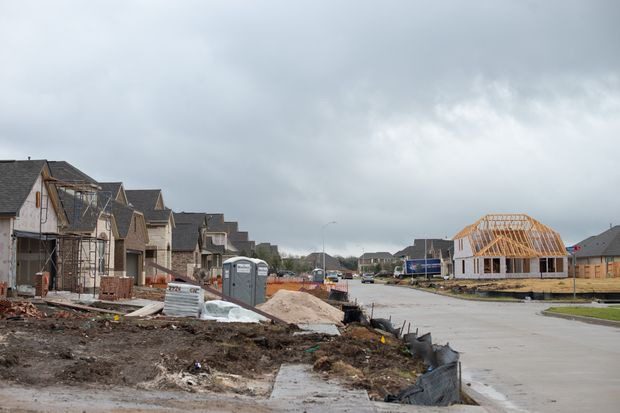
Housing development under construction

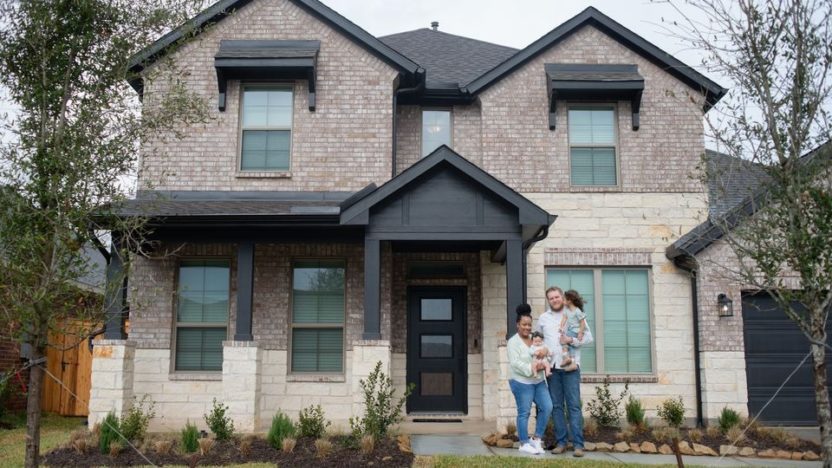
Coby and Tierrah Finger recently moved into a housing development in Fresno, Texas. (Brandon Thibodeaux for The Wall Street Journal)

Builders are scrambling to find new suppliers, stock up on building products and use substitute materials. Some are scouring retail big-box stores for products they can’t find through the normal supply channels.

That was the case with builder Epcon Communities in Dublin, Ohio, which bought metal shower grab bars online because they weren’t available through its typical commercial suppliers, said Stew Walker, Epcon’s vice president of construction. The company’s electrical subcontractor resorted to buying electrical boxes in hardware stores, he said.

“From one week to the next, the only thing we know is that we’re going to get notified of something else that is unavailable,” Mr. Walker said.

Epcon sold some homes last year without gutters and downspouts, then installed those features after buyers had already moved in, Mr. Walker said.

Homes by WestBay LLC in Riverview, Fla., has started ordering windows six months in advance, up from the typical 60 days of lead time, said President and CEO Willy Nunn. The company’s homes are 30 to 60 days behind their normal schedule.

“About the time we’re getting ready to pave streets in a new subdivision…we’re ordering windows for 100 homes,” Mr. Nunn said.

Unfinished home construction

The Fingers signed a contract with their builder in January 2021 but were unable to move in until December. Building-supply issues forced the couple to select brick three times. (Brandon Thibodeaux for The Wall Street Journal)

Many builders are selling houses later in the construction process, when they can better predict their costs and schedule, said Ali Wolf, chief economist at Zonda. Some are limiting options for floor plans or design features.

“In the home-building industry, timeline is king, because there are so many moving parts,” Ms. Wolf said.

California-based Williams Homes Inc. planned to build about 500 homes last year but only completed 400 due to supply-chain constraints, said Chief Executive Lance Williams.

“It was spotty and across the spectrum—just hiccups in the supply chain that we just historically haven’t seen,” he said. A shortage of garage doors, in particular, prompted the company to “scour the Western United States” to find more, he said.

Garage-door delays in Sacramento, Calif., prompted city officials in November to establish a provisional policy allowing builders to close homes with temporary garage doors.

The delays are causing havoc for buyers who are planning moves. And if mortgage-interest rates continue rising, buyers might face higher borrowing costs if their home closings are delayed.

Coby and Tierrah Finger signed a contract with M/I Homes Inc. to build a new home in the Houston suburbs in January 2021 and expected it to be completed by August or September. That was convenient because their apartment lease was up at the end of September, and Mrs. Finger was due with their second child in October.

But construction was delayed by city permits, freezing weather in Texas and materials shortages. M/I Homes asked the Fingers to choose new exterior bricks three times, because the options they had selected were no longer available. The family moved in with Mr. Finger’s parents after their lease ended and were living there when their baby was born.

“It was incredibly frustrating,” Mr. Finger said. They closed on their home purchase Nov. 29.

M/I Homes said it faced similar supply-chain issues to those of other builders in the Houston market, and it has been upfront with buyers about delays.

Home builders have built up a huge backlog of uncompleted homes. The number of single-family homes currently under construction surged 28.3% in November from a year earlier to the highest seasonally adjusted level since 2007, according to the Commerce Department.

Homes by WestBay’s Mr. Nunn expects demand in his market to stay robust as more remote workers relocate to Florida. “This is a terrific environment for us long-term, but we have to get through this supply chain unraveling,” he said.

Finished home with family outside

“It was incredibly frustrating,” Coby Finger said of the construction delays on the family’s new home. (Brandon Thibodeaux for The Wall Street Journal)


By Nicole Friedman, writer for REALTOR.com®


Housing Market Predictions for 2022

  • By
  • Posted

Learn what factors are at play that will influence real estate sales in the year ahead.

2022 housing market predictions

©Urupong - Getty Images

by Rose Morrison

The housing market is a complicated machine with close connections to the U.S. economy. Changes in one will affect the other, and vice versa. Because these two entities are connected so closely, even the slightest shift can have far-reaching implications for home buyers and real estate agents.

Looking for patterns and understanding the relationships between different economic factors can help real estate professionals anticipate where the housing market may go next. As the new year approaches, here’s what experts are saying.

The Housing Market Now

Coinciding with the pandemic in early 2020, supply chain shortages and underbuilding across the nation made it increasingly difficult for Americans to find new homes. Underbuilding has been a growing problem for years, as construction companies have faced more restrictions and obstacles on how they can build.

COVID-19 has compounded this issue and impacted spending and production. Building materials were bought up early in the pandemic as eager homeowners used their extra time for home renovations. Meanwhile, new products could not reach stores—either because they weren’t being produced or because of backups in the supply chain. 

This lack of supply was exacerbated by a rise in demand for homes over 2020 and 2021. Many people changed their lifestyles and moved outside the city. Low supply and high demand created a strong seller's market, which led to higher prices. Even though houses cost more, bidding wars broke out as buyers tried to secure a residence.

High competition meant homes were selling in a matter of days or even hours, giving sellers the upper hand and reducing room for any negotiation from buyers. However, homebuyers kept engaging with the market since lower mortgage rates and remote work made homeownership a possibility for many.

The Future of the Housing Market

Experts agree that the housing market will continue to favor sellers for some time, possibly for years, but with slower growth in home prices and decelerating inflation. The large discrepancy between supply and demand for new homes will take a while to balance out, and the supply chain will need to work smoothly for some time before things can settle.

Market Competition

Although many other factors also create a seller’s market, the power dynamic between supply and demand is the main predictor of how things will turn out. Except in extreme cases, buyers and sellers can reach their goals regardless of who has the upper hand. However, sellers will get a better deal overall.

Seasonally, competition for homes and bidding wars tend to slow down in the winter. However, because competition has been so high overall, lowered levels this season are still high compared to years before the pandemic. Prices are expected to keep rising, so finding a home over the winter is probably wiser than waiting until spring.

Interest Rates

Another factor predicted to cause major shifts moving forward is the adjustment of interest rates by the Federal Reserve. The American housing market is sustained through a complex system of loans and interest rates, flowing down from the federal level. When inflation is high, the Federal Reserve raises interest rates, which affects loans like mortgages in an aim to prevent further growth.

Higher mortgage rates mean buyers will have to pay more for homes, which could slow down the housing boom by discouraging some people. However, investors will benefit from these higher rates since they’ll be making back larger amounts of money from banks and homeowners.

Financial Security

After the pandemic caused many people to lose their jobs and experience financial insecurity, the government and banks responded with loan forbearance programs to protect individuals from being evicted or going into foreclosure. However, most of these will come to an end in early 2022, so experts like National Association of REALTORS® Chief Economist Dr. Lawrence Yun predict some stimulation to the housing market as more homes come up for sale.

Consumer Confidence

Another factor that affects the housing market is consumer confidence. When people are optimistic about the future, they spend more and invest in long-term goals like houses. The early months of the pandemic caused a lot of uncertainty about the future and made many people question their goals and financial stability.

However, according to Kuba Jewgieniew, CEO of Realty ONE Group, consumer confidence and investments are growing as the pandemic era evolves. Looking forward, people will likely continue to move out of high-population areas because they’re seeking more space and homes with a smaller environmental impact.

Supply and Demand

Experts expect demand for homes to outpace supply for some time, so high competition and rising prices will continue to factor into buyers’ decisions. Rising interest rates may preclude some people from buying, which could tone down high competition rates. However, as incomes increase and employment rates move back to normal levels, the market should begin to balance out.

Changes in economic conditions are already affecting buyers. For instance, in 2021, lumber prices skyrocketed as demand for this building material outpaced supply. However, according to Kuba, lumber prices are expected to stabilize over the next year. This will make building new homes a more affordable option for many people. 

Zoom RVs

With the ability to work remotely, some would-be homeowners have decided to hit the road in their RVs, using Zoom to connect to work along the way. This trend could potentially continue due to a combination of the challenging housing market and remote work becoming normal for many people and industries, according to Kuba.

The COVID-19 pandemic has led to a seismic shift in how individuals relate to their jobs. It’s allowed many home buyers to move farther away from their offices. While some companies may decide to bring their employees back to the office, others will likely establish remote work as a permanent option.

Many people are thriving with the increased flexibility, lack of commute, and control over their work environment. The Zoom RV craze may eventually calm down, but working from home will continue to impact real estate in unprecedented ways for years to come.

The Housing Market in 2022 and Beyond

The housing market has been dynamic over the last two years. The pandemic highlighted how even small changes can have a ripple effect on the opportunities available to home buyers and investors.

However, the market’s close connection with the economy also offers hope as 2022 approaches. Over time, supply and demand will balance out, and the tides will eventually turn to favor buyers again in the future. In the meantime, sellers can make the most of this time in history.


Rose Morrison is the managing editor of Renovated, a home living site where she shares the latest home renovation news and market trends. Throughout her writing career, Rose has been a regular contributor to a number of sites, such as the National Center for Construction Education & Research, the American Society of Home Inspectors, and the International Code Council. 

The New Rules for Homebuyers and Sellers in the Age of Omicron: What To Expect in 2022

  • By
  • Posted

The homebuying and selling season typically kicks off right now. Will the newest stage of the COVID-19 pandemic wreck the market? Here’s the scoop.

Omicron and the housing market

(Realtor.com / Getty Images)

By Janet Siroto

Omicron has indisputably put a damper on early 2022 and as COVID-19 infection rates continue to climb, many may wonder whether we’re headed toward another nationwide shutdown of schools, businesses, and other #lifegoals that may have just begun sputtering back to life.

Meanwhile, homebuyers who’ve vowed that this is the year they’ll finally buy a house might feel as if a wrench the size of a Mack truck was thrown into their plans. Will open houses even be allowed? Will home sellers pull their listings, thinking it’s not worth the risk?

In an effort to shed some light on the year ahead, we surveyed real estate experts on what homebuyers and sellers should expect in the coming weeks and months.

How omicron will affect the housing market

Before the omicron variant of COVID-19 appeared on the scene, the 2021 housing market was rebounding healthily from previous waves of the pandemic and turned downright bullish as the end of the year approached. In spring 2021, a Realtor.com® survey found that only 10% of homeowners planned to sell within 12 months. By fall, that number had ballooned to 26%.

These factors had portended a tidal wave of home sales in the new year. And then the new omicron strain hit in November, followed by a December dip in new listings.

Was this sudden drop due to omicron, or just the typical holiday season lull?

George Ratiu, manager of economic research at Realtor.com, isn’t sure, but feels optimistic that omicron won’t halt the housing market’s momentum, particularly since this variant appears milder than its predecessors.

“We are not through it yet, but so far, this virus seems to be a lot more contagious, but also a lot less negatively impactful in terms of sickness and death,” Ratiu says. He also points out that data from epidemics in 1918 and the 1950s have also shown that viruses become more contagious but less severe over time.

Indeed, indications from South Africa, where the COVID-19 strain was first detected, showed a steep surge in cases followed by a rapid decline. So there’s some reason to expect that this latest wave of the pandemic in the U.S. will follow suit.

Omicron doesn’t seem to have hit the economy as hard as previous waves, either.

“The GDP and economy have survived fairly well,” Ratiu explains. “We’re seeing housing weather the variant so far. Retail sales, consumer confidence, and other indicators show guarded optimism in the road ahead.”

Bottom line: Even as COVID-19 infection rates climb, most experts aren’t bracing for a shutdown like we saw during the first wave of the pandemic in spring 2020.

“I do not believe that omicron will have much impact on the selling season,” says Cara Berkeley, a personal financial expert at Penny Polly. “The delta variant did not seem to slow things down here [in Tennessee], so omicron should not either. The number of homes sold in Nashville in November of this year was higher than the number sold in November of last year. The upwards trend both in sales and in the median price per home is continuing.”

Why omicron isn’t stopping home sellers from listing today

Even in the face of high COVID-19 infection rates, many home sellers are still eager to list in the new year because, frankly, they’ve been waiting long enough.

“My husband is already retired, and we’ve been dreaming of moving to Maine for a while,” says Meg Rooney, 63, of Fairfield, CT. “But we’ve felt paralyzed by the pandemic. The time didn’t feel right in the middle of the crisis. But I think omicron will be the last surge, and our real estate agent says people are ready to tour and buy despite this current uptick in cases. So we’ll finally put our house on the market.”

Most listing agents we spoke to see no shortage of buyers in their respective markets—particularly with more people taking on remote jobs than ever before.

“There continues to be huge pent-up demand,” says Tami Bonnell, co-chair of EXIT Realty Corporate International.

The take-home lesson for sellers: Those who list should expect plenty of offers—although only time will tell whether we’ll see a repeat of the frenzied bidding wars of 2021.

Why omicron isn’t scaring off homebuyers

Meanwhile, omicron doesn’t seem to be deterring homebuyers much.

“I will be hitting the open houses hard this month,” says Alison Levine, a mom of a toddler and a 6-year-old in Cleveland. “I know how high the infection rates are. But the pandemic has also shown me that our apartment is too small for remote learning plus working from home—and I need a backyard.”

Many of today’s homebuyers, much like Levine, have put their house hunts on hold for the past two years of the pandemic. By now, they’ve had it with their cramped quarters, and are willing to take a few calculated risks to upgrade to a place that better fits their lives today.

“Younger parents may be having a first or second child and need a bigger house, or a different school district,” explains Ratiu. “I see a bright future for the suburbs in 2022.”

In addition to outgrowing their homes, homebuyers have another urgent reason to hazard some home tours right now even with omicron lurking: Mortgage interest rates are expected to rise soon.

“Buyers are acutely aware that the current mortgage rates are just above 3%,” says Ratiu. “While they have been flat, rates are expected to rise, so people are in a hurry to capitalize on this.”

Homebuyers this year should brace themselves for plenty of competition.

“There is huge demand, [but] there’s still short inventory,” says Bonnell. “I believe the first half of the year will be tighter with more bidding wars than the second half.” 

One reason omicron likely won’t slow down homebuyers is that so much of home touring today is happening virtually rather than in person. In 2020 during the first wave of COVID-19, video and virtual tours were more of a novelty that certain buyers and sellers resorted to when in-person viewing wasn’t safe. By now, though, virtual tours have matured into a far more sophisticated and commonplace experience

“We’ve had a year and a half to practice virtual tours and marketing,” says Norman Miller, a real estate and finance professor at the University of San Diego. “We’ve taken some of the fear out of the process.”

To succeed in early 2022, buyers will need to bring their A-game and start preparing now. This means making sure you have a current mortgage pre-approval (they expire over time), watching interest rates closely, and getting ready to pounce once your dream house appears.

“My agent and I frequently text about what she’s seeing in the market, things like how quickly things are selling and where the winning bid is compared to the asking price,” says Levine. “That way, I know how high to bid.”

Real estate in the wake of omicron: What’s ahead?

While many experts anticipate that omicron will be more of a blip than a bomb on this year’s real estate forecast, the one real wild card is whether more variants are on the horizon.

“It’s hard to project, but on broad balance, we’re likely to see continued variants in 2022,” says Ratiu.

Yet putting our lives on hold forever just isn’t something humans are meant to do, a fact that homebuyer Levine keeps in mind as she forges ahead.

“Omicron isn’t softening things so far,” she says. “So I am getting my ducks in a row.”


Janet Siroto is a journalist, editor, and trend tracker. Her work has appeared in Cosmopolitan, Good Housekeeping, and other publications.

Get in touch!

Do not fill in this field:

I agree to receive marketing and customer service calls and text messages from Melanson Real Estate. To opt out, you can reply 'stop' at any time or click the unsubscribe link in the emails. Consent is not a condition of purchase. Msg/data rates may apply. Msg frequency varies. Privacy Policy.

This site is protected by reCAPTCHA and the Google Privacy Policy and Terms of Service apply.