Blog :: 2021

Welcome to our blog! Here you will find information regarding market, local and Lakes Region information and events! Along with DIY projects and more! Come back often to see what's new and leave us a comment if there's something you'd like to see.

Mortgage Costs Grow 20 Times Faster Than Incomes

  • By
  • Posted

Housing affordability continues to decline as the hot real estate market fuels skyrocketing prices. Incomes aren’t keeping pace with the higher prices.

© malerapaso - iStock/Getty Images Plus

The median family income rose by 1.2% in May while the monthly mortgage payment jumped by 20%, according to the National Association of REALTORS®’ Housing Affordability Index.

Even as mortgage rates are down compared to a year ago—which has helped buyers save on borrowing costs—the median existing-home price has jumped 24.4% compared to the same period.

Monthly mortgage payments increased to $1,204 in May, a 20% jump compared to a year earlier. NAR’s analysis notes the annual mortgage payment—as a percentage of income—increased to 16.5% over the past year due to higher home prices and a decline in median family incomes.

Homeowners in the West have the highest mortgage payments to income share at 22.1% of income. Home prices in the West have climbed to a record high of $513,700.

The most affordable region of the U.S. in housing continues to be the Midwest, in which the median family income is $86,440. NAR’s index calculates a qualifying income as the income required to afford a mortgage so that payments are no more than 25% of a family’s income. The Midwest had a qualifying income of $44,016.


Source: “Housing Affordability Falls in May as Home Prices Rise Faster Than Income,” National Association of REALTORS® Economists’ Outlook blog (July 9, 2021)

5 Mortgage Trends To Watch

  • By
  • Posted

Understanding key financing issues affecting homebuyers in their purchasing decision.

by Melissa Dittmann Tracey

Buyers have fueled a red-hot housing market over the last year as they rushed to secure record-low mortgage rates. But shifts are underway, which may affect borrowers planning for their next home.

  1. Rising rates. “Interest rates below 3% on a 30-year fixed-rate mortgage aren’t likely to be around long,” says Lawrence Yun, chief economist of the National Association of REALTORS®. Rising inflation and a strengthening economy are expected to push rates up. Yun predicts that by as early as year’s end—but likely by next spring—30-year fixed-rate loans will average 3.5%. Higher rates and home prices could push some would-be buyers out of the market.

  2. Strict qualifications. Lending standards tightened during the COVID-19 pandemic as lenders looked to avert risk, notes Tendayi Kapfidze, chief economist at LendingTree. Standards could ease a bit as the economy keeps improving and refinancings become a smaller share of total mortgage lending, says Guy Cecala, publisher of Inside Mortgage Finance. Still, the most favorable rates will go to borrowers with stellar credit histories—scores of 750 and above—and large down payments. Lending criteria in the hot vacation and second-home market could be a different story. Due to tightened underwriting criteria, second-home buyers could face steeper rates.

  3. Larger mortgages. Higher home prices are leading to larger loan amounts. In March, the average mortgage taken out on a new-home purchase reached a record-setting $374,000, up from about $332,000, two years earlier, according to the Mortgage Bankers Association. As more people upsized their space in the pandemic, sales in upper price brackets outpaced those at lower price points. Applications for mortgages larger than $766,000 jumped 55% year over year in February, the largest jump in any price range, according to the Mortgage Bankers Association. By contrast, mortgages in the $150,000–$300,000 range decreased by 2%.

  4. More nonbank lending. Borrowers have more options as nonbank lenders gain market share. “Nonbanks are competing more on rates and underwriting than banks have been, and that’s particularly been true over the past year,” Cecala says. “That likely will continue. As of now, banks appear to be content competing from the sidelines.” The top five U.S. banks—Wells Fargo, Bank of America, JPMorgan Chase, US Bancorp, and Citigroup—comprised only 21% of total mortgage originations last year, a decline from their 50% combined market share in 2011, according to Business Insider Intelligence’s Online Mortgage Lending Report. Alternative lenders are offering traditional financial products often at lower costs, with more relaxed eligibility criteria, and expanded digital options in loan processing. Quicken Loans (now known as Rocket Mortgage) issued the highest dollar amount of single-family loans in 2020, according to an analysis of 2020 Home Mortgage Disclosure Act data.

  5. Rate lock-in effect. Some owners aren’t selling because they don’t want to give up their existing ultra-low interest rate, thus squeezing supply and placing upward pressure on home pricing, Kapfidze says, adding “this could be a challenge to the housing market going forward.” But Yun offers a broader view, noting that mortgage rates aren’t the only factor potential sellers consider. Some seek more space or the new flexibility to work remotely and live anywhere.


Melissa Dittmann Tracey is a contributing editor for REALTOR® Magazine. 

Alternative Ways to Hanging Artwork

  • By
  • Posted

Artists provide creative methods for hanging your masterpieces that won't ruin your walls. 

CREDIT: D3SIGN / GETTY IMAGES

By Brigitt Earley,

If you're starting to build a collection of art, chances are you want to display your investments proudly. Otherwise, maybe you simply want to show off your favorite family photos. Whether photos or paintings, wall hangings have the profound ability to pull a space together in an instant. But what if you rent your place and have to keep the drywall intact or have intricate millwork that you don't want to mar with nail holes? You aren't relegated to a world with drab white walls. There are plenty of ways to hang artwork without making a single hole in the wall. 

The most common way to hang artwork without nails is by using Command Strips. You simply plan how you want to arrange your picture, then apply one half of the hook and latch strip to the wall and the other to the frame. Then, you stick them together to secure the picture or painting to the wall. When you go to remove them, they don't cause any damage to paint or drywall.

To go beyond this common hack for hanging artwork, we asked the pros—artists, DIY experts, and interior designers—for other creative solutions. Here's what they had to say.

Magnetic Paint 

To design a gallery wall that can be rearranged on a whim, use Rust-Oleum Magnetic Paint and adhesive-backed magnets to the back of lightweight prints or photo frames, says Audrey Van de Castle, manager of Stanley Black & Decker's Maker Initiatives. You can even try painting the magnetic paint in fun accent shapes around the artwork.

Display Easel 

Try showing off larger paintings on a display easel, says artist Corey Paige. "No matter what the piece you're displaying is, it automatically adds a unique touch to your space," she explains. "You don't typically expect to walk into someone's home and see art displayed on an easel—it's always a conversation starter, since it highlights the art."

String and Clothespins 

Another option? Use tape or mounting putty to string a piece of twine across your wall, then use decorative clips or clothespins to display prints along the line, says Van de Castle.

Suspended from the Ceiling 

If you have tricky wainscot or tiled walls, drive hooks into the ceiling instead, says Lindsay Pumpa, owner of L Pumpa Designs. Then, you can use rope, leather, or chains to suspend the framed artwork.

Wire Grid 

If you're looking to occupy more vertical space, a wire grid is another method that's perfect for your desk area, says Paige. Simply use clothespins to attach your favorite prints or photos.

Ladder Shelves 

Framed prints look great displayed on a ladder shelf, since leaning art is a great way to add dimension to a room, says Paige. Simply frame your artwork and prop it on the shelf. If your ladder shelf leans against a wall, you can display a larger framed print on the top shelf.

Room Divider 

Another fun way to arrange small works of art into a sort of gallery wall? On a folding screen or room divider, says Pumpa. This serves as an excellent way to divide a studio apartment into multiple "rooms," while also creating a cool focal point.


Brigitt Earley is a freelance writer and editor based in New Jersey. Her work has been published in a wide range of women's lifestyle magazines, including Martha Stewart, Real Simple and Oprah.

Top 10 Issues Affecting Real Estate in 2021

  • By
  • Posted

Remote work and mobility are expected to have the most significant impact on real estate over the next year, according to The Counselors of Real Estate’s list. The group identified current and emerging issues expected to have an influence over real estate in the 2021-2022 cycle. Remote work and mobility and its influence over commercial buildings globally was named as the top issue, followed by technology and ESG (Environment, Social, and Governance).

“The pandemic was a stress test, revealing vulnerabilities, appetites, and new and increased risks,” says Michel Couillard, global chair of The Counselors of Real Estate. “These themes present themselves in the 2021-2022 Top Ten Issues, which are highly interconnected and indicative of a newly changed and further evolving real estate environment. We have been awakened to some familiar but nascent areas of importance, namely cybersecurity, supply chain, and price instability. None of these are new concepts, but in a span of months or even just weeks, we saw high profile hacks, shortages of resources like microchips, lumber and labor, and rising prices across the board.”

Here’s a closer look at the top 10 issues on CRE’s list for 2021-2022:

1. Remote work and mobility

The pandemic greatly disrupted the workplace as many employees began to work remotely—and still are more than a year later. Commercial properties may need to be repositioned as the workplace adapts to more flexible and even shareable spaces.

“As we emerge from COVID-19 into a new world replete with local and global disruptions alike, our industry has been forced to recognize that adaptability and resiliency are paramount in real estate markets,” says Couillard. “It is undeniable that the pandemic’s disruption significantly impacted human behavior in how and where people have chosen to work. Now, with an escalating return to ‘business as usual,’ and workers beginning to return to offices, landlords, and companies nevertheless are facing repositioning of the workspace and the benefit of easily adaptable and shareable spaces. …. Property owners and managers should be flexible in order to accommodate these demand-driven changes in the desired use and location of space."

2. Technology acceleration and innovation

The Counselors of Real Estate also ranked the acceleration and adoption of technology as having the second greatest impact on the real estate industry. “The stressors were not about new tech, but about the acceptance of it,” Coulliard says. “Lockdown-driven changes in our work, the economy, in social structures, and in our personal behavior forced the industry to put any earlier reluctance aside.” Growing technology themes include artificial intelligence, machine learning, the Internet of Things, and cybersecurity, the report notes.

3. ESG at a tipping point

Environmental, social, and governance (ESG) initiatives are growing. In 2020, ESG funds more than doubled net new money intakes. “The growth in recent years is fueled by multiple drivers, including consumer shifts, regulatory requirements, trillions of dollars of wealth transferring to generation Z and millennials committed to philanthropic living, a blurring of work and societal expectations, and a full sprint to attract and retain top talent,” the report notes.

4. Logistics

“Whether it’s a port, rail line, pipeline … manufacturing facility, warehouse, farm, ranch, or grocery store, all these real estate assets are a critical segment in the supply-chain funnel that is logistics,” the report notes. “How logistics is functioning impacts the utilization of commercial real estate. Redundancy and the ability to process disruption are two key elements required to support the fast-moving, high-volume requirements of modern-day logistics in the ‘shop-online-and-deliver-to-me’ era in which we find ourselves.”

5. Infrastructure

The Civil Engineers estimates the U.S. infrastructure funding gap in 2021 to be $2.6 trillion, a 24% increase compared to 2017. “The COVID-19 pandemic, climate change, and heightened societal interest in social and economic equity have redefined infrastructure imperatives beyond the significant ongoing necessity for improved roads, bridges, airports, ports, mass transit, and other traditional infrastructure needs,” the report notes. A proposal on Capitol Hill sets out to allocate $110 billion in new spending to bridges and roads, $65 billion to expanding access to broadband, and $48.5 billion to public transit, and more.

6. Housing supply and affordability

The National Association of REALTORS® and the Rosen Consulting Group released a report last week calling for a “once-in-a-generation” response to address decades of underinvestment and underbuilding in the housing market. The nation has faced a shortfall of 5.5 million to 6.8 million housing units since 2001, according to the report. Housing groups are calling on lawmakers to expand access to resources, remove barriers to incentivize new development, and more. 

7. Political polarization

“Political friction is holding back America’s economic productivity,” the report notes. “We are squandering resources as we try to address problems that arise from the partisan divide rather than problems confronting us as common issues …. And the real estate industry’s well-being is a function of our economic growth.”

8. Economic structural change

Economic growth is mostly an unknown. As the report notes, how do we assess the real potential of the economy for sustainable growth? What numbers indicate a true trend and which are merely adjustments from the low bottom of the second quarter of 2020? Which behavioral changes made by U.S. households in the pandemic will persist? The ability for businesses to anticipate what’s next is met with challenges. For example, “even though real estate investors may reasonably expect an uptick in demand in the coming year, the ability to anticipate when occupancy and rent will rise frustrates underwriting,” the report notes. “We are observing many investors increasing their focus on property management aimed at retaining tenants and defending cash flow, while selectively seeking ‘value-add’ properties amenable to active asset management. The thinking is ‘focus on what you can control’ during this period where macro-level uncertainty is the governing headwind at the policy level in terms of the structural problems in this economy.”

9. Adaptive Reuse 2.0

The term is not new but the focus is getting bigger. CRE refers to Adaptive Reuse 2.0 as “The Neighborhood Approach.” It aims to address the challenges of what to do with defunct suburban malls and thousands of empty big-box retail stores that are surrounded by desirable and affordable neighborhoods. It requires a re-examination of suburban communities in repositioning and transforming areas that could be at risk for blight. A number of projects have been completed or are underway to help reconnect communities, prevent blight, and restore green space.

10. Bifurcation of capital markets

Debt capital markets have been volatile since the pandemic, namely public markets like commercial mortgage-backed securities, mortgage REITs, and agencies such as Freddie Mac and Fannie Mae. “Mortgage REITs took a significant hit early in the pandemic, with some recent recovery driven by restructuring credit lines and paying down credit facilities that experienced margin calls,” the report notes. Still, the “market continues to be flush with debt capital liquidity, despite property type and market uncertainty. Looking out to the remainder of 2021 and into 2022, performance will dictate the amount of distress and losses, and risk management should dictate markets, property types, leverage, loan structure, and pricing for mortgage debt. The next year should also tell us if commercial real estate debt was too rich and whether perceived risk underestimated where pricing should have been.”


Source: The Counselors of Real Estate

Happy 4th of July!

  • By
  • Posted


Independence Day (colloquially the Fourth of July or           July 4) is a federal holiday in the United States.  It commemorates the Declaration of Independence of the United States, on July 4, 1776.

The Continental Congress declared that the thirteen American colonies were no longer subject (and subordinate) to the monarch of Britain, King George III, and were now united, free, and independent states. The Congress had voted to declare independence two days earlier, on July 2, but it was not declared until July 4.


Wolfeboro Independence Day Parade


  •   

Location: Main Street, Wolfeboro, NH
Sponsor: American Legion Post #18


Mortgage Rates Rise Above 3%

  • By
  • Posted

For the first time in 10 weeks, mortgage rates inched above 3%—and the era of 2% rates may be over. “As the economy progresses and inflation remains elevated, we expect that rates will continue to gradually rise in the second half of the year,” said Sam Khater, Freddie Mac’s chief economist. “For those homeowners who have not yet refinanced—and there remain many borrowers who could benefit from doing so—now is the time.”

© ATU Images - The Image Bank/Getty Images

The National Association of REALTORS® has predicted that mortgage rates will average 3.2% by the end of the year.

Freddie Mac reports the following national averages with mortgage rates for the week ending June 24:

  • 30-year fixed-rate mortgages: averaged 3.02%, with an average 0.7 point, rising from last week’s 2.93% average. A year ago, 30-year rates averaged 3.13%.

  • 15-year fixed-rate mortgages: averaged 2.34%, with an average 0.7 point, increasing from last week’s 2.24% average. A year ago, 15-year rates averaged 2.59%.

  • 5-year hybrid adjustable-rate mortgages: averaged 2.53%, with an average 0.3 point, up slightly from last week’s 2.52% average. Last year at this time, 5-year ARMs averaged 3.08%.

Freddie Mac reports average commitment rates along with points to better reflect the total upfront cost of obtaining a mortgage.

Source: Freddie Mac


Is the Housing Market Going to Crash in 2021?

  • By
  • Posted

The housing market is red-hot right now, but if you're waiting for a massive market correction, don't count on it. Real estate industry experts weigh in with predictions for home buying and selling trends.

for sale sign in yard outside home in the USA

CREDIT: SAUL LOEB/AFP/GETTY IMAGES

By Mia Taylor

It's hardly a secret that real estate prices across the country have been skyrocketing. Recent data from Redfin, a real estate brokerage, shows that median home prices are up 20% year-over-year. At the same time, many properties are under contract for purchase within a mere one to two weeks of hitting the market and it's not unusual for prospective buyers to offer 10% or even 20% over the asking price. In fact, Redfin reports that 46% of homes sold for more than their list price. As if that's not enough, many buyers are paying cash for homes. Yes, cash. You read that right.

"We are in a record-breaking housing market with asking prices at an all-time high ($357,200), median sale prices at an all-time high ($347,500), the share of homes selling over list price at an all-time high (46%), and homes selling faster than ever before: 58% under contract within two weeks of listing and 46% within one week of listing," says Redfin Chief Economist Daryl Fairweather. "Ask just about any real estate agent, and they'll tell you they've never seen a market this hot."

All of which has left many watchers and potential buyers scratching their heads and wondering if we're due for a market crash similar to the housing market burst that brought on the Great Recession in 2007. The short answer to that question? No, a similar crash is not likely. And there are many reasons for that. 

Here's a closer look at some of the most obvious factors contributing to widespread confidence that there will be no real estate market crash in 2021 (or anytime soon), as well as insight into what real estate and industry experts do see happening in the market over the coming months—and what it all means for potential buyers.

Factors Contributing to the Overheated Housing Market 

First, it's important to understand that there are numerous elements driving the current housing market and they differ from what was taking place before the Great Recession.

"Those of us who experienced the housing crash really don't want to go back to the days of underwater sellers and houses sitting on the market for months at a time without a single offer. The good news is that this isn't 2008 and 2021 has a few things going for it that the sub-prime market could only dream about back when 'short sale' became a household word," explains Debra Remington, managing broker for Texas-based Remington Team Realty.

1. Lack of Inventory 

One of the biggest contributors to the current red-hot market and sky-high prices is a dearth of inventory. This is an explanation you'll hear from experts far and wide. 

The shortage of inventory is caused by a few factors, including owners not wanting strangers (potential buyers) traipsing through their living quarters amid a global pandemic, thus far fewer homes being put on the market for sale.

The second issue is the pace of new construction, which has been slower than normal. Years of sluggish new construction in the United States has finally caught up, and many builders went under during the Great Recession.

"Not enough people are listing their homes for sale, and new construction isn't keeping pace with demand," says Fairweather. "America built fewer homes in the 2010s compared to any decade going back to the 1960s."

In other words, one of the primary drivers behind the current overheated housing market is very different than what set the stage for the 2007 crash. Today's boom is not due to loose lending practices flooding the market with unqualified buyers.

"What caused the market to crash was related to real estate and the lending practices that were happening. People were buying homes that shouldn't have been buying homes," says Dave Nations, founder of The Nations Network. "They couldn't actually afford the house they were buying but the loan product allowed them to at least get in the house short-term."

Experts predict that the current record low inventory will keep demand at record levels. But in the run-up to the Great Recession, the market was characterized by limiteddemand and too much inventory, says Remington.

2. Historic Low Interest Rates 

Historic low interest rates are also contributing to current conditions, encouraging a steady stream of buyers to enter the market. The Federal Reserve repeatedly lowered interest rates amid the economic downturn caused by the COVID-19 pandemic. And it doesn't appear that those rock-bottom rates will disappear anytime soon, yet another reason buyer demand is likely to remain strong and thus no market crash.

"The Federal Reserve has no immediate plans to change interest rate strategy. If they stay low, buyers will continue to purchase as even if they are paying a premium, they are locking in really great rates for the next 30 years," says San Francisco-based realtor Julie Upton. 

3. Millennial Buyers Entering the Market 

Millennials are also entering the market like never before, which is playing a role in market conditions. According to the 2021 NAR Buyer and Seller Report, the median age of first-time homebuyers is now 33, which is coincidentally also the average age Millennials turn this year.

"Millennials buying homes have already significantly impacted the market," says Grace Keister of California-based First Team Real Estate. "At First Team, we've seen a big uptick in Millennial clients. I've personally referred two friends in the last year to buyers' agents; [I] know about two other friends who are casually searching, and another couple who just purchased after six months of searching. We also had a new agent who closed 15 transactions in her first year, all buyers that she met through her TikTok presence."

4. Lending Practices Tightened 

Perhaps one of the most meaningful indicators that a real estate market crash is unlikely in 2021 can be found in today's lending environment, which is far stricter than it was prior to 2007. As Upton likes to say, the days of NINJA loans (no income, no job, no assets) are long gone. 

"These risky loans were common prior to the market crash," explains Upton. "These days, lenders are very strict when qualifying buyers, and changes to appraisal laws have also tightened up the appraisal practices. Taken together, there are fewer risky mortgages in the financial system."

Why a 2021 Market Crash is Unlikely 

Market crashes generally take place when there's a serious breakdown somewhere in the system. But as outlined by so many experts, that's not currently a problem.  

"Absent a catastrophe in the financial markets or in the political arena, we fully expect demand for housing to remain strong," says Michael Shapot, a New York based real estate broker with The Shapot Team.

Upton supports Shapot's assessment. "While anything can happen that might impact the housing market, there are no key indicators right now to suggest that there will be a crash in 2021," she says.  

Bankrate Chief Financial Analyst Greg McBride says that while the recent pace of home price appreciation isn't sustainable over the long-run, that doesn't mean prices are at risk of some sort of sharp drop or correction. It would likely take a return to the questionable lending practices of the early 2000s to trigger such a collapse.

"If lending standards loosen and we go back to the wild, wild west days of 2004 to 2006, then that is a whole different animal," McBride explains. "If we start to see prices being bid up by the artificial buying power of loose lending standards, that's when we worry about a crash."

What Is Likely to Happen with the Housing Market? 

As the vaccine rate of Americans continues to increase and more homeowners feel comfortable listing properties and having strangers walk through their homes, market conditions will likely become more balanced. There will be more supply and prices should adjust somewhat.

"The gradual increase in inventory will begin to slowly alleviate the demand created by the inventory shortage," says Colby Hager of Texas-based Capstone Homebuyers. "This rather gradual return to normal will create a larger pool of options for buyers which will lead to more days on market for houses. The bidding wars seen today that are a big factor of price increases will begin to die out because buyers will have more housing options to choose from and there will be a drop in competition between buyers for any one house."

Indeed, Zillow data supports the projections of Hager and other industry professionals; while the early weeks of 2021 were marked by a scarcity of new home listings as sellers stayed on the sidelines in the face of an uptick in COVID-19 cases, data indicates sellers are starting to come back. New listings nationwide rose by 30% in the four weeks between late February and late March.

What Does It All Mean? 

So what do all of these insights and predictions add up to? Is it good news for homebuyers? In many ways, that depends on your buying timeline.

"Homebuyers who have the ability to wait for the bidding wars to disappear, prices to stagnate, and listings to stay on the market longer will get more house for their dollar," says Hager. "Homebuyers who can afford to sit on the sidelines during this overheated housing market will definitely be rewarded."

And if you're in the market to buy right now and can't wait it out? "Remain patient. Exercise caution. Don't ever pay more than you can comfortably afford," says Shapot. "Consider other options, perhaps in different neighborhoods or off market properties that haven't yet been listed. Look at properties that have been on the market a while and appear overpriced; there is less likelihood that there will be a bidding war and perhaps the homeowner will be sensible and consider reasonable offers."


Mia Taylor is an award-winning journalist who's passionate about making personal finance coverage accessible and engaging. News organizations she has worked for as a staff member or contributor include The Atlanta Journal-Constitution, the San Diego Union-Tribune, The Boston Globe, TheStreet, Bankrate, MSN, and Cheapism. In 2011, she was a member of a team of KPBS reporters who received a Walter Cronkite Award for Excellence in Journalism. Follow her coverage on Twitter and Instagram.

Lumber Prices Are Dropping Fast

  • By
  • Posted

Lumber prices are falling quickly from record highs, and that may be happening at the right time for the new-home market.

Photo Credit: Nathalie Dupont - Getty Images

By REALTOR Magazine

Home builder sentiment sank to its lowest level since August 2020, with builders blaming increasing material supply challenges for their outlook, according to a newly released report from the National Association of Home Builders. Builders said that declining availability for softwood lumber and other building materials is pushing builder sentiment down in June, at a time when buyer demand is surging.

Lumber prices have been increasing for months, prompting builders to raise their prices and, in some cases, to stop taking new orders due to the difficulty of pricing projects accurately during the course of construction.

But wood prices are coming down—and they’re falling fast. For example, futures for July delivery of lumber were $1,009.90 per thousand board feet, a 41% drop from the record of $1,711.20 reached in early May, The Wall Street Journal reports.

“The rapid decline suggests a bubble that has burst and the question is how low lumber prices will fall,” The Wall Street Journalreports. “Even after tumbling, lumber futures remain nearly three times what is typical for this time of year. Lumber producers and traders expect that prices will remain relatively high due to the strong housing market, but that the supply bottlenecks and frenzied buying that characterized the economy’s reopening and sent prices to multiples of the old all-time highs are winding down.”

During the run-up in lumber prices, some builders began hoarding lumber to shield themselves from any future gains and to ensure they didn’t run out of it during construction. Housing analysts predict the new-home market will see greater “shadow inventory” as businesses begin to sell their own stockpiles.

“I don’t think $1,000 lumber prices are the new normal,” Devin Stockfish, chief executive of Weyerhaeuser Co., a lumber producer, told investors last week at a conference. “But that being said, when you think about the amount of housing that we’re going to have to build in the U.S. over the next three, five, 10 years, that’s just a significant amount of demand for wood products.”

Source: “Lumber Prices Are Falling Fast, Turning Hoarders Into Sellers,” The Wall Street Journal (June 15, 2021) [Log-in required.] and “Rising Material Challenges, Declining Builder Sentiment,” National Association of Home Builders (June 15, 2021)

So You Bought a Fixer-Upper to Save Money-Here Are the Projects to Prioritize

  • By
  • Posted

If you're embarking on renovations on a tight budget, it can be difficult to decide what to do first. In the article below, experts identify the best projects for your wallet and your home.

By Mia Taylor

The vast majority of people who purchase fixer-upper homes do so for financial reasons— because they generally can't afford a turn-key property. A recent report from Buildworld, a UK company that connects buyers with building materials, reveals that 73% of people who buy fixer-uppers do so because of money issues. This financial reality, however, can present a perplexing challenge when moving into a home that's in need of a little (or a lot) of TLC. Which renovation projects should you focus on first if your budget is tight? And why?

According to Buildworld, the average spend on "necessary repairs" is about $13,000, and "practical upgrades" cost about $6,000. We asked experts to help identify the fixer-upper projects that make the most sense right out of the gate as well as those that will give you the most bang for your buck. Here's what the industry insiders had to say, along with a few tips on how to get organized as you embark on your fixer-upper facelift.
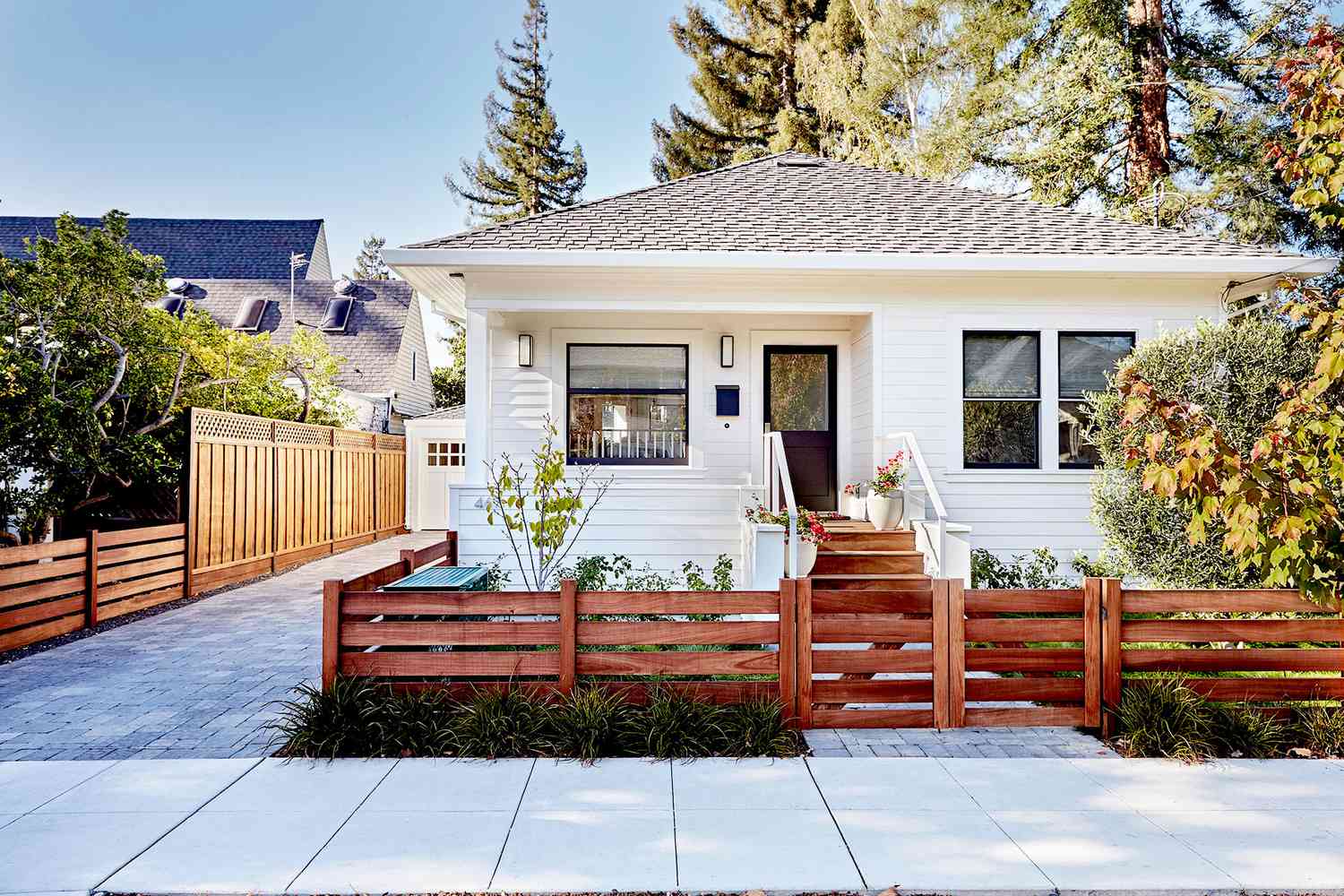
white house wooden fence

PHOTO CREDIT: KIM CORNELISON

Before You Start Remodeling 

First things first: It's essential to understand what work should be done for safety reasons and to prevent costly challenges down the road. The best way to do this is to have a professional assess your newly purchased home and use that insight to develop a game plan.

"Create a priority list and start with what must be fixed," says Robbie Maynard, San Diego-based interior designer and owner of Robbie Interiors. "Hire an inspector to look for potential issues or hazards with electrical, plumbing, and the roof. It's a good idea to start with the structure and take care of items like electrical, which can be a potential fire hazard, as well as plumbing issues so that you don't end up with major problems or damage in the future. You will not see a great transformation, but it brings peace of mind."

Hiring an expert to create a cost estimate for your renovations can give you a realistic assessment of how much money you'll need to accomplish each item on the list and help you decide what you can afford to do first. And remember, while safety repairs are likely to be among the most expensive, they're critical to laying the proper groundwork for subsequent projects.

"Upgrading plumbing and electrical is always expensive," says AmyLynn Schwartzbard, owner of New York City-based Life Designs Group. "A two-bedroom, two-bath home could run $25,000-plus for all new electrical wiring and outlets. Plumbing could run $15,000-plus. But the additional work isn't worth doing if the inner runnings of the home are in disarray."

black and white living room

PHOTO CREDIT: JOHN BESSLER

1. Refresh Rooms with Paint 

Once you've addressed safety matters, you can turn your attention to aesthetic renovation projects and upgrades. Adding a new coat of paint throughout your home can make a big difference without a big investment, says Stephanie Lindsey, principal designer with Texas-based Etch Design Group.

"A fresh coat of paint on walls goes a long way for our mental health," says Lindsey. "We feel rejuvenated and like we have a clean slate to start a new chapter. You can paint walls, cabinets, or even your front door for a fresh new look."

The best part: a paint project can cost as little as $50, depending on the scope. Maynard also notes that paint almost always needs a refresh anyway when a home transitions from one owner to the next. "New paint is the first thing that makes a huge impact," says Maynard. "The great thing is you can paint yourself and save on this one."

For an added style boost, consider painting an accent or focal wall, which is generally the wall you first see when entering a room. It might also be the wall where your sofa or your bed is located.  "Dark gray or smoky green or blue are all popular colors," says Maynard.
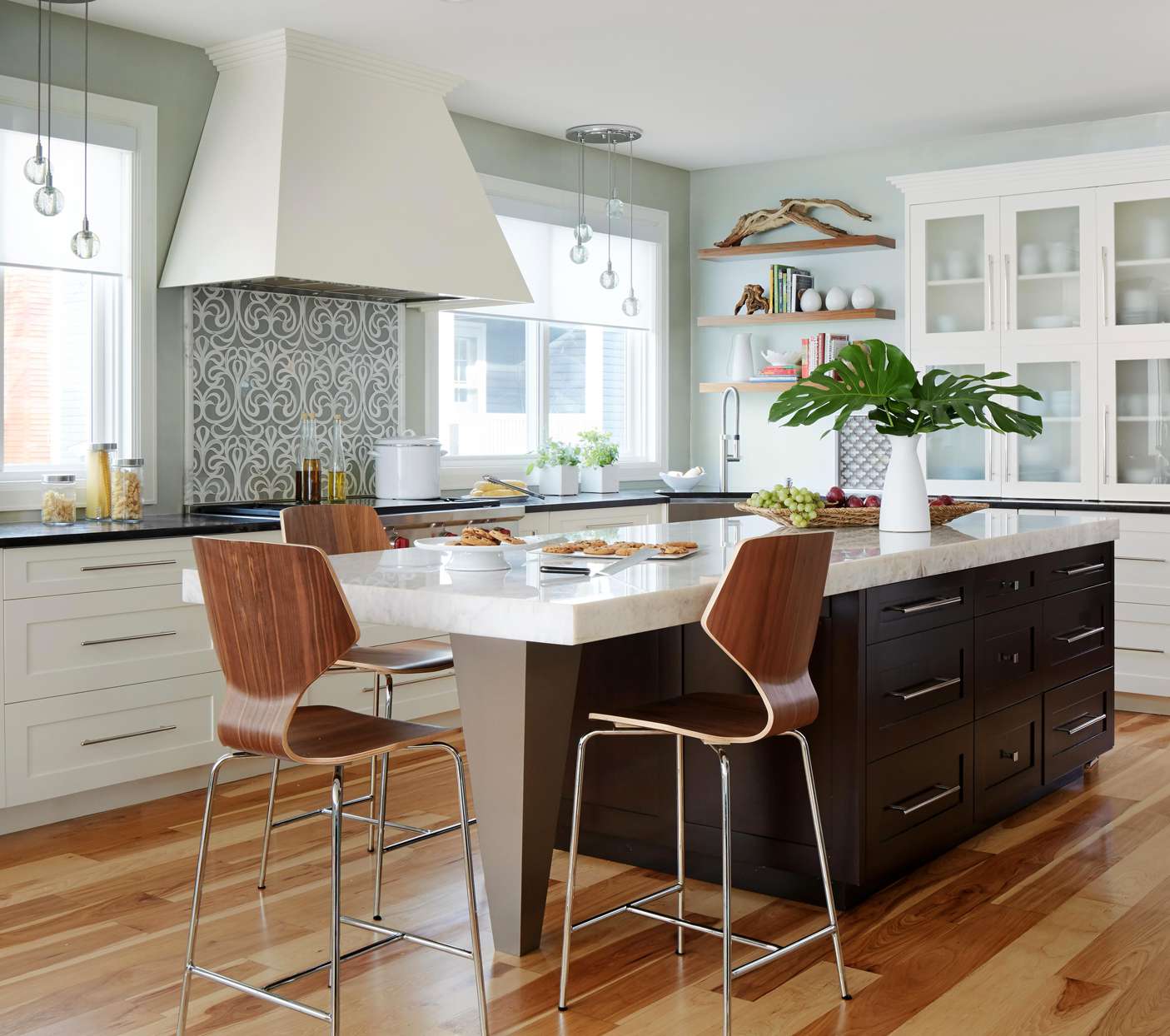
kitchen with large island and wood floors

PHOTO CREDIT: WERNER STRAUBE

2. Install New Flooring 

Another project that can make a tremendous and immediate difference in a fixer-upper is flooring. Maynard recommends luxury vinyl plank flooring to save money, which runs about $5 a square foot.

"It's the best thing since sliced bread," says Maynard. "It looks like real wood for a fraction of the cost. I love the chevron or herringbone patterns, which I have been specifying in many of my projects. Luxury vinyl plank is also water-resistant and can be used in bathrooms. New flooring and paint will transform your fixer-upper right before your eyes."

Not only will new flooring brighten a fixer-upper visually, but tackling this type of change early on can be much easier logistically. Once you've moved in and your furniture and personal belongings fill every room, redoing flooring can be challenging at best.

"It can be downright unbearable while the work is being done," says Ron Leffler, of Virginia-based Ron Leffler Real Estate. "It usually takes several days from beginning to end. The smell from the fresh polyurethane [if you're refinishing hardwood floors] can also take a day or two to dissipate."

One additional consideration: the color you select for your vinyl flooring or floor stain will also help set the stage for future updates in your home.  

White house porch people front yard

PHOTO CREDIT: KIM CORNELISON

3. Upgrade the Exterior 

Exterior upgrades are also an important consideration for fixer-uppers and can be more affordable than interior changes, which often require plumbing and other system improvements. The 2020 U.S. Houzz & Home Study found that 21% of renovating homeowners tackled roofing, windows and skylights, and exterior paint projects at a median spend of $8,000, $3,900, and $1,000, respectively. Outdoor yard and landscaping projects are also a good idea, says realtor Jennifer Thomson.

"Don't forget about your fixer-upper's curb appeal; the neighbors will thank you and you will be able to enjoy your yard in the summer months," says Thomson, who recommends adding grass for starters. "If you use fast-growing grass seed, you will have a lush lawn surrounding your home in no time. Most homeowners spend between $450 and $900 on lawn seeding a 5,000-square-foot lawn. When it comes time to sell your fixer-upper, the curb appeal will add thousands to the value of your home."

Bermuda grass germinates in as little as seven to 10 days, while Buffalo grass can take two weeks to 30 days, says Thomson. Yet another option is Centipede grass, which has a germination time of 14 to 21 days.
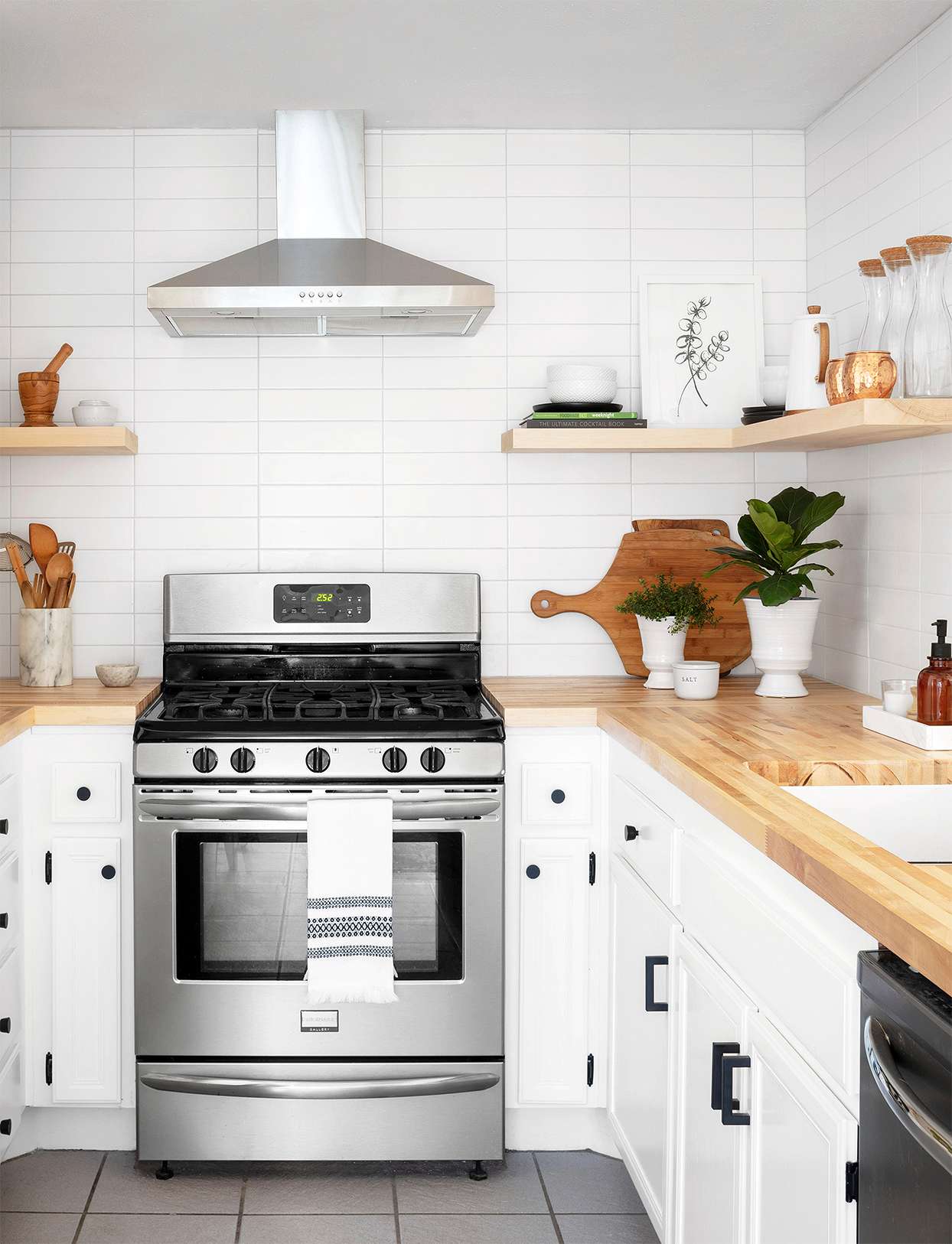
black white kitchen modern minimalist butcher block counter range

PHOTO CREDIT: EDMUND BARR

4. Remodel Your Kitchen 

It's no secret that kitchens are often among the priciest renovations homeowners embark upon—because who doesn't want a dream kitchen with all of the bells and whistles right? The good news is that a kitchen renovation doesn't have to cost a small fortune. And furthermore, you might want to prioritize your spending on this space given just how big of a role kitchens play in everyday life. (Not to mention the solid return on investment you're likely to get.)

"The kitchen is one of the most used and important spaces in the home," says Maynard, noting that one way to save costs on improvements in this room is by simply painting your cabinets if they're in good shape, or refinishing them. Taking this approach could cost anywhere from $2,500 to $3,500, Maynard estimates.  

If the doors are not in good shape and won't be much improved with paint, refacing (replacing the doors) can be another budget-friendly cabinet upgrade option. Costs range from $5,000 to $7,000, says Maynard. Bottom line: kitchen renovations do not have to cost in excess of $15,000 or $20,000.

"Everyone thinks a kitchen remodel is super expensive, but it doesn't have to be. The Home Depot cabinets can look great. There are discount granite shops that will cut and install your countertop for much less than the high-end showroom places. I flip houses in California and can get an entire kitchen remodel for under $12,000," says Nancy Chillag of 23rd Street Investors.

Chillag's tricks of the trade include sourcing granite at warehouses, not showrooms, where you can purchase more affordable materials for a countertop upgrade. She also suggests searching for kitchen fixtures and other items at Lowe's or similar big-box, high-volume stores as opposed to high-end showrooms.

cheery entryway with colorful wallpaper and white doors and windows

PHOTO CREDIT: PETER MOLICK

5. Replace Windows 

Installing new windows might not be the cheapest project to tackle initially, depending on who you buy them from (and you should definitely shop around.) But this is an improvement that can pay for itself over the long run by saving you money on utility bills.

"Old windows might have air leaks, which can cause your furnace or HVAC system to work overtime and increase your bills," says Andrew Wilson, a home improvement contractor based in Madison, Wisconsin. "Plus, it also makes living in the home comfier when you don't have to worry about the cold breeze or warm summer heat entering through the windows seasonally."

white kitchen with beige ceiling

PHOTO CREDIT: JOHN GRANEN

6. Repair Drywall and Ceilings 

Yet another home improvement project to consider early on for logistical reasons is major drywall or ceiling repairs, including moving walls. Like flooring, this type of work is best tackled before moving in. 

"Removing popcorn ceiling texture? It's a messy job and much easier to do when you don't have to worry about getting furniture or floors wet and dirty," says Robert Taylor, a rehabber based in Sacramento, California, who's been fixing and flipping homes for more than 15 years.

While most homeowners can remove popcorn ceiling on their own, you'll likely need someone to come through to retape and texture the ceiling, says Taylor, owner of The Real Estate Solutions Guy. Expect removal of acoustic ceiling texture and retexturing to cost around $2 to $3 per square foot, says Taylor.

How to Get the Most for Your Money 

Whether you choose to start with new flooring, kitchen renovations, updated ceilings, or drywall, if you're hiring a professional to do the work, it's best to shop around to make sure you're getting a good price. This will also help you develop a more complete picture of the expenses involved.

"Get at least three qualified quotes from contractors to do the work," says John Bodrozic, co-founder of HomeZada, a platform that helps homeowners manage renovations. "This is where you start to see what the total cost of the project is beyond material costs, because the contractor quotes will include their labor costs, their tools costs, insurance costs, and their goals for profit on the project."

One more point about selecting a contractor: the lowest bid is not always the best bid, even when you're on a tight budget. 

"Hire the right contractor, don't hire the cheapest contractor to save money," says Chillag. "It will cost you more money in the long run. Get recommendations for contractors, interview them, and talk to their prior clients. A good contractor will look at your remodel wish list and give you advice on how to save money and what order to do things in so that you're not undoing work later on in the remodel process."

Final Considerations 

Buying a fixer-upper can be a wise way to get into homeownership on a budget. It can also be a monumental undertaking and a labor of love, particularly if you intend to stay in the home for the long haul rather than simply flip it in a few years. No matter which camp you're in, make sure you thoroughly understand the work that needs to be done and why before diving into any projects. After all, mistakes can be costly and if your budget is already tight, it's best to spend your money judiciously as a new homeowner. Doing this requires being educated about your choices.

"One of the biggest tips anyone should know about renovating a fixer-upper is ensure the correct thing is being fixed. A common mistake is people thinking for instance that if floors aren't leveled correctly, they need to replace the flooring. That's a costly mistake since most of the time it's not a flooring issue, but instead a problem with the home foundation," says Wilson, the home improvement contractor. "It's essential to be sure that what's actually causing the issue is what's being fixed."


Mia Taylor is an award-winning journalist who's passionate about making personal finance coverage accessible and engaging. News organizations she has worked for as a staff member or contributor include The Atlanta Journal-Constitution, the San Diego Union-Tribune, The Boston Globe, TheStreet, Bankrate, MSN, and Cheapism. In 2011, she was a member of a team of KPBS reporters who received a Walter Cronkite Award for Excellence in Journalism. Follow her coverage on Twitter and Instagram.

Should You Laminate Your COVID-19 Vaccine Card?

  • By
  • Posted

According to experts, this isn't the best course of action.

COVID-19 Vaccine Card Suggestions

By Jenn Sinrich , Martha Stewart, Health and Wellness

If you have already secured one or both of your COVID-19 vaccinations, you're probably feeling extra grateful for science. You're likely also feeling as if you are seeing the light at the end of the tunnel after a year filled with fear and countless unknowns. Needless to say, your vaccine card—which documents your coronavirus inoculation—is incredibly important, since it marks this moment, proves your vaccinated status, and may be your ticket to traveling internationally or attending large-scale events, like sports games and concerts, down the line. As such, you might be wondering if you should preserve your card to keep it in mint condition, and many people are even asking whether or not it's a good idea to laminate the card.

While Niket Sonpal, M.D., a New York City internist on faculty at the Touro College of Medicine, agrees that keeping the card safe is important, he feels that laminating it is not necessary at this point in time. "The card itself contains valuable information on your two doses, including date, timing, and vaccine name and information; however, the United States has not yet instituted vaccine passports for travel or attendance to gatherings," he tells us. "Additionally, we do not know which way the research will go. Will there be a need for booster shots? They would be placed on that original card." In short, Dr. Sonpal feels that, given data and the current state of the pandemic, permanently sealing your card is premature.

Sharon Nachman, chief of the division of Pediatric Infectious Diseases at Stony Brook Children's Hospital in Long Island, New York, agrees, suggesting instead that people put their vaccine cards in plastic folders or a sealable vinyl pouch and store them in a safe place at home. "I suspect that we may need to get booster shots in the future and will need to record them on the same document," she affirms. "Over time, we will want to look at any differences between the vaccines, including the timing of when the original was given and when a booster should be given." Having a card that is easily accessible and amendable will ensure that all information is stored in one place, she explains.

In the meantime, Dr. Nachman advises taking a picture of your vaccine card and saving it on your phone, so you have two copies of you what were given and when it was administered. "I like the redundancy and having these copies available to you at any time as a precaution to needing that information at the drop of a hat," she adds. In addition to storing your card in a plastic folder and keeping a digital iteration on your phone, Robert Hess III, a public health expert and the CEO of Hess III Communications, a company that advises health and human service providers, also recommends sending a copy of your card to your primary care physician, so that it is stored in your medical record. "This will also make sure it is fully protected and always accessible," he says. "Additionally, individuals can make a photocopy of their vaccine card—and laminate that one if they so choose."


Vaccines, Stimulus Are Fueling Seller Optimism

  • By
  • Posted

Americans are more upbeat about the idea of selling, particularly as the vaccine rollout continues and latest round of stimulus checks are distributed. That could come as hopeful news as many markets face severe housing shortages and buyers are increasingly being left with few choices of homes for sale.

Vaccines, stimulus are fueling seller optimism

Fannie Mae’s Home Purchase Sentiment Index rose by 5.2 points in March to a reading of 81.7. The components on the index that increased the most last month related to home selling and buying, household income, and home prices.

“The significant increase in the HPSI in March reflects consumer optimism toward the housing market and larger economy as vaccinations continue to roll out, a third round of stimulus checks was distributed, and this spring home buying season began—perhaps with even more intensity this year, since 2020’s spring homebuying season was limited by virus-related lockdowns,” says Doug Duncan, Fannie Mae’s senior vice president and chief economist.

The measure over home-selling sentiment moved higher across most consumer segments and reached nearly pre-pandemic levels, Duncan notes. That is “generally indicative of a strong seller’s market,” he notes. “Consumers once again cited high home prices and tight inventory as primary reasons why it’s a good time to sell.”

More Americans also reported it’s a “good time to buy” in the March survey compared to February, likely still being drawn to historically low mortgage rates despite recent upticks. However, that measure on home-buying sentiment still lags behind pre-pandemic levels. The home-buying experience is proving difficult due to rapidly rising home prices and a lack of housing supply, Duncan adds.

Here’s a closer look at indicators from March’s Fannie Mae’s Home Purchase Sentiment Index, reflecting responses from nearly 1,000 consumers over the housing market:

  • 61% of consumers said it’s a good time to sell, up from 55% in February.

  • 53% of consumers said it’s a good time to buy a home, up from 48% in February.

  • 50% of Americans surveyed believe home prices will go up over the next 12 months, up from 47% the month prior.

  • 54% of consumers expect mortgage rates to increase over the next year, up from 47% a month earlier.

  • 82% of Americans say they are not concerned about losing their job over the next 12 months, unchanged from February.

  • 25% of respondents said their household income is significantly higher than it was 12 months ago, up from 17% in February.


Source: “Home Purchase Sentiment Index,” Fannie Mae (April 7, 2021)

Why Spring Is the Best Time to Deep Clean Your Home

  • By
  • Posted

Why it's so popular to refresh your spaces during this season every year.

Spring cleaning woman vacuuming floor

By Nashia Baker 

When you think about springtime, fresh blooms, seasonal fruit, and pastel colors likely come to mind. Another (arguably less fun) seasonal association? Spring cleaning. But why do we deep clean our spaces at this time? According to the experts, it's simple: The warm weather makes a maximum refresh possible. "With the ability to open windows and shake the rugs, spring is the perfect time for decluttering and deep cleaning," says Andy Telatnik, the director of marketing for retail at Bona. If you feel the same way, you're not alone. According to a Bona and Harris Poll survey last year, half of the adults in the United States say that the start of spring is all about cleaning; decluttering and polishing floors will be the top two tasks for homeowners this particular season.

Don't forget about the pros of disinfecting during this time of year, either. "Spring is a season when everyone starts spending a little more time outdoors—and more dirt and germs are invited in," explains Julie Mckinney, PhD, R&D director of equity, claims and compliance, hygiene, and home at Reckitt Benckiser. "Even though spring signals the end of the cold and flu seasons, people should still be vigilant about the germs and bacteria living on surfaces and collecting in the spaces in their homes—especially as the COVID-19 virus continues to circulate." Ahead, our experts share more about the logic behind spring cleaning and how to make the most of this time.

The benefits are both physical and emotional.

With spring comes longer days, which physically shine a light on the grime that has accumulated during winter. You start "noticing all the dust and smudges that have collected over the past year and feel inspired to get it all cleaned out to bring fresh energy," Kadi Dulude, the owner of  Wizard of Homes, a top-rated home cleaner on Yelp, says. And certain parts of your home really do need that refresh. Take your hardwood floors, "Deep cleaning your floors will extend their life," Telatnik shares. "By  removing dust, debris, and other elements of winter, deep cleaning will prevent scratches and damage to the wood finish, which likely means refinishing the floors less often."

Inevitably,  when your space looks good, you feel good, too. A recent Harris Poll survey, in partnership with Bona, found that people feel safer, productive, relieved, happy, and in control after cleaning and disinfecting their homes. Plus, eight out of 10 Americans felt more relaxed and enjoyed spending time in their spaces that much more.

Take a targeted approach.

"When considering what to prioritize in your spring cleaning and disinfecting routine, remember that any frequently touched surface should be considered high priority," Mckinney says. "Think light switches, doorknobs, handles, and sink faucets—all places where germs can linger for hours, or even days, and then travel from person to person." Once you've got your head wrapped around the most important areas to clean, Dulude says to carve out time and listen to your favorite music to make the process a fun one. Another tip? Round up go-to supplies. "Pick scents and materials that make you want to try them out on different surfaces," she explains. "Get a new mop, microfiber cloths, or organizing bins." She always recommends having other cleaners on hand to give your floors, countertops, and other most-touched surfaces the deepest clean possible.

From here, Dulude says to start on the top floor of your home with hard-to-reach items. "Things that are often overlooked during weekly cleans: tops of picture frames, ceiling fans, tops of high dressers and cabinets, and the insides of lighting fixtures," she explains. "But don't forget to clean under things, too. Take everything out from under the bed, give it all a clean, and put things back neatly (after mopping the floor, of course)." Take this approach in every space, like under your big kitchen appliances. If you'd rather enlist help to master this type of cleaning, you can also turn to an app or use a cleaning business tailored for the task.

Maximize your cleaning efforts.

Next, Dulude recommends these essential steps: deep clean your rugs, donate, toss or recycle any things you don't need, wipe down your knick-knacks, wash your throw pillows, blankets, and toys, and remove scuffs from your walls. Make sure to scrub your floors too. After this step, Telatnik says to let them dry, and then apply a coat of polish to refresh your finish. "A coat of polish can even out a floor's look, filling in any small scratches and adding a new protective layer on top of your floor," he said. "If the surface has larger areas of damage (worn patches, scratches, water spots, etc.), consider contacting a certified flooring contractor to determine the best approach."

"Additional steps that people often neglect, but should definitely tackle as part of their comprehensive spring cleaning and disinfecting routine, include vacuuming the mattress to reduce allergens and dust mites, emptying and disinfecting the shelves and drawers around the house, vacuuming the blower compartments of the A/C to prevent mold and mildew from venturing into your home, and cleaning the inside of the washing machine to help prevent bacteria buildup and laundry contamination adds Mckinney.


4 Simple Updates to Refresh the Home Office

  • By
  • Posted

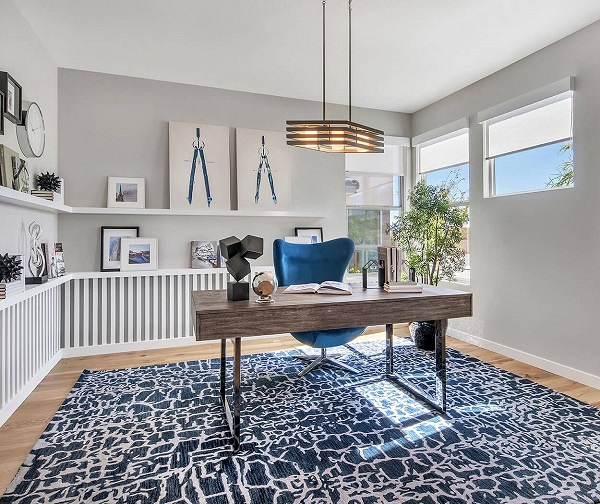
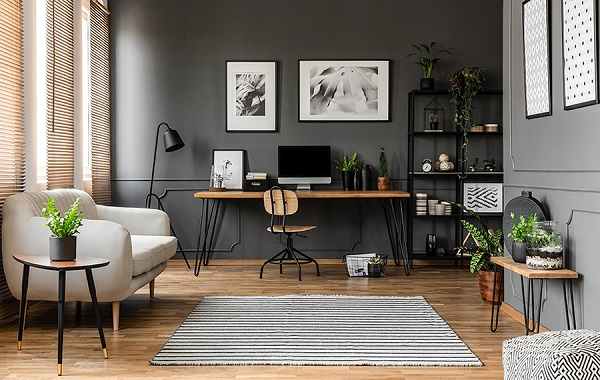
Homeowners across the country have transformed their kitchens and living rooms into temporary workstations. But have they created an optimal setup for remote work? Kelsey Stuart, CEO of Bloomin’ Blinds, offers the following tips to make a home office more inviting and motivational.

woman on laptop with her cat

Give the walls a fresh coat of paint. Whether you have a designated home office or plan to repurpose a spare bedroom or basement, try a quick and fresh paint job to transform the room. Lighter tones reflect more light, helping to make a home office feel roomier. Try a light, simple color scheme in order to promote high energy and creativity. This will also provide a professional background for video conference calls. Need inspiration? Try these 2021 paint colors of the year from Benjamin-MooreBehrPantone, or Sherwin-Williams.

Good lighting is key. Lighting is critical to productivity and professionalism in the age of Zoom calls. There are two ways to control the lighting in a room: through natural light via windows and artificial light, using lamps and bulbs.

  • If you haven’t already, swap out existing lightbulbs for LED bulbs. Relatively inexpensive, LEDs are energy-efficient and help light up a room better than traditional bulbs. Eliminate shadows by adding lamps where needed.

  • Whether you’re trying to focus for an extended period of time or are about to log into a videoconference call, controlling the amount of natural light in the room impacts your productivity. You might find it helpful to rearrange your office based on natural light sources so that your eyes don’t get fatigued. Also, control the amount of light in the space by adding blinds, which give you the ability to direct the light in your office. You could also use shades with motorized units to make easier adjustments. Blinds also can have sun sensors that will lower shades if the window gets too hot, helping you to stay focused on your work.

Bring in the outdoors. A functional and beautiful add-on to your office space, plants have been shown to boost creativity while also creating a calm environment to work—all while filtering the air you breathe. Here are ideas for what plants to add.

Personalize your space. We’re all spending more time in our home office, so don’t forget to add the personal touches that remind you of why you go to work every day. For instance, photos of loved ones or a fun pattern on a floor rug can help you create a space that you’re happy to spend time in.


Courtesy Realtor Magazine

Source: By Kelsey Stuart, CEO of Bloomin’ Blinds  

Is the new Workweek 3 Days In, 2 Days Out?

  • By
  • Posted

Many workers want to continue to work from home, even when the pandemic is over. A new survey from JLL of 2,000 employees globally found that 72% want to be able to work from home more during the workweek, up considerably from 34% before the pandemic. Sixty-six percent are in favor of a hybrid model that mixes in office, home, and a co-working facility.

office space and cubicles

The idea of a 3-2-2 model is gaining popularity with workers. LinkedIn’s year-end roundup of 2020’s workplace trends called it a one to watch in the new year. The model would allow employees to work three days in the office, two days remotely, and two days off.

While many workers don’t want to return full-time to the office, they are missing the workplace. Fifty-two percent of professionals say they do not feel as productive at home, and 58% miss working at an office, according to a separate JLL survey. The 3-2-2 model could allow workers to balance remote and in-office work.

“The emergence of this new framework for the workweek confirms that people don’t just want to go back to the office—for many, they need to,” writes Kenny Kane, chief operating officer at Firmspace, for Forbes.com. “And commercial real estate agents will see this reflected in their quarterly reports as soon as the pandemic turns around.”

Still, a CBRE analysis cautions that the growth in remote work could cut the overall need for office space by 15% after the pandemic ends. As workplaces consider new leases, they’re demanding more flexible space options, shared meeting spaces, better indoor air quality, connected building apps, and touchless technology, CBRE notes. Also, about 50% of the workers surveyed by JLL consider socialization spaces crucial to their experiences in the office in the future. These spaces could include coffee and tea areas, lounges, terraces that offer more connection with nature, and more.

Peter Miscovich, managing director of strategy and innovation at JLL, told the Commercial Observer that some clients are wanting to decrease their office portfolios, open up satellite spaces in the suburbs, or retool their existing spaces to fit a new hybid workplace model.

Co-working spaces are increasingly being viewed as an alluring option to more workers. The JLL survey finds that 40% of workers would like to be able to work at a co-working space in the future.

Regardless, the office will remain a key role for companies as a collaboration space, Miscovich says. Only 10% of survey respondents said they would want to work from home exclusively. Seventy-four percent said they would be willing to return to the office at least part time; 24% would be willing to return on a full-time basis.


Courtesy Realtor Magazine

Source: "72% of Workers Don't Want to Return to Office Full Time. Report Finds," Commercial Observer (March 5, 2021); "Shaping Human Experience," JLL (Feb 22, 2021); and "What the New 3-2-2 Work Week Will Mean for Commercial Real Estate," Forbes.com (March 2, 2021)

Co-Working Spaces May Soon See a Surge in Activity

  • By
  • Posted

Co-working and flexible workspace providers saw business quickly dwindle as the COVID-19 pandemic struck last spring and the shift to remote work began. These businesses sublet space on short-term contracts, which allowed tenants to leave quickly as employees moved to working from home.

Co-Working Spaces and flexible work week

However, investors and analysts are turning bullish that co-working and flexible office providers such as WeWork and IWG could soon see a boom in business as workers return to offices.

Still, there’s a lot of catching up to do. WeWork’s occupancy rate globally plunged to 47% at the end of 2020. It lost $3.2 billion last year, The Wall Street Journal reports. Before the pandemic, co-working spaces were the fastest-growing type of office space in commercial real estate, according to JLL. But the pandemic struck the sector particularly hard.

On the other hand, traditional property service providers have been more protected in the pandemic since their tenants sign long-term leases. Even as offices have remained mostly empty, building owners could still collect rent.

But moving forward, property providers may be more drawn to shorter-term leases. As such, investors are seeing signs that co-working spaces could hold a special attraction to offices moving forward.

Flexible leases could grow from less than 5% of the market today to as much as 30% by 2030, the real estate firm JLL forecasts.

Co-working spaces could grow as an option as companies may be reluctant to sign a 10-year lease until they better understand what the future of work will look like and how employees will divide their time between home and office. “Some may turn to looser office arrangements longer term, accelerating a trend already building before the pandemic,” says reporter Carol Ryan for The Wall Street Journal.

Companies that press forward with a remote office likely will still find they need a space to meet in-person at times. Also, some offices may decide on a hybrid workweek approach—splitting time between the office and home—which could also cause companies to look at flexible office space as an option.

“Co-working spaces have the potential to provide vital business services to support the remote workforce closer to where they are, especially as residual anxieties linger over taking public transit,” Brent Capron, design director of interiors at architecture firm Perkins and Will’s New York studio, told CNBC in an article on co-working spaces.


Courtesy Realtor Magazine

Source: "Flexible Offices Will Be Crowded After COVID-19," The Wall Street Journal (March 23, 2021) and "How Co-Working Spaces Could Succeed in the Post-Pandemic World," CNBC (Jan 12, 2021)

Getting the Right Light

  • By
  • Posted

Choosing bulbs has gotten much more complicated as energy-saving technology becomes more common. Here’s how to make the smartest and most flattering choices for a home.

energy saving lightbulbs

By Al DeGenova

Selecting a beautiful new light fixture for a home is a great way to visually update a home and add sparkle to a space. But putting the wrong lightbulb in that fixture can have disastrous effects. The wrong lighting makes a room feel too dark or too bright. Light also affects the appearance of upholstery, paint, or artwork.

Comparing lighting options available today can be like comparing a Model T with a Prius because of the vast options—both old-school and new—on the market. With energy consciousness steadily rising, the expansion of federal legislation mandating lightbulb efficiency is now being reconsidered by the Department of Energy, and some states, including California, Nevada, and Washington, already have strict laws in place. The 60-watt tungsten bulb is, indeed, becoming a Model T.

Just as you can still find gas-guzzling cars, however, you can still purchase incandescent bulbs. However, you need to understand the terminology surrounding new light sources.

Lightbulb Types

LED, CFL, and halogen and tungsten incandescent: LED is the most energy-efficient and long-lasting; it’s also the most expensive. Tungsten incandescent bulbs are the least efficient and cheapest; 90% of the energy consumed by an incandescent bulb is lost as heat. CFLs contain mercury and must be disposed of properly.

Bulbs come in any number of shapes and sizes. When shopping, the most common lightbulb shape and size is described as an “A19 Medium Base.”

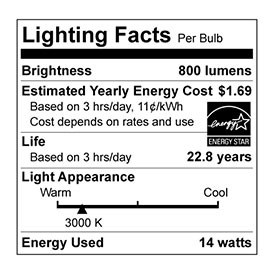
Brightness: Light output is measured in lumens, not watts as we previously used for brightness. In context, a 60-watt incandescent bulb provides roughly 800 lumens: 40W, 450 lumens; 75W, 1100 lumens; 100W, 1600 lumens; 150W, 2600 lumens.

Energy Used: The amount of electricity that a lightbulb consumes is measured in watts. A 60W tungsten bulb consumes 60W. An 800-lumen LED bulb (equivalent to the 60-watt tungsten) uses approximately 14W of electricity, a 75% reduction in energy consumption. Efficiency is often expressed as lumens per watt; the higher the LPM ratio, the more energy-efficient the bulb.

Light Appearance: We understand lightbulbs described as “warm white” or “bright white,” but these are subjective terms, meaning different things to different manufacturers. Light appearance refers to the “color” of the white light. Light color is represented in Kelvin, a temperature measurement. 2700K is roughly the equivalent of a tungsten bulb; 3000K roughly the equivalent of a halogen bulb; 4500K considered equivalent to daylight, and appears blueish.

2700K lighting is warm and cozy, great for living rooms and bedrooms. 3000K lighting is crisper and best used where functional light is important, as in a kitchen or bathroom. 4000K is great for the garage or laundry room. Make sure that the lamps and ceiling lights in a room have matching Kelvin ratings. Nothing’s worse for a room’s appearance than mismatched light color. A bedroom with 2700K lighting at the ceiling and 4000K in the nightstand lamp looks awkward and will create an imbalance in paint and fabric colors.

Dimming: Ever say, “let’s dim the lights” to create a little romance or watch a movie? When incandescent bulbs are dimmed, their color warms, meaning that it changes to look more like candlelight.

Look for the word “dimmable” as a feature on the lightbulb package or integrated LED fixture. Unlike incandescent lighting, not all LED or CFL lights can be dimmed. This is not a huge consideration for bulbs used in table or floor lamps, but ceiling lights, especially chandeliers, are often controlled by wall dimmer switches. Nondimmable LEDs may not react and CFLs may turn a greenish-blue color. So much for atmosphere.

Further, LEDs and CFLs rated as dimmable will not warm to look like candlelight. They will simply get less bright while giving off the same color. LEDs offer a technology called “warm dim” that mimics the dimming of incandescent bulbs. Search for warm dim LEDs that offer a color range of 3000K to 2200K or wider.

Color Rendering: You probably won’t see the color rendering index of a lightbulb on its package. But this measurement is important when illuminating artwork or when highlighting decor, such as fabrics or paint colors. Low CRI ratings make the colors in a room seem flat, while high CRI makes color snap.

Sunlight, with a CRI of 100, has the most accurate color rendering; halogen matches sunlight with 100 CRI, which is why galleries often use halogen lighting. Most LED bulbs are rated above 85 CRI, which is considered acceptable; CFLs are somewhat lower. However, LEDs are available at higher CRI levels when color rendering is critical.


Al DeGenova is a freelance writer and former marketing executive in the lighting industry based in the Chicago area.


Luck, Superstition May Influence Real Estate Decisions

  • By
  • Posted

Many Americans admit to being superstitious when it comes to choosing what home to buy—in fact, they say if a home feels unlucky, they aren’t buying it. More than a third—or 38%—of Americans have decided against buying a home because of superstition, according to a newly released survey from LendingTree of about 1,500 Americans. And consumers who find their self-described lucky house are willing to pay even more for it.

4 leaf clover, influence real estate decisions


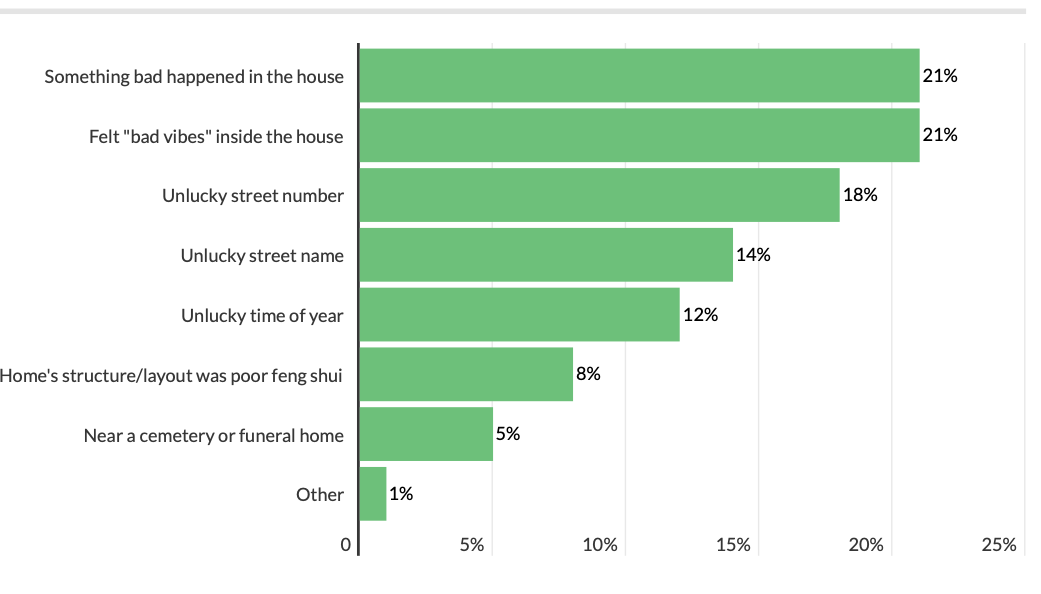
Reasons some consumers reconsidered a home purchase due to luck or superstition


Source: LendingTree survey of 1,550 consumers conducted Feb. 19-22, 2021. Only those who chose not to buy a certain home due to luck or superstition answered this question. 

Homes a buyer perceives as lucky can nab more at resale. Nearly 47% of survey respondents say they would blow their budget for a lucky house—and are willing to go an average of $38,000 above their range for the home, the LendingTree survey shows. What qualifies as a lucky home? More than a third of buyers say they’d pay extra for a home whose street number was their lucky number.

The younger generations appear to be the most superstitious in real estate—55% of Gen Z and 50% of millennials said they’ve bypassed a home because of something related to luck or superstition. Overall, men are more likely than women to decide against buying a particular home because of superstition, at 51% of men and 37% of women.

Here are some additional findings from the LendingTree survey:

  • 39% of homeowners refuse to live next to a cemetery.

  • 32% would not buy a home with an unlucky street number. (On the other hand, the majority of respondents did say they’d buy a house with an unlucky street number like 13 or 666, but 20% would prefer to pay less because of it.)

  • 30% say they would not buy a home where the previous owners experienced a tragedy inside the home, like death.

  • 43% say they have at least one deal breaker related to the home’s feng shui, with the most cited reasons being a staircase that faces the front door, back and front doors in the same path, or a bathroom door that faces the front door.

  • 43% of survey respondents who reported being previous home sellers said they’ve had difficulties selling their home due to superstitious buyers.


Source: "Nearly Half of Americans Would Burst Their Budget for a "Lucky" Home," LendingTree (March 16, 2021)

The Top Green Features Buyers Seek in New Homes

  • By
  • Posted

Energy efficiency is on many buyers’ minds when they shop for new-home construction, according to a consumer survey from the National Association of Home Buyers. The NAHB surveyed more than 3,000 home buyers—both recent and prospective—on the features they most desire in their new home.

Many buyers said they’d go with the more sustainable option, such as the use of more durable materials in their home, when presented the option.

When the cost savings of these features are pointed out, they may be even more tempted—and they say they are willing to pay up front to help lower their utility bills. On average, buyers would pay up to $9,292 more for a home in order to save $1,000 annually on utility costs, according to the NAHB’s study.

“We’re doing a lot more in our homes now,” Brandon Bryant, founder of Red Tree Builders, a green home building company in Asheville, N.C., said during February’s virtual 2021 International Builders’ Show. But he added education is key. “We’ve got to teach people how to live in green homes, how these homes operate, and even before we build to let them know what we could do because a lot of times we could do so much more for their life.”

The top eco-friendly components and designs consumers said they desired:

  • Energy Star–rated windows and appliances

  • Efficient lighting that uses less energy than traditional bulbs

  • Energy Star rating for the whole house

Other trending features center around health and wellness, such as zone heating, purified air appliances (like UVC fans), indoor air quality sensors, and connections to the outdoors, the NAHB said.

"There are a wide range of green features that buyers feel are desirable," said Paul Emrath, vice president of surveys and housing policy research at the NAHB. "Energy efficiency, though, tops the list of what they most want."


Source: National Association of Home Builders

The Brighter Path Ahead

  • By
  • Posted

More inventory and better access to vaccines are welcome news.

family in front of home for sale

Courtesy of Lawrence Yun

The 2020 pandemic-induced recession was unique in terms of the sudden and massive slashing of jobs. It was also the first recession during which overall income grew. No doubt there are families struggling paycheck to paycheck, but due to the massive stimulus packages—including the initial deposit of $1,200 and enhanced unemployment benefits—the financial condition of many families was better in a recession than before the pandemic.

Total income for the country in late 2020 was 4% higher than a year earlier. This was the figure reported just before the second stimulus checks of $600 per person went out in late December. It also does not include wealth accumulation from the record-high stock market or rising home prices. Also not reflected in the totals are the proceeds from mortgage refinances last year or the relief expected from a new stimulus. Still consumers remain cautious, as spending opportunities have been restricted by COVID-19. For the year, consumer spending fell by 2%. And the savings rate consequently rose to twice the pre-pandemic levels.

The situation translates into the potential for a great unleashing of spending in 2021. The positive impact will be increasingly felt as jobs come around. The full effect will be evident once herd immunity is established with the vaccine, likely in autumn. That is to say, 2021 is a growth year that will take us out of the recession.

The housing market continues to shine brightly. The main frustration is for buyers who find themselves outbid during multiple offer situations. More inventory is needed to give buyers more options and lessen the heat.

It's encouraging to see that builders are ramping up production of homes with backyards, which are now at their highest level in 13 years. Activity has been particularly robust in Southern states where land is more plentiful and building regulations are less onerous.

Moreover, with the wider availability of COVID-19 vaccines, homeowners, especially older Americans, who have been more hesitant about strangers visiting their homes, now may be more ready to list. Many seniors own their homes outright and have sizable housing equity for their next home purchase. They may even need to buy a larger place to accommodate more family visitors. After all, in the new economy, remote-work flexibility may mean more days working from grandma’s house.


Lawrence Yun, Chief Economist and Senior Vice President of Research at the National Association of REALTORS®


21-40 of 62 Posts

Get in touch!

Do not fill in this field:

I agree to receive marketing and customer service calls and text messages from Melanson Real Estate. To opt out, you can reply 'stop' at any time or click the unsubscribe link in the emails. Consent is not a condition of purchase. Msg/data rates may apply. Msg frequency varies. Privacy Policy.

This site is protected by reCAPTCHA and the Google Privacy Policy and Terms of Service apply.