Blog :: 06-2021
Welcome to our blog! Here you will find information regarding market, local and Lakes Region information and events! Along with DIY projects and more! Come back often to see what's new and leave us a comment if there's something you'd like to see.
Is the Housing Market Going to Crash in 2021?
The housing market is red-hot right now, but if you're waiting for a massive market correction, don't count on it. Real estate industry experts weigh in with predictions for home buying and selling trends.

CREDIT: SAUL LOEB/AFP/GETTY IMAGES
By Mia Taylor
It's hardly a secret that real estate prices across the country have been skyrocketing. Recent data from Redfin, a real estate brokerage, shows that median home prices are up 20% year-over-year. At the same time, many properties are under contract for purchase within a mere one to two weeks of hitting the market and it's not unusual for prospective buyers to offer 10% or even 20% over the asking price. In fact, Redfin reports that 46% of homes sold for more than their list price. As if that's not enough, many buyers are paying cash for homes. Yes, cash. You read that right.
"We are in a record-breaking housing market with asking prices at an all-time high ($357,200), median sale prices at an all-time high ($347,500), the share of homes selling over list price at an all-time high (46%), and homes selling faster than ever before: 58% under contract within two weeks of listing and 46% within one week of listing," says Redfin Chief Economist Daryl Fairweather. "Ask just about any real estate agent, and they'll tell you they've never seen a market this hot."
All of which has left many watchers and potential buyers scratching their heads and wondering if we're due for a market crash similar to the housing market burst that brought on the Great Recession in 2007. The short answer to that question? No, a similar crash is not likely. And there are many reasons for that.
Here's a closer look at some of the most obvious factors contributing to widespread confidence that there will be no real estate market crash in 2021 (or anytime soon), as well as insight into what real estate and industry experts do see happening in the market over the coming months—and what it all means for potential buyers.
Factors Contributing to the Overheated Housing Market
First, it's important to understand that there are numerous elements driving the current housing market and they differ from what was taking place before the Great Recession.
"Those of us who experienced the housing crash really don't want to go back to the days of underwater sellers and houses sitting on the market for months at a time without a single offer. The good news is that this isn't 2008 and 2021 has a few things going for it that the sub-prime market could only dream about back when 'short sale' became a household word," explains Debra Remington, managing broker for Texas-based Remington Team Realty.
1. Lack of Inventory
One of the biggest contributors to the current red-hot market and sky-high prices is a dearth of inventory. This is an explanation you'll hear from experts far and wide.
The shortage of inventory is caused by a few factors, including owners not wanting strangers (potential buyers) traipsing through their living quarters amid a global pandemic, thus far fewer homes being put on the market for sale.
The second issue is the pace of new construction, which has been slower than normal. Years of sluggish new construction in the United States has finally caught up, and many builders went under during the Great Recession.
"Not enough people are listing their homes for sale, and new construction isn't keeping pace with demand," says Fairweather. "America built fewer homes in the 2010s compared to any decade going back to the 1960s."
In other words, one of the primary drivers behind the current overheated housing market is very different than what set the stage for the 2007 crash. Today's boom is not due to loose lending practices flooding the market with unqualified buyers.
"What caused the market to crash was related to real estate and the lending practices that were happening. People were buying homes that shouldn't have been buying homes," says Dave Nations, founder of The Nations Network. "They couldn't actually afford the house they were buying but the loan product allowed them to at least get in the house short-term."
Experts predict that the current record low inventory will keep demand at record levels. But in the run-up to the Great Recession, the market was characterized by limiteddemand and too much inventory, says Remington.
2. Historic Low Interest Rates
Historic low interest rates are also contributing to current conditions, encouraging a steady stream of buyers to enter the market. The Federal Reserve repeatedly lowered interest rates amid the economic downturn caused by the COVID-19 pandemic. And it doesn't appear that those rock-bottom rates will disappear anytime soon, yet another reason buyer demand is likely to remain strong and thus no market crash.
"The Federal Reserve has no immediate plans to change interest rate strategy. If they stay low, buyers will continue to purchase as even if they are paying a premium, they are locking in really great rates for the next 30 years," says San Francisco-based realtor Julie Upton.
3. Millennial Buyers Entering the Market
Millennials are also entering the market like never before, which is playing a role in market conditions. According to the 2021 NAR Buyer and Seller Report, the median age of first-time homebuyers is now 33, which is coincidentally also the average age Millennials turn this year.
"Millennials buying homes have already significantly impacted the market," says Grace Keister of California-based First Team Real Estate. "At First Team, we've seen a big uptick in Millennial clients. I've personally referred two friends in the last year to buyers' agents; [I] know about two other friends who are casually searching, and another couple who just purchased after six months of searching. We also had a new agent who closed 15 transactions in her first year, all buyers that she met through her TikTok presence."
4. Lending Practices Tightened
Perhaps one of the most meaningful indicators that a real estate market crash is unlikely in 2021 can be found in today's lending environment, which is far stricter than it was prior to 2007. As Upton likes to say, the days of NINJA loans (no income, no job, no assets) are long gone.
"These risky loans were common prior to the market crash," explains Upton. "These days, lenders are very strict when qualifying buyers, and changes to appraisal laws have also tightened up the appraisal practices. Taken together, there are fewer risky mortgages in the financial system."
Why a 2021 Market Crash is Unlikely
Market crashes generally take place when there's a serious breakdown somewhere in the system. But as outlined by so many experts, that's not currently a problem.
"Absent a catastrophe in the financial markets or in the political arena, we fully expect demand for housing to remain strong," says Michael Shapot, a New York based real estate broker with The Shapot Team.
Upton supports Shapot's assessment. "While anything can happen that might impact the housing market, there are no key indicators right now to suggest that there will be a crash in 2021," she says.
Bankrate Chief Financial Analyst Greg McBride says that while the recent pace of home price appreciation isn't sustainable over the long-run, that doesn't mean prices are at risk of some sort of sharp drop or correction. It would likely take a return to the questionable lending practices of the early 2000s to trigger such a collapse.
"If lending standards loosen and we go back to the wild, wild west days of 2004 to 2006, then that is a whole different animal," McBride explains. "If we start to see prices being bid up by the artificial buying power of loose lending standards, that's when we worry about a crash."
What Is Likely to Happen with the Housing Market?
As the vaccine rate of Americans continues to increase and more homeowners feel comfortable listing properties and having strangers walk through their homes, market conditions will likely become more balanced. There will be more supply and prices should adjust somewhat.
"The gradual increase in inventory will begin to slowly alleviate the demand created by the inventory shortage," says Colby Hager of Texas-based Capstone Homebuyers. "This rather gradual return to normal will create a larger pool of options for buyers which will lead to more days on market for houses. The bidding wars seen today that are a big factor of price increases will begin to die out because buyers will have more housing options to choose from and there will be a drop in competition between buyers for any one house."
Indeed, Zillow data supports the projections of Hager and other industry professionals; while the early weeks of 2021 were marked by a scarcity of new home listings as sellers stayed on the sidelines in the face of an uptick in COVID-19 cases, data indicates sellers are starting to come back. New listings nationwide rose by 30% in the four weeks between late February and late March.
What Does It All Mean?
So what do all of these insights and predictions add up to? Is it good news for homebuyers? In many ways, that depends on your buying timeline.
"Homebuyers who have the ability to wait for the bidding wars to disappear, prices to stagnate, and listings to stay on the market longer will get more house for their dollar," says Hager. "Homebuyers who can afford to sit on the sidelines during this overheated housing market will definitely be rewarded."
And if you're in the market to buy right now and can't wait it out? "Remain patient. Exercise caution. Don't ever pay more than you can comfortably afford," says Shapot. "Consider other options, perhaps in different neighborhoods or off market properties that haven't yet been listed. Look at properties that have been on the market a while and appear overpriced; there is less likelihood that there will be a bidding war and perhaps the homeowner will be sensible and consider reasonable offers."
Mia Taylor is an award-winning journalist who's passionate about making personal finance coverage accessible and engaging. News organizations she has worked for as a staff member or contributor include The Atlanta Journal-Constitution, the San Diego Union-Tribune, The Boston Globe, TheStreet, Bankrate, MSN, and Cheapism. In 2011, she was a member of a team of KPBS reporters who received a Walter Cronkite Award for Excellence in Journalism. Follow her coverage on Twitter and Instagram.
Lumber Prices Are Dropping Fast
Lumber prices are falling quickly from record highs, and that may be happening at the right time for the new-home market.
Photo Credit: Nathalie Dupont - Getty Images
By REALTOR Magazine
Home builder sentiment sank to its lowest level since August 2020, with builders blaming increasing material supply challenges for their outlook, according to a newly released report from the National Association of Home Builders. Builders said that declining availability for softwood lumber and other building materials is pushing builder sentiment down in June, at a time when buyer demand is surging.
Lumber prices have been increasing for months, prompting builders to raise their prices and, in some cases, to stop taking new orders due to the difficulty of pricing projects accurately during the course of construction.
But wood prices are coming down—and they’re falling fast. For example, futures for July delivery of lumber were $1,009.90 per thousand board feet, a 41% drop from the record of $1,711.20 reached in early May, The Wall Street Journal reports.
“The rapid decline suggests a bubble that has burst and the question is how low lumber prices will fall,” The Wall Street Journalreports. “Even after tumbling, lumber futures remain nearly three times what is typical for this time of year. Lumber producers and traders expect that prices will remain relatively high due to the strong housing market, but that the supply bottlenecks and frenzied buying that characterized the economy’s reopening and sent prices to multiples of the old all-time highs are winding down.”
During the run-up in lumber prices, some builders began hoarding lumber to shield themselves from any future gains and to ensure they didn’t run out of it during construction. Housing analysts predict the new-home market will see greater “shadow inventory” as businesses begin to sell their own stockpiles.
“I don’t think $1,000 lumber prices are the new normal,” Devin Stockfish, chief executive of Weyerhaeuser Co., a lumber producer, told investors last week at a conference. “But that being said, when you think about the amount of housing that we’re going to have to build in the U.S. over the next three, five, 10 years, that’s just a significant amount of demand for wood products.”
Source: “Lumber Prices Are Falling Fast, Turning Hoarders Into Sellers,” The Wall Street Journal (June 15, 2021) [Log-in required.] and “Rising Material Challenges, Declining Builder Sentiment,” National Association of Home Builders (June 15, 2021)
So You Bought a Fixer-Upper to Save Money-Here Are the Projects to Prioritize
If you're embarking on renovations on a tight budget, it can be difficult to decide what to do first. In the article below, experts identify the best projects for your wallet and your home.

By Mia Taylor
The vast majority of people who purchase fixer-upper homes do so for financial reasons— because they generally can't afford a turn-key property. A recent report from Buildworld, a UK company that connects buyers with building materials, reveals that 73% of people who buy fixer-uppers do so because of money issues. This financial reality, however, can present a perplexing challenge when moving into a home that's in need of a little (or a lot) of TLC. Which renovation projects should you focus on first if your budget is tight? And why?
According to Buildworld, the average spend on "necessary repairs" is about $13,000, and "practical upgrades" cost about $6,000. We asked experts to help identify the fixer-upper projects that make the most sense right out of the gate as well as those that will give you the most bang for your buck. Here's what the industry insiders had to say, along with a few tips on how to get organized as you embark on your fixer-upper facelift.
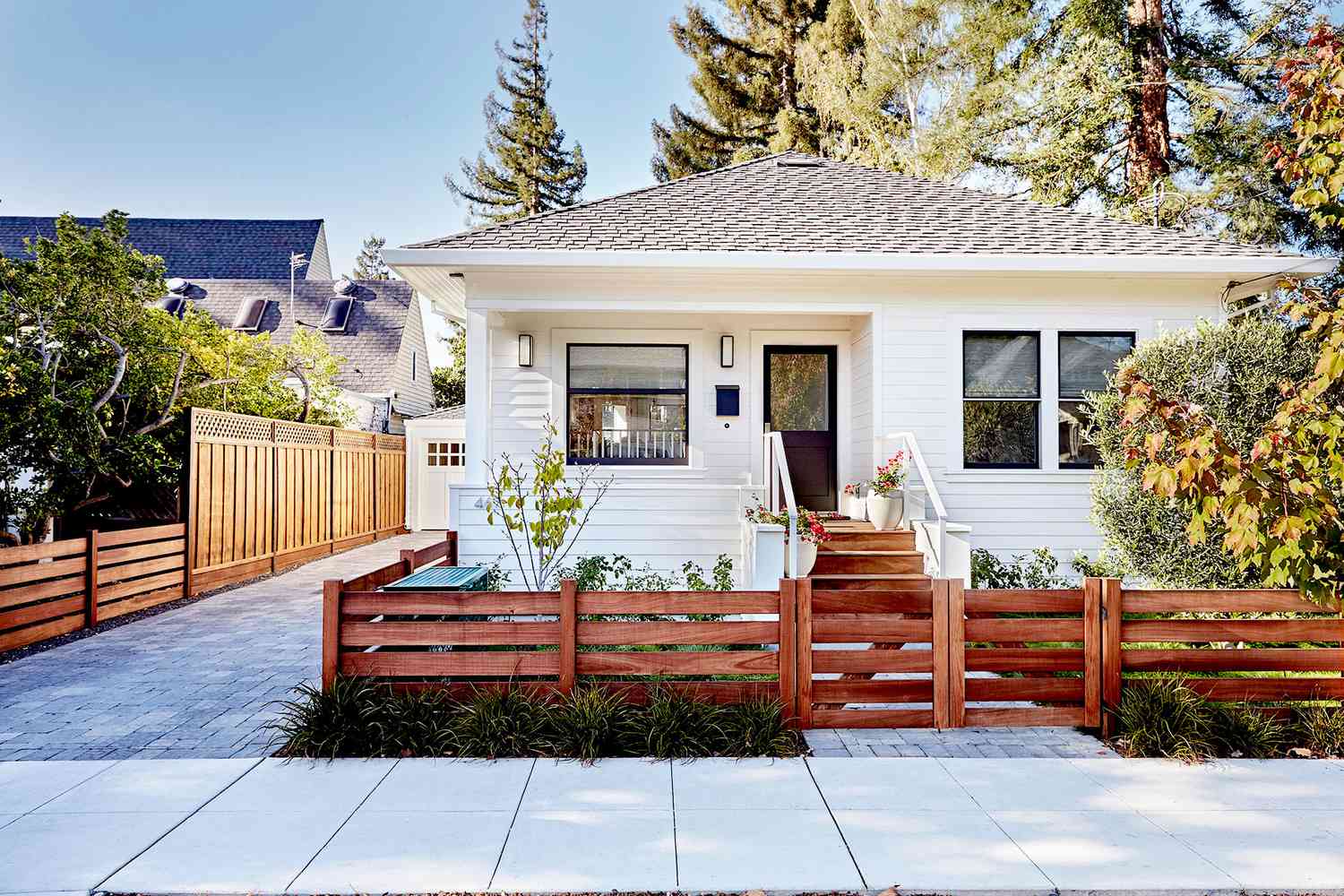
PHOTO CREDIT: KIM CORNELISON
Before You Start Remodeling
First things first: It's essential to understand what work should be done for safety reasons and to prevent costly challenges down the road. The best way to do this is to have a professional assess your newly purchased home and use that insight to develop a game plan.
"Create a priority list and start with what must be fixed," says Robbie Maynard, San Diego-based interior designer and owner of Robbie Interiors. "Hire an inspector to look for potential issues or hazards with electrical, plumbing, and the roof. It's a good idea to start with the structure and take care of items like electrical, which can be a potential fire hazard, as well as plumbing issues so that you don't end up with major problems or damage in the future. You will not see a great transformation, but it brings peace of mind."
Hiring an expert to create a cost estimate for your renovations can give you a realistic assessment of how much money you'll need to accomplish each item on the list and help you decide what you can afford to do first. And remember, while safety repairs are likely to be among the most expensive, they're critical to laying the proper groundwork for subsequent projects.
"Upgrading plumbing and electrical is always expensive," says AmyLynn Schwartzbard, owner of New York City-based Life Designs Group. "A two-bedroom, two-bath home could run $25,000-plus for all new electrical wiring and outlets. Plumbing could run $15,000-plus. But the additional work isn't worth doing if the inner runnings of the home are in disarray."

PHOTO CREDIT: JOHN BESSLER
1. Refresh Rooms with Paint
Once you've addressed safety matters, you can turn your attention to aesthetic renovation projects and upgrades. Adding a new coat of paint throughout your home can make a big difference without a big investment, says Stephanie Lindsey, principal designer with Texas-based Etch Design Group.
"A fresh coat of paint on walls goes a long way for our mental health," says Lindsey. "We feel rejuvenated and like we have a clean slate to start a new chapter. You can paint walls, cabinets, or even your front door for a fresh new look."
The best part: a paint project can cost as little as $50, depending on the scope. Maynard also notes that paint almost always needs a refresh anyway when a home transitions from one owner to the next. "New paint is the first thing that makes a huge impact," says Maynard. "The great thing is you can paint yourself and save on this one."
For an added style boost, consider painting an accent or focal wall, which is generally the wall you first see when entering a room. It might also be the wall where your sofa or your bed is located. "Dark gray or smoky green or blue are all popular colors," says Maynard.
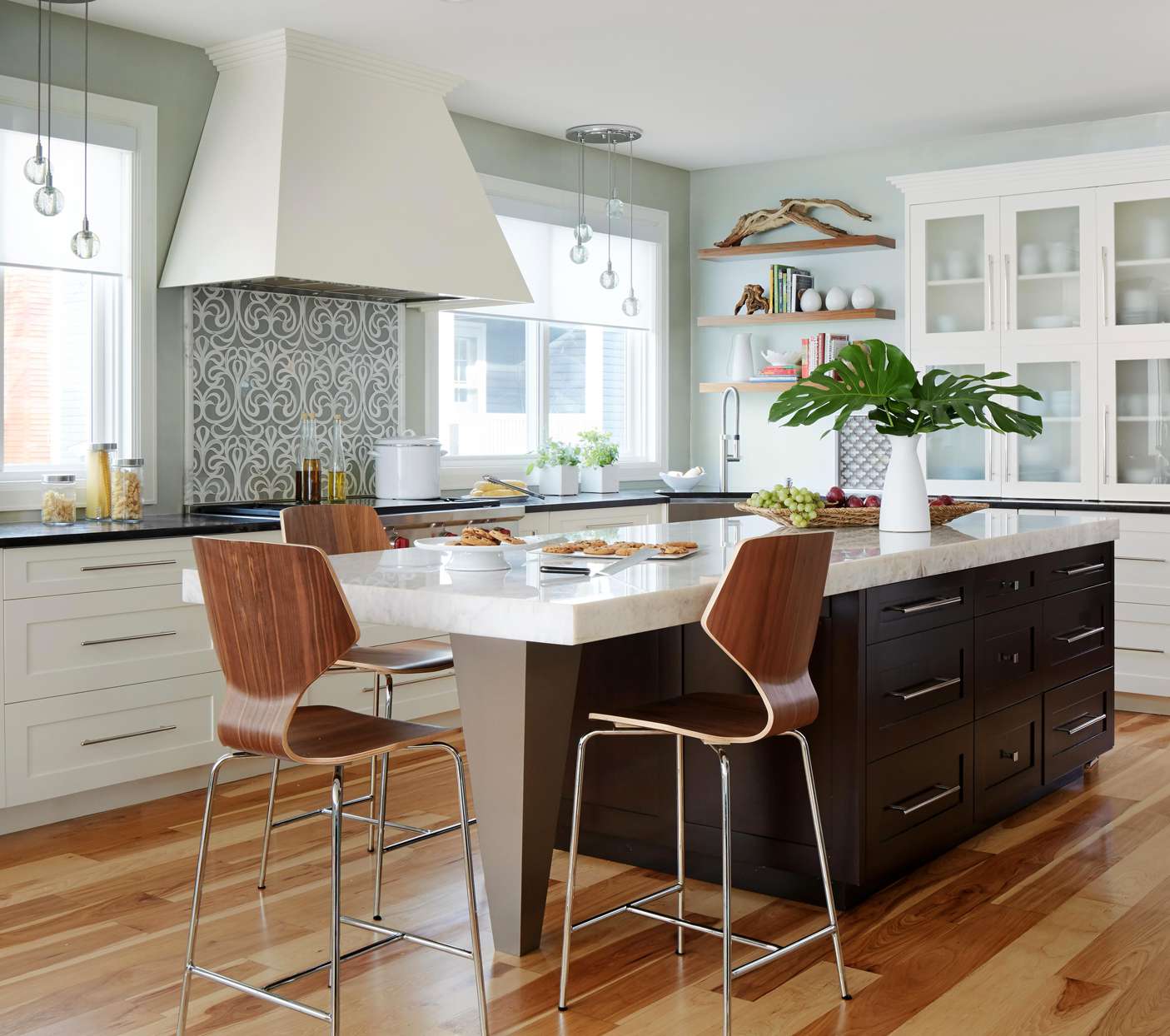
PHOTO CREDIT: WERNER STRAUBE
2. Install New Flooring
Another project that can make a tremendous and immediate difference in a fixer-upper is flooring. Maynard recommends luxury vinyl plank flooring to save money, which runs about $5 a square foot.
"It's the best thing since sliced bread," says Maynard. "It looks like real wood for a fraction of the cost. I love the chevron or herringbone patterns, which I have been specifying in many of my projects. Luxury vinyl plank is also water-resistant and can be used in bathrooms. New flooring and paint will transform your fixer-upper right before your eyes."
Not only will new flooring brighten a fixer-upper visually, but tackling this type of change early on can be much easier logistically. Once you've moved in and your furniture and personal belongings fill every room, redoing flooring can be challenging at best.
"It can be downright unbearable while the work is being done," says Ron Leffler, of Virginia-based Ron Leffler Real Estate. "It usually takes several days from beginning to end. The smell from the fresh polyurethane [if you're refinishing hardwood floors] can also take a day or two to dissipate."
One additional consideration: the color you select for your vinyl flooring or floor stain will also help set the stage for future updates in your home.

PHOTO CREDIT: KIM CORNELISON
3. Upgrade the Exterior
Exterior upgrades are also an important consideration for fixer-uppers and can be more affordable than interior changes, which often require plumbing and other system improvements. The 2020 U.S. Houzz & Home Study found that 21% of renovating homeowners tackled roofing, windows and skylights, and exterior paint projects at a median spend of $8,000, $3,900, and $1,000, respectively. Outdoor yard and landscaping projects are also a good idea, says realtor Jennifer Thomson.
"Don't forget about your fixer-upper's curb appeal; the neighbors will thank you and you will be able to enjoy your yard in the summer months," says Thomson, who recommends adding grass for starters. "If you use fast-growing grass seed, you will have a lush lawn surrounding your home in no time. Most homeowners spend between $450 and $900 on lawn seeding a 5,000-square-foot lawn. When it comes time to sell your fixer-upper, the curb appeal will add thousands to the value of your home."
Bermuda grass germinates in as little as seven to 10 days, while Buffalo grass can take two weeks to 30 days, says Thomson. Yet another option is Centipede grass, which has a germination time of 14 to 21 days.
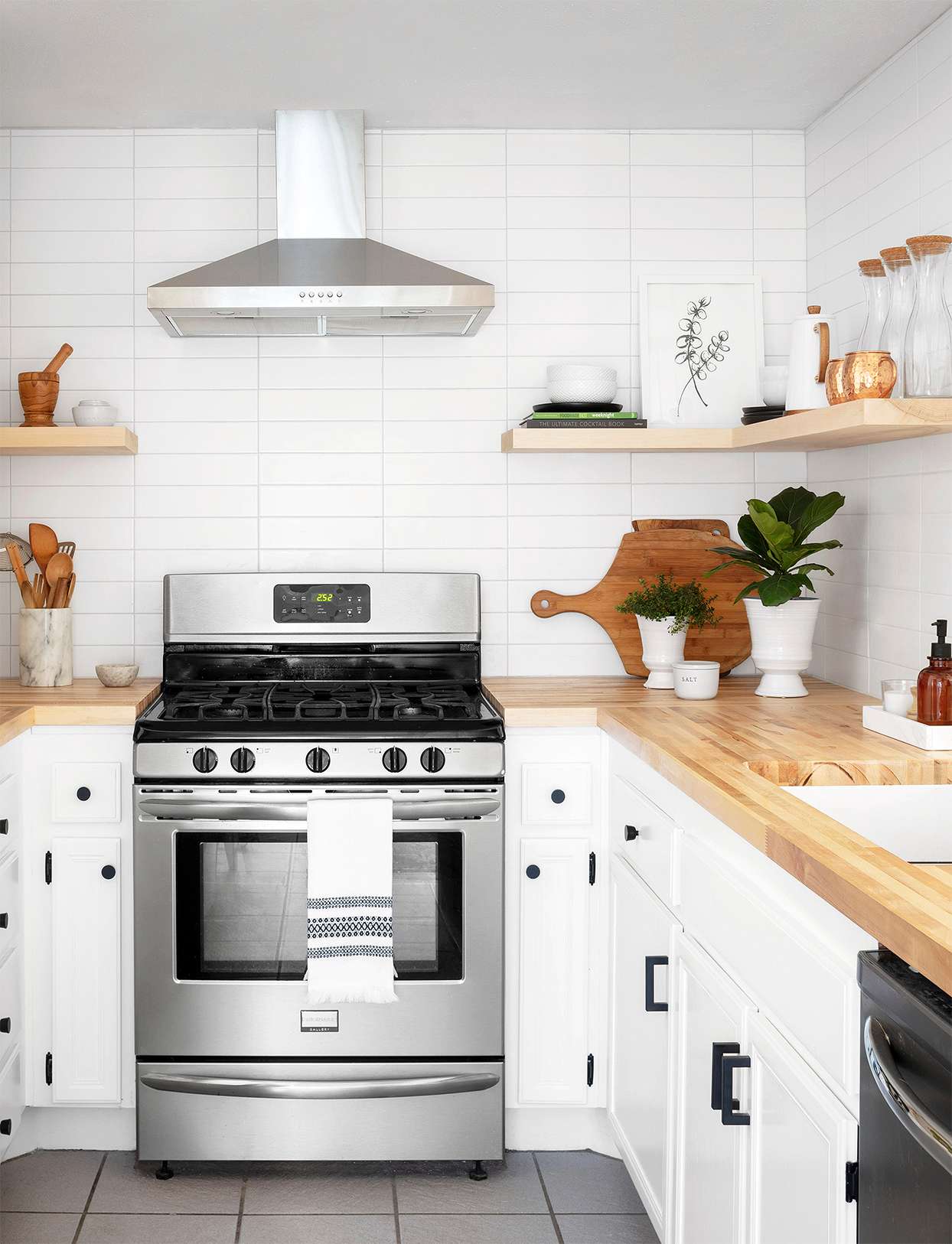
PHOTO CREDIT: EDMUND BARR
4. Remodel Your Kitchen
It's no secret that kitchens are often among the priciest renovations homeowners embark upon—because who doesn't want a dream kitchen with all of the bells and whistles right? The good news is that a kitchen renovation doesn't have to cost a small fortune. And furthermore, you might want to prioritize your spending on this space given just how big of a role kitchens play in everyday life. (Not to mention the solid return on investment you're likely to get.)
"The kitchen is one of the most used and important spaces in the home," says Maynard, noting that one way to save costs on improvements in this room is by simply painting your cabinets if they're in good shape, or refinishing them. Taking this approach could cost anywhere from $2,500 to $3,500, Maynard estimates.
If the doors are not in good shape and won't be much improved with paint, refacing (replacing the doors) can be another budget-friendly cabinet upgrade option. Costs range from $5,000 to $7,000, says Maynard. Bottom line: kitchen renovations do not have to cost in excess of $15,000 or $20,000.
"Everyone thinks a kitchen remodel is super expensive, but it doesn't have to be. The Home Depot cabinets can look great. There are discount granite shops that will cut and install your countertop for much less than the high-end showroom places. I flip houses in California and can get an entire kitchen remodel for under $12,000," says Nancy Chillag of 23rd Street Investors.
Chillag's tricks of the trade include sourcing granite at warehouses, not showrooms, where you can purchase more affordable materials for a countertop upgrade. She also suggests searching for kitchen fixtures and other items at Lowe's or similar big-box, high-volume stores as opposed to high-end showrooms.
PHOTO CREDIT: PETER MOLICK
5. Replace Windows
Installing new windows might not be the cheapest project to tackle initially, depending on who you buy them from (and you should definitely shop around.) But this is an improvement that can pay for itself over the long run by saving you money on utility bills.
"Old windows might have air leaks, which can cause your furnace or HVAC system to work overtime and increase your bills," says Andrew Wilson, a home improvement contractor based in Madison, Wisconsin. "Plus, it also makes living in the home comfier when you don't have to worry about the cold breeze or warm summer heat entering through the windows seasonally."

PHOTO CREDIT: JOHN GRANEN
6. Repair Drywall and Ceilings
Yet another home improvement project to consider early on for logistical reasons is major drywall or ceiling repairs, including moving walls. Like flooring, this type of work is best tackled before moving in.
"Removing popcorn ceiling texture? It's a messy job and much easier to do when you don't have to worry about getting furniture or floors wet and dirty," says Robert Taylor, a rehabber based in Sacramento, California, who's been fixing and flipping homes for more than 15 years.
While most homeowners can remove popcorn ceiling on their own, you'll likely need someone to come through to retape and texture the ceiling, says Taylor, owner of The Real Estate Solutions Guy. Expect removal of acoustic ceiling texture and retexturing to cost around $2 to $3 per square foot, says Taylor.
How to Get the Most for Your Money
Whether you choose to start with new flooring, kitchen renovations, updated ceilings, or drywall, if you're hiring a professional to do the work, it's best to shop around to make sure you're getting a good price. This will also help you develop a more complete picture of the expenses involved.
"Get at least three qualified quotes from contractors to do the work," says John Bodrozic, co-founder of HomeZada, a platform that helps homeowners manage renovations. "This is where you start to see what the total cost of the project is beyond material costs, because the contractor quotes will include their labor costs, their tools costs, insurance costs, and their goals for profit on the project."
One more point about selecting a contractor: the lowest bid is not always the best bid, even when you're on a tight budget.
"Hire the right contractor, don't hire the cheapest contractor to save money," says Chillag. "It will cost you more money in the long run. Get recommendations for contractors, interview them, and talk to their prior clients. A good contractor will look at your remodel wish list and give you advice on how to save money and what order to do things in so that you're not undoing work later on in the remodel process."
Final Considerations
Buying a fixer-upper can be a wise way to get into homeownership on a budget. It can also be a monumental undertaking and a labor of love, particularly if you intend to stay in the home for the long haul rather than simply flip it in a few years. No matter which camp you're in, make sure you thoroughly understand the work that needs to be done and why before diving into any projects. After all, mistakes can be costly and if your budget is already tight, it's best to spend your money judiciously as a new homeowner. Doing this requires being educated about your choices.
"One of the biggest tips anyone should know about renovating a fixer-upper is ensure the correct thing is being fixed. A common mistake is people thinking for instance that if floors aren't leveled correctly, they need to replace the flooring. That's a costly mistake since most of the time it's not a flooring issue, but instead a problem with the home foundation," says Wilson, the home improvement contractor. "It's essential to be sure that what's actually causing the issue is what's being fixed."
Mia Taylor is an award-winning journalist who's passionate about making personal finance coverage accessible and engaging. News organizations she has worked for as a staff member or contributor include The Atlanta Journal-Constitution, the San Diego Union-Tribune, The Boston Globe, TheStreet, Bankrate, MSN, and Cheapism. In 2011, she was a member of a team of KPBS reporters who received a Walter Cronkite Award for Excellence in Journalism. Follow her coverage on Twitter and Instagram.