Welcome to our blog! Here you will find information regarding market, local and Lakes Region information and events! Along with DIY projects and more! Come back often to see what's new and leave us a comment if there's something you'd like to see.
Whether you’re hearing about low interest rates or longing for more space, you might be wondering if this is a good time to buy. Here’s what you need to know.
From Zillow.com
Are You Missing Out if You Don't Buy Now?
Not necessarily. There are many factors to consider beyond the current shifts in the market.
Zillow economists predict that home prices will most likely decrease between 2-3% through the end of the year from pre-COVID levels and slowly recover by late 2021.
The predictions include two other possible scenarios: Prices decline as much as 4% and take longer to recover, or as little as 1% and recover more quickly. For example, a home priced at $250,000 in February 2020 could be priced between $2,500 and $10,000 lower, at least through the end of the year, according to the forecast.
Which scenario plays out depends on many things, including how quickly the market reopens and whether interested buyers can still afford to purchase a home.
What the forecast doesn’t change is whether buying now or in the foreseeable future is right for you. The decision to buy depends on your personal circumstances. Trying to time the market for the best deal is something even professional investors aren’t very good at.
According to Zillow economists, the current environment poses both opportunities and challenges.
New opportunities for buyers might be out there
If demand stays strong and the crisis passes relatively quickly — both big “ifs” at this moment — then we can probably expect price growth to accelerate like it was earlier this year. If that’s the case, it might be a good time for some buyers in some markets to get ahead of any growth in home prices. Other factors that could help buyers:
Mortgage interest rates are very low, which has the potential to significantly boost your buying power.
There could be less competition for the still-limited pool of homes for sale, with many people putting plans on hold and staying home.
Sellers may be more flexible on pricing and/or timing in order to close a sale, especially if letting their home stay on the market will cost them or delay their own plans.
But the challenges could be daunting
Even with the best forecasting, we can’t know for sure how things will unfold over the coming months. If the crisis persists and social-distancing and other behaviors last through the bulk of the year, home prices may fall somewhat in response to the lack of demand from buyers. It could make sense for some buyers to wait to see if the home they’re eyeing today is available at a lower price tomorrow. Additional considerations:
Inventory is already low, and it’s unlikely that many would-be sellers will list their homes right now. That could make it harder for you to find the right home.
Mortgage interest rates are low but volatile — and lenders are working through a flood of refinance applications. For would-be buyers who secured financing in early March, this may not be as big an issue. It’ll be a lot tougher if you have not yet started the mortgage process.
Logistical hurdles need to be addressed. It may be difficult to complete the sale on time if some of the connected businesses, such as appraisals, inspections and title services, are temporarily closed due to public health orders.
If you have the time and willingness to face the current challenges, now could present some interesting opportunities. But you should have a plan to ensure you can back off or reevaluate as the situation unfolds. If you’re risk-averse or don’t feel ready, you’re likely to be more comfortable waiting until the situation is more clear.
For the most up-to-date housing market analysis, data and commentary on how the market is responding to this situation, visit Zillow Research.
Choosing the most suitable bathroom flooring can be daunting. You want your bathroom flooring to complement the rest of the home yet still withstand high moisture levels, humidity and heavy foot traffic. The sheer number of bathroom floor designs, colors, textures and material types further complicate the process. To help cut through the clutter, we’ve narrowed down the best flooring for bathroom areas as well as the pros and cons of each.
Best waterproof bathroom flooring options
There are many bathroom flooring options on the market today, with many of them claiming to be waterproof. But are they? Waterproof flooring means that no water or moisture will penetrate it no matter how long the floor is exposed. In genuinely waterproof flooring materials, the waterproofing product is baked in rather than just being used as a coating. By contrast, water-resistant floors are usually not resistant to moisture under the top layer of the floor.
While the flooring material may be waterproof, the subfloor is usually not. As such, water can seep through cracks, between floorboards or along the wall and cause damage to the bathroom’s structure. Bathrooms often need a silicone sealant around bathtubs and toilets no matter what flooring type you choose.
Waterproof bathroom flooring is easier to clean and maintain, but it also protects. Because water will always find its way down through cracks on the floor or in walls, this leakage can manifest itself in the form of damp ceilings or walls, especially if the bathroom is on an upper floor. As waterproof flooring is watertight, there’s little risk of leakage.
Waterproof vinyl flooring
Gone are the days when vinyl was perceived as flimsy or cheap. Today it is one of the most popular flooring options for its durability and comfort. Vinyl planks and tiles come in virtually any color and style imaginable.
Waterproof vinyl flooring’s core is reinforced by additional layers to enhance its rigidity. When shopping for waterproof vinyl flooring with rigid core construction, you are likely to come across wood plastic composite (WPC)and stone plastic composite (SPC).
As the name suggests, WPC incorporates fine sawdust or other wood-like materials, a thermoplastic resin, fiber and a foaming agent. Sometimes referred to as wood polymer composite, this type of flooring material is lightweight, resilient, warm and comfortable when you are standing for long periods.
SPC vinyl flooring material uses ground limestone, polyvinyl chloride (PVC) and stabilizers. SPC is thinner, denser and heavier compared to WPC flooring. Due to its thin nature, there’s little padding underfoot, which makes it less comfortable.
Types of waterproof vinyl flooring for bathrooms
Waterproof vinyl planks are perhaps the most popular WPC vinyl flooring option on the market today. Made to mimic hardwood floors, they are available in several shapes and sizes.
Waterproof vinyl tile
The top surface of waterproof vinyl tiles is glazed, preventing moisture from seeping through it. Most mimic natural stone, but there are a few that look like wood.
Pros and cons of waterproof vinyl
Pros:
Affordability: Vinyl is relatively inexpensive as compared to other flooring options such as porcelain tile or hardwood.
Ease of installation: Because vinyl is lightweight, you can cut and adjust it to fit your bathroom floor exactly.
Waterproof: Vinyl floors are water-resistant, making them practical for bathrooms.
Versatility: Vinyl flooring is available in many shapes, textures and colors.
Cons:
Impossible to repair: Once damaged, vinyl flooring cannot be repaired. You have to replace the entire tile or plank.
Prone to wear and tear: Compared to other flooring materials such as hardwood that can last a lifetime, vinyl flooring has a maximum lifespan of about 20 years.
Tough to remove: If installed using a vinyl adhesive, vinyl floors are challenging to remove.
Porcelain and ceramic tile bathroom floors
From the appearance, it’s difficult to tell porcelain and ceramic tile apart. Both are made from a clay mixture that’s heated in a kiln. However, porcelain flooring is made of refined clay and is heated at higher temperatures making it denser and more durable than ceramic. Porcelain and ceramic are often the best tile for bathroom floors for durability and affordability.
Porcelain and ceramic planks
Technology has made it possible to achieve the appearance of a hardwood floor while maintaining the features of porcelain or ceramic floors through planks that mimic real wood.
Porcelain and ceramic tile
Homeowners are particularly fond of porcelain and ceramic tiles for their bathroom floors due to their versatility and durability. Porcelain tiles are harder, denser, tougher and less porous. On the downside, they are more expensive than ceramic tiles. Ceramic tiles are more affordable because they are less refined, but are also less durable.
Thin-gauged floor tiles
Gauged porcelain tiles (GPT) measure 36-by-36 inches or smaller. These tiles offer superior porcelain features that are only available from natural stone or marble. Gauged tiles are available in a wide range of styles, textures and colors.
Pros and cons of tile flooring
Pros:
Easy to maintain: Tile floorings are normally coated with liquid glass which protects them from stains.
Chemical and heat resistant: Tiles made of porcelain and ceramic do not corrode when exposed to chemical agents or extreme temperatures.
Diverse colors and styles: Tiles are available in a wide range of colors, patterns, sizes, styles and textures to fit most decor.
Durable: Porcelain and ceramic tiles are rather long-lasting. And water-resistant.
Cons:
Hard surface: This type of flooring can be uncomfortable to stand on for long periods. Professional installation is required: Even slightly uneven tiles can result in breakage, so the installer needs to be skilled and knowledgeable. Cold: This type of floor getscold during colder months. Grout lines: It’s impossible to prevent grout lines entirely. Tiles need some maintenance to keep grout lines clean and mold-free.
Natural stone tiles
When used on your bathroom floor, natural stone tile adds warmth and depth to the bathroom. The tiles are uniquely textured and colored, and can be made of marble, granite, limestone, slate and travertine, among others.
Pros and cons of natural stone tile flooring
Pros:
Enhances your bathroom’s elegance: Natural stone flooring can be beautiful and enhance your decor.
Aesthetic value: While the tiles may be the same material, each has a different coloring or grain alignment, which adds depth and texture to the space.
Increases home resale value: Natural stone flooring is as expensive as it is unique, thus improving the home’s value.
Durability: Natural stone is long-lasting when compared to other flooring materials.
Cons:
Expensive: Compared to other flooring materials such as vinyl, natural stone is quite costly.
Uncomfortable: Like ceramic and porcelain tile, natural stone adapts to existing weather conditions. The floor could become uncomfortable to walk on in cold weather.
Difficult to maintain: Soaps and detergents can lead to floor discoloration.
Porous: Unlike glazed porcelain or ceramic tiles, natural stones are quite porous and prone to water damage.
Water-resistant laminate floors
Laminate flooring came up as an easy-to-install and more affordable option to hardwood flooring. Since its inception, laminate flooring has undergone tremendous improvements. Today, it is difficult to tell hardwood and laminate flooring apart. There are also laminate flooring styles that resemble natural stone, vinyl and even tiles.
Pros and cons of water-resistant laminate floors
Pros:
Easy to install: Laminate flooring is lightweight, so it’s easier to install and ideal for a DIY bathroom floor remodel.
Waterproof: Laminate flooring is water-resistant, especially when silicone-sealed around tubs and toilets.
Affordability: Laminate flooring is an affordable alternative to hardwood and other flooring types.
Durability: Waterproof laminate is long-lasting and practical for a high-traffic bathroom.
Cons:
Difficult to repair: While it is durable, laminate flooring has to be replaced when damaged.
Less versatile: As it is a relatively newer material, there are fewer options when it comes to design and style as compared to other flooring types.
Appearance: While laminate may mimic natural stone or hardwood, it can look less realistic up close.
Engineered wood floors
If you are keen on getting long-lasting hardwood floors for your bathroom, go for core engineered wood floors. Unlike traditional hardwood floors, core engineered wood has several layers, with the outermost layer being hardwood veneer. The inner layers are made of hardwood, fiberboard or plywood.
Pros and cons of rigid core engineered wood floors
Pros:
Water-resistant: Compared to traditional hardwood, engineered hardwood does a better job of reducing moisture problems.
Easy to install: Real wood flooring is rather difficult to install, unlike engineered wood flooring which can utilize click-lock installation.
Easy to clean and maintain: As engineered wood is coated with wood veneer, it is easy to clean and maintain, holding up well against dents, fading, scratches and stains.
Cons:
Price: Compared to conventional wood, tile vinyl and laminate, engineered wood is considerably more expensive.
Health concerns: Some people have allergic reactions to the adhesives used to bind the various layers of engineered wood together
Prone to damage: The outermost surface is not scratch-resistant and needs more care than other types of flooring.
Fewer chances of refinishing engineered wood: Unlike traditional wood flooring which you can re-sand numerous times, engineered wood cannot be sanded (or only once) due to its thin top layer of hardwood.
Frequently asked questions
What are some bathroom floor tiles for a high-use bathroom? Porcelain tiles are great for high-use and high-traffic bathrooms as they are denser, harder and less porous than other types. Ceramic tiles have the same benefits as porcelain tiles but are more affordable. Vinyl is the most affordable option for a high-use bathroom.
What are the best cheap flooring ideas? Laminate and vinyl are both affordable flooring options for a bathroom. Both come in various styles, designs and colors and are two of the more easily installed flooring types.
What are some small bathroom tile ideas? A small bathroom should have small- or medium-sized tiles in neutral colors. It is not a good idea to install large tiles in small bathrooms. Apart from disrupting proportionality, large tiles may need to be cut off, resulting in waste, which can also interrupt any patterns.
What are the best bathroom flooring ideas for households with kids? Porcelain and ceramic flooring is great in a kid’s bathroom. These tiles are scratch-, stain- and water-resistant. They are also more durable than bathroom vinyl flooring and can withstand splashes from exuberant playing in tubs and sinks.
Summer will be here before you know it, and along with it, a pretty important date for all the dads out there. You guessed it: We're talking about Father's Day. Although most sons and daughters don't need a specific date to celebrate the most important man in their life, every dad in the country does get his special day on the calendar. This year's celebrations might look a little different with our current social distancing situation, but you should still take the time to commemorate the day. If you're not able to dine together, maybe you can surprise him with a porch drop-off of some of his favorite Father's Day brunch recipes or even surprise him with a mail-order meat delivery so he can grill up his favorite meal.
It was never meant to be this way, but the annual holiday can surprisingly come with a considerable amount of stress when you're supposed to find the perfect Father's Day gift for the guy who insists he doesn't need anything. (And let's be honest, sometimes a Father's Day card alone just doesn't cut it.) You may now be wondering, "Well, when is Father's Day in 2020?" Here, we're telling you all you need to know about the holiday, including its history.
WHEN IS FATHER'S DAY 2020, EXACTLY?
Before you start worrying about what to get your father for his day, you can relax a little, because there's still time to plan a Father's Day brunch or even put your crafty side to work with a DIY gift idea for dad. This year, Father's Day is on Sunday, June 21, 2020.
IS FATHER'S DAY ON THE SAME DATE EVERY YEAR?
Don't feel bad if this date is news to you; the celebration changes days year-to-year. If you ever forget, just remember that Father's Day always falls on the third Sunday in June, and then check the calendar accordingly.
WHAT IS THE HISTORY OF FATHER'S DAY?
Unlike Mother's Day, which has pretty somber origins, Father's Day has relatively light roots—and was actually created by a woman. According to History.com, back in 1909, a woman named Sonora Smart Dodd, "tried to establish an official equivalent to Mother’s Day for male parents." She went around to local businesses to gather support for her idea, and on June 19, 1910, the state of Washington celebrated the first-ever Father's Day.
Although the event inspired President Woodrow Wilson and President Calvin Coolidge to urge Americans to acknowledge a day for dads during their administrations, it still wasn't an official holiday. Unfortunately, the enthusiasm for the commemoration didn't last long. During the '20s and '30s, people tried to do away with both Mother's Day and Father's Day and replace them with Parents’ Day instead.
Then, during the Great Depression, retailers made a push to commercialize the holiday in an attempt to make money during dire financial times. And as World War II started, people began to use Father's Day as a way to pay respect to American troops.
Finally, several decades later, on May 1, 1972, President Richard Nixon signed Proclamation 4127, which declared Father's Day as a national holiday, with the first official celebration on June 18, 1972. "Let each American make this Father's Day an occasion for renewal of the love and gratitude we bear to our fathers, increasing and enduring through all the years," he wrote in the document.
Jennifer Aldrich was the editorial assistant for CountryLiving.com.
Now here's something to get excited about to celebrate our 244th Independence Day in Wolfeboro! �In�lieu of the parade being canceled and the fireworks postponed, a contest has been arranged for participating resident homeowners and�local businesses to show their patriotism in full view! Thanks to the partnering entities below, they've made this possible. For more information on how to get involved, please continue reading...
�� � �
Celebrate Independence Day in Wolfeboro by decorating your home or business. The Wolfeboro Area Chamber of Commerce, American Legion Post #18, and Wolfeboro Parks and Recreation have partnered to provide a little fun in light of this years unique circumstances.
We can all be a part of the celebration. Wolfeboro will shine with lots and lots of homes and businesses festively decorated in true Independence Day in Wolfeboro fashion.�
Participating businesses will also have their logo published on the map. This is a great opportunity to get some free advertising for your business.�
Prizes will be awarded for the viewer's choice of Best Decorated House and Best Decorated Business.�
Registration forms are available on the events page at�wolfeborochamber.com,�wolfeboronh.us/parks-recreation�and on social media linked from @WolfeboroNH and @Wolfeboroparksandrecreation. Contest Map will be available at those sites no later than July 1.
Every day that passes, people have a need to buy and sell homes. That doesn’t stop during the current pandemic. If you’ve had a major life change recently, whether with your job or your family situation, you may be in a position where you need to sell your home – and fast. While you probably feel like timing with the current pandemic isn’t on your side, making a move is still possible. Rest assured, with technology at your side and fewer sellers on the market in most areas, you can list your house and make it happen safely and effectively, especially when following the current COVID-19 guidelines set forth by the National Association of Realtors (NAR) and the Centers for Disease Control and Prevention (CDC).
You may have a new baby, a new employment situation, a parent who moved in with you, you just built a home that’s finally ready to move into, or some other major part of your life that has changed in recent weeks. Buyers have those needs too, so rest assured that someone is likely looking for a home just like yours. This year, delayed listings from the typically busy spring season will push into the summer months, so more competition will be coming to the market as the pandemic passes. Getting ahead of that wave now might be your biggest opportunity.
Bottom line, homes are still being bought and sold in the midst of this pandemic. If you need to sell your house and would like to know the current status in your local market, contact us to create a safe and effective plan that works for you and your family.
Check out our "Buyers & Sellers" tab at the top of this page for more information on how to go about it!
Please read the following article to get some terrific decorating ideas, tips and tricks from Rooms To Go.
One of the most exciting and possibly daunting parts of moving out on your own is decorating your first home. Amid all of the stress of packing, phone calls, bills and changing addresses, you also have to consider how you want your new place to look. This is an opportunity to discover your style of decorating.
1.) Prioritize Your Purchases
While decorating your first home, you'll probably find that you need a lot of new stuff. Compare the items you need now with those you could add to a wish list for the future. Begin by choosing furniture for the rooms where you spend the most time. Consider the areas you'll use the most:
Living Room: This is one of the busiest and most-used rooms of the house, so comfy seating is a must. Consider a simple yet stylish sofa set to save money and outfit the whole room.
Bedroom: After a long move, you'll need a good night's rest. A chic storage bed and a supportive mattress are essential items.
Kitchen: Hard work means big appetites, so one of the first rooms you'll unpack is the kitchen. A casual seating set is a great place to gather for your first meal in your new home.
2.) Get Creative With Decor
Once you have the perfect wall color, you can begin hanging artwork and decor that transforms your house into a home. Check out these suggestions for turning a blank wall into a showcase for your unique personality.
A favorite for rustic homes, a large clock completes your farmhouse-inspired kitchen.
Turn your hallway into a gallery with floral prints framed in dark wood or gold.
Give any room a bit of edge with an arrangement of photographs.
Collections of artwork look beautiful on a single wall or spread across rooms to carry a motif throughout.
3.) Make It Shine
Changing out light fixtures can completely transform your design. From a traditional chandelier in the foyer to modern floor lamps in the den, select coordinating fixtures or use a variety of styles for a cool, eclectic vibe. Make sure you have overhead lighting in addition to lamps so that you can brighten up the space for guests or relax with a subtle ambient glow.
4.) Feng Shui Your Way
Think about how you want to arrange your furniture to keep things inviting and comfortable. Consider who is using the room and how you need it to function. While a sprawling sectional provides seating for large families and for those who like to entertain, a loveseat with a coffee and end table trio is ideal for couples.
5.) Accents Are Everything
Accents are another wonderful way to make your new place your own. Take this chance to play with bold hues, quirky patterns and fun textures that reflect who you are. While many of your first purchases may be essentials, this is where you can get creative. Consider these stylish and functional first home ideas to personalize your space:
Try a set of nesting tables for a versatile option that you can move around the room or stack for storage.
Piles of accent pillows in a variety of colors and materials adds character to your seating arrangement.
Poufs and ottomans serve as extra chairs, footrests and impromptu tables.
Store shoes, blankets and seasonal clothing in a storage bench in your entryway or at the foot of your bed.
6.) Creature Comforts
After a big move, it's natural to crave a sense of normalcy. Do you need to begin your day with a hot cup of joe? Consider installing a coffee bar in your kitchen using a rolling cart or a credenza. Is it important for you to feel polished before leaving the house? Designate a well-lit area of your bedroom for a chic vanity.
7.) A Fresh Start
Don't underestimate the power of a little greenery to refresh the atmosphere in your home. Fresh flowers are lovely, but they can be difficult to maintain in the flurry of post-move life. Try adding silk floral arrangements or lush shrubs in every room for a much-needed dose of nature all year long.
A Hearty Housewarming
You'll be all ready to host your housewarming party thanks to these home decorating ideas. Welcome friends and family to see your new place and celebrate the landmark occasion of moving into a new home. With these tips, you're sure to impress everybody, including yourself, with a design that's all your own.
Be honest: When it comes to home projects, are you a handy hero or an aspiring amateur? No matter what your answer is, there’s something here for you. See Susan Kelleher's suggestions from easy to more advanced projects you can do yourself!
Whether you're looking for a small project or a new challenge, these improvements can enhance your space and potentially boost your home's value.
Beginner projects:
New faucets
Attention to detail is key for this project — you don’t want to flood your kitchen because you forgot to turn off the water valve — but no previous plumbing skills are required, and a shiny new faucet can generate a lot of day-to-day pleasure for a little effort. These instructions walk you through the steps to install a kitchen faucet (and the process is just the same for a bathroom sink).
Light fixtures and switches
Few things can change the atmosphere of a room as quickly as lighting. Swapping out an old fixture for a new one — or an on-off switch for a dimmer — can provide a mood for any occasion. Here’s an easy guide to change a light fixture. Switches use the same types of wires, so if you can swap a fixture, you can handle a switch.
Fire pit
This is a great one to tackle with kids. Celebrate the finished product with a s’mores party. Plus, the sales price premium on homes with fire pits is 2.8%, according to a Zillow analysis of thousands of home listings and sales prices.* Build you own backyard fire pit in 7 easy steps.
Smart tech upgrade
There are countless smart home products you can choose from, and some require little more than changing a light bulb or plugging in a device. A few to consider:
Smart doorbell/camera: Installing one is similar to changing out a light switch. The process involves removing your old doorbell and connecting the device to your Wi-Fi.
Smart locks: Do you have a family member who is always losing their house key? Replacing a traditional door lock with a keyless entry you access using a touch pad or smartphone app is an easy solution.
Smart home hub: Amazon, Google, Apple, Nest, Samsung and others offer smart home hubs, which allow you to interact with compatible devices through a central system. The hub itself is typically “plug and play” and easy to set up. But you may need to do some initial troubleshooting to get all of your devices connected.
Smart lights: This project is as simple as buying and installing light bulbs. However, the upgrade requires coordination with a smart home system because each one has its own requirements and controls. If you already have a home system, be sure the lights you choose are compatible. If you’re thinking of buying a new system, keep in mind that it needs to work harmoniously with the products you already have.
Intermediate projects:
Cabinet refresh
Updating your kitchen doesn’t have to involve major renovations. You can create a whole new look by changing out the door and drawer pulls, painting your cabinets or removing cabinet doors to create an open-shelving effect. Or, if you have too much wall space and too few cabinets, you can easily install open shelving from scratch. An added bonus: Homes with open shelving sell for 4.2% more than expected. For cabinet tips and other ideas, here are seven ways to upgrade your kitchen without remodeling.
Barn door
Switching out a traditional swinging door or a closet slider for a barn door that glides on a rail can give your room a striking look, as well as open up space and change the furniture arranging possibilities. And your effort might pay off in other ways: Barn doors are associated with a 5% price premium. You’ll need a few tools, another pair of hands, and these step-by-step instructions which cover all the details of how to build and install your own sliding barn door.
Advanced projects:
Board & batten
You may not be familiar with the term, but you’ve probably seen this classic design feature in a number of homes. Precision is required for this one, and that means you need the right tools, namely a measuring tape, a level and a miter saw. Also patience. But if you can imagine a 3D element atop your drywall, you’re ready to go, and this guide will walk you through each step of the process.
Garden shed
If you have the know-how to build a garden shed, you can find any number of plans and tutorials online to suit your taste. And if you’re not quite up for that challenge, you can still improve the one you’ve got or buy a garden-variety one and make it your own. Start by imagining whether you need it for storage or extra work or living space, and go from there. Homes with a “she shed” are associated with a 3.6% price premium. Here’s some inspiration to create your own custom garden workspace.
Heated floors
This is the kind of project you can tackle if you missed out on your real vocation and ended up in a desk job. Labor-intensive and requiring the confidence of an accomplished tradesperson (and some math skills), your success in warming your dwelling from the bottom up will make you a hero or heroine in your own home. This project is ideal if you already planned to replace the flooring in a room and have the opportunity to add a heating element in the process. Learn about the different types of radiant flooring and tips for DIY success. Homes with this feature sell for 4.9% more than expected.
Whatever you decide to do, measure twice, cut once and have fun!
Susan Kelleher is a Pulitzer Prize-winning reporter and writer. She joined Zillow in May 2018 as a senior writer on data and trends.
In the last days of Spring, all Americans commemorate those who died in the military service. Every year, we celebrate Memorial Day on the last Monday of May.
The history of Memorial Day goes back to the 19th century. People who lost their friends and relatives in the Civil War started to decorate the graves of their dead with flowers, wreaths, and flags. That is why the initial name of the holiday was Decoration Day.
After World War I, all Americans adopted this remembrance tradition of the Southern states and devoted it to all those who died in any military action. We are honoring men and women who gave their lives for our country up to now.
Today, people go to cemeteries to decorate the graves and pay homage to their dead. Typically, many Americans spend Memorial Day getting together with their family for a picnic, BBQ and/or sporting events. Although, this year may be a little different with social distancing and all.
What is the Difference between Memorial Day and Veterans Day?
If you are one of those asking “is Memorial Day not for veterans?” it is time to learn the answer. Since a lot of us still confuse Veterans Day and Memorial Day, you should know the difference to avoid any misunderstanding.
These two holidays have different origins. The official observance of Memorial Day started in 1868 at Arlington National Cemetery where people decorated the graves of Union and Confederate soldiers with flowers. This tradition was extended to commemorate all military men and women who died in all American wars.
Veterans Day dates back to the early 20th century when Armistice Day was declared after World War I to honor the heroism of the American soldiers and their contribution to the world peace. After World War II, the name of the holiday was changed to “Veterans.” Ever since then Veterans Day is observed on November 11 to celebrate the veterans of all American wars.
What Do You Say To a Veteran on Memorial Day?
To express noble Memorial Day sentiments, you should remember that this is the time to commemorate those who gave their lives in service to our country. That is why you should not thank the living veterans on Memorial Day but show respect to their fallen comrades in arms, friends, and family.
We honor veterans on Veterans Day to express our gratitude and reverence for their service. On Memorial Day, we remember and grieve for those who died in wars. In such a way, we can deliberate on the price of war and pay tribute to those who paid in full.
So instead of looking for proper words to say to a veteran on Memorial Day, you should better visit a Veterans memorial or the USSAH National Cemetery and place flags and flowers on the graves, attend the Largest Memorial Day Parade and Concert, buy a poppy, or take part in the National Moment of Remembrance.
Do You Say Happy Memorial Day?
Over time people have adopted different attitudes to using a Memorial Day saying “Happy Memorial Day.”However, it might seem inappropriate to wish a day of bitter and painful memories to be happy. Since those of us who lost their loved ones in the wars can get genuinely fragile and emotional on Memorial Day, you should rather avoid using the word “happy.”
To be on the safe side, you can say things like “Have a nice day today” or “I hope you have a fine day today.” If you plan to honor a person whose relative died in the service, you can express your appreciation for their sacrifices in the following ways:
I remember and deeply appreciate the ultimate sacrifice [name of a fallen hero] made.
I share your tremendous loss and offer my deepest gratitude for [name of a fallen hero] service.
I hope you have a nice time with your family and good memories of [name of a fallen hero] to honor [his or her] sacrifice.
By
Lastly, on Memorial Day, may we all stop and take a moment to express our deepest gratitude and appreciation to those who serve our country and to those that made the ultimate sacrifice!
Also, to honor health professionals, first responders and others who are putting their lives in harm’s way to help their neighbors and fight the spread of the coronavirus.
Thank you all for your service! Everyone be well and stay safe!
For the past five years in a row, it has been determined that due to the Millennial generation, who represent the largest share of the home buying market, has resulted in a seismic shift in the real estate market.
Now that Spring is in full swing, Home Sellers wanting to make that fabulous first impression towards Millennials (and anyone else for that matter looking to buy a new home) a memorable and successful one, now is the time before the hot summer months arrive.
Following is an article addressing those key improvements a homeowner can make to capture the eye of young adults searching for that perfect home.
By Patti Stern
Millennials, who make up the largest share of home buyers, are looking for properties in move-in condition and want to avoid the expense of significant repairs, according to National Association of REALTORS® most recent Home Buyer and Seller Generational Trends study. As such, sellers may want to invest in updates that will be most appealing to these younger buyers. Our list below features the top modest home improvements to get your home noticed and boost its perceived value in a competitive market.
Enhance Curb Appeal
Make the best first impression for buyers—even before they step foot in the door—by investing in the exterior of the property by sprucing up curb appeal:
Remodeling Magazine’s 2020 Cost vs. Value Report lists replacing siding, garage doors, entry doors, and windows as the upgrades with the greatest return on investment.
Refresh landscaping by trimming bushes, weeding, eliminating dead shrubs/trees, and manicuring the lawn.
Power-wash and make any necessary repairs to siding, windows, walkways, and steps.
Enhance the entry with a fresh coat of on-trend paint color for the front door, and update or clean all outdoor light fixtures. Finish with a colorful welcome mat, fresh wreath, and seasonal potted plants.
Refresh the Heart of the Home
The 2020 Cost vs. Value Report also lists minor kitchen remodels as a top investment for resale. Our top kitchen upgrades for an instant boost include:
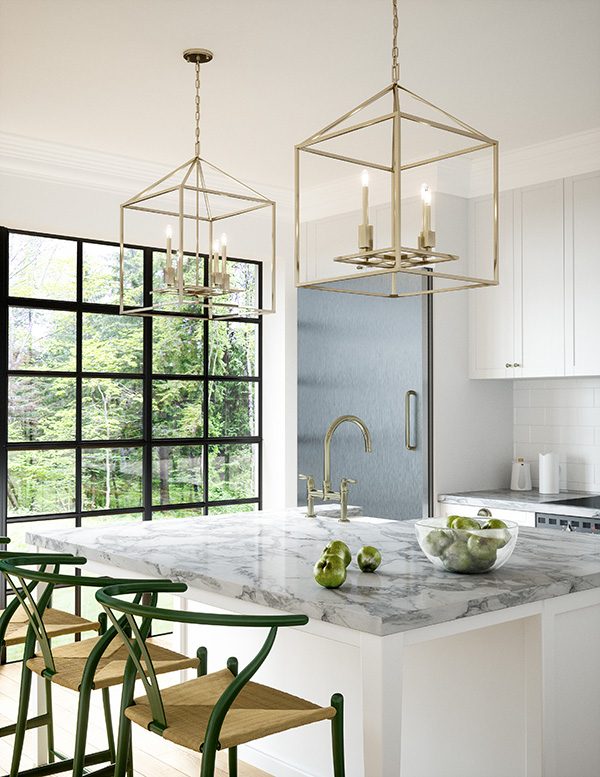
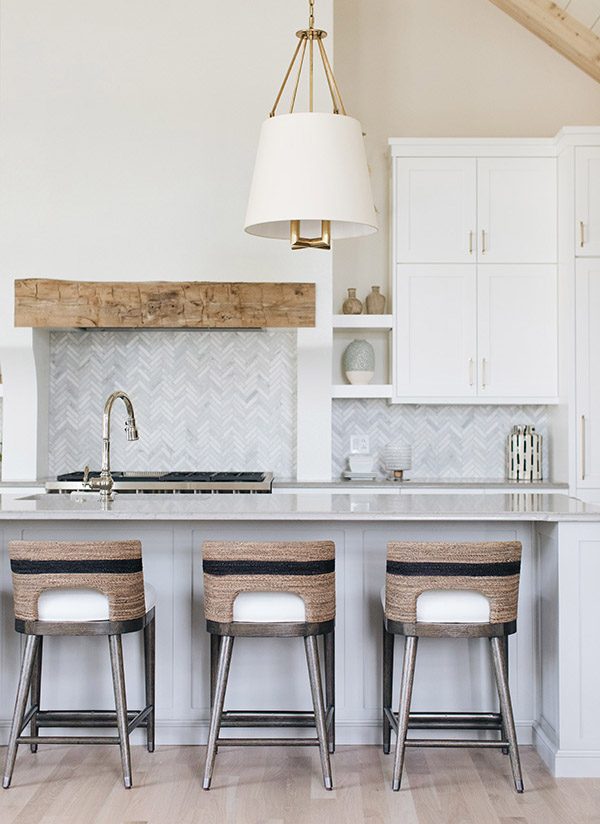
Introduce modern lighting options with fixtures in different materials (metals, woods, rattan) and geometric shapes.
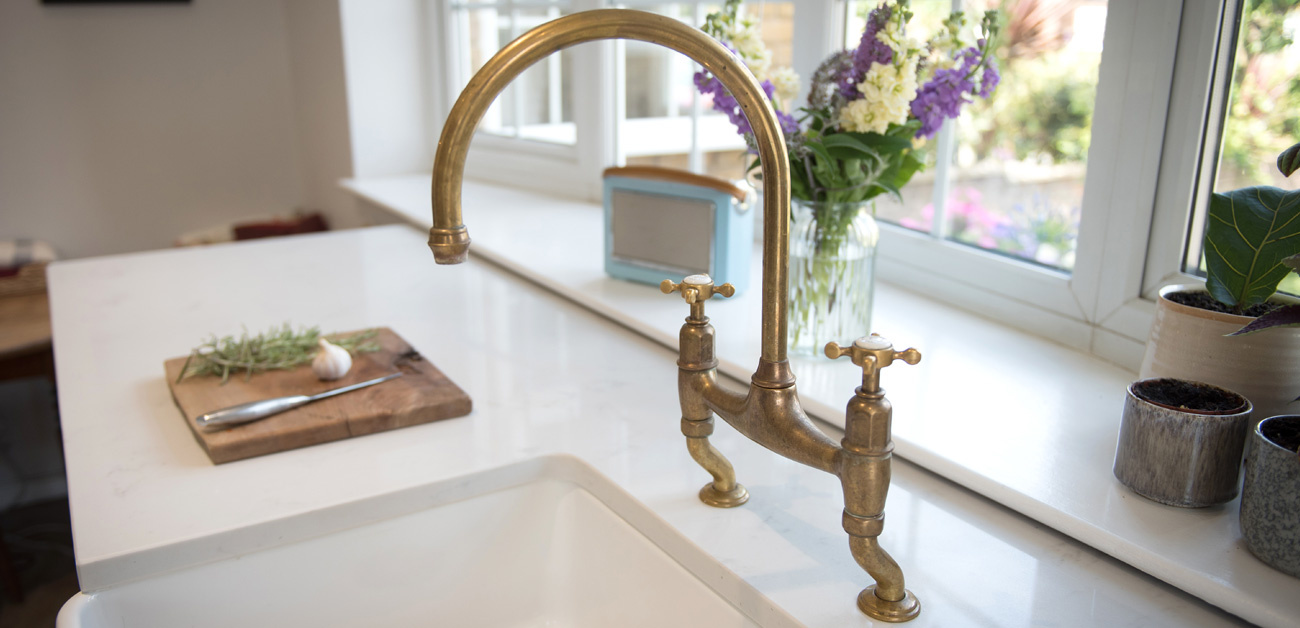
Swap out dated faucets and cabinet hardware for more contemporary, full-functioning styles in trending finishes, such as matte black, brushed brass, or polished nickel.
Rather than completely replacing dark, dated, and worn cabinets, simply repaint them in a bright white or soft gray hue to brighten and enlarge the space.
Replace or refinish damaged or dull hardwood floors to make the room shine.
Give the Bathroom an Update
Potential buyers evaluate bathrooms both functionally and visually—the colors, the style, the layout, the amenities, and the fixtures.
Start by fixing leaky faucets and shower heads, worn caulking, broken toilets, or chipped tile.
Replace outdated lighting in modern designs and finishes to instantly set the mood and add sophisticated style. Pair with matching hardware and faucets to complete the look.
Change out damaged and dated countertops with marble or quartz and/or paint darker-colored vanities with an on-trend neutral or soft color (the robin egg blue pictured above is a perfect example).
Be sure the wall and/or tile color is soft and soothing to give the room a spa-like appeal.
Revive the Dining Room
Buyers want to envision where they can entertain guests. Be sure to present the dining room as spacious, inviting, and elegant.
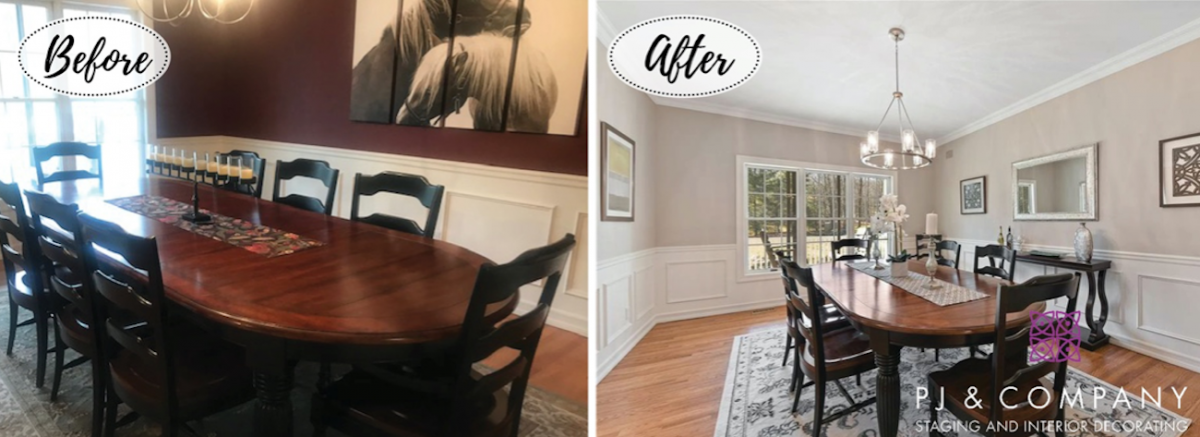
The best way to make the space feel larger and enhance the room’s features is by covering dark walls with neutral paint. It will also pair well with bright white crown molding and/or wainscoting for an added touch of elegance.
Replace traditional chandeliers with chic, contemporary fixtures to set a more sophisticated tone.
Spruce up your dining room table with a stylish table setting to help buyers envision their own dinners here.
Create a Master Bedroom Retreat
Make the master bedroom feel like a cozy getaway with these simple changes:
Remove and/or replace heavy draperies with simple, sheer white curtains or shades that allow for a little privacy while letting in natural light.
Install stylish ceiling and bedside table lighting.
Deep-clean soiled carpeting to restore plushness, or add a neutral, textured area rug to hardwood floors.
Layer fluffy, white bedding with accent pillows and soft throws in different colors and patterns.
Once all the updates are complete, you can hire a professional home stager to add in some finishing touches before listing the home for sale. Home stagers can add inviting, modern furnishings and accents that set out to help buyers emotionally connect with a home.
Patti Stern: Patti is a principal of PJ & Company Staging and Interior Decorating.
When a simple deck or porch isn’t enough, more and more homeowners are expanding their outdoor living spaces with interconnected patios. These spaces can also include fire pits, fireplaces, outdoor kitchens, and even pool and spas.
Connecting existing decks, porches, entrances or outbuildings with patios creates the opportunity to have one cohesive, connected space allowing better flow throughout the property. These spaces become focal points when entertaining, as they allow guests to choose rooms or features to visit while socializing. Some designs allow guests to enter the space directly from the driveway, with access to the house via the patio.
Drainage of patio areas away from buildings is an important consideration, one that becomes more challenging when areas are at different elevations. Decorative drains can alleviate water issues and creative grading also provides architectural interest.
When making choices for materials, natural stone is still the most popular option; granite and bluestone are used the most.
Other important design considerations are: determining the size of the patio and outdoor rooms so that there is enough room for furniture and for people to move around; providing landscape lighting for safety and to highlight features; and including plantings, when possible, to soften the scale of a large space.
Having an interconnected patio is a great way to increase the size of your outdoor living area, providing ample room for fun and entertaining.
Become the toast of the neighborhood with your sparkling screens. Not only do dirty screens obstruct your view, they can also affect the air quality that's filtered throughout your house. Window screens allow cool, fresh air to come in while keeping bugs out . . . but of course, you also want to see out of them.
There are lots of ways to clean screens depending on severity of the dirtiness, but just to stay on the safe side, it's important to deep clean all your window screens and door screens at least once a year— and there are some relatively easy methods to go about this unpleasant business. You can do a quick clean with a lint roller, or fill a good-size pail with warm water and a few drops of dish soap. Then find a soft-bristled hand brush and some lint-free hand towels.
Note, for really tough dirt, give your screens a soapy bath and add a slightly harder bristle brush like a toothbrush to really scrape off grime. Try not to press too hard on the screen because you don't want to bend it out of shape. It may be tedious, but a toothbrush can break through any dirt stuck in those tiny holes, nooks, and crevices.
You can begin cleaning your screen with it either standing up or you can lay it down flat on a deck or in your lawn. If your screens are very dusty, you should first remove the dirt and dust using a shop vac, vacuum upholstery attachment, or dry rag. Then dip your brush in the soapy water, and gently scrub each side of the screen. To remove the soap residue, gently spray the screen with a hose before the soap film has time to dry.
Next, you will want to remove the water from the screen. To do this, it is important to first identify the front from the back of the screen. The back of the screen will have a rubber cord around the frame, which is there to hold the screen to the frame. While facing the back of the screen, you will want to GENTLY slap the screen with a clean lint-free towel, which will dislodge the water trapped in the mesh of the screen. Do NOT slap the screen on the front side, as this can cause the screen to pop out of the cord that is holding it to the frame. After the water is removed from the screen, wipe down the frame with your towel. Your screen is now ready to be put back into its place on your window.
Not only will homebuyers consider moving out of the city and into the suburbs, we can expect a surge of out-of-stater's looking to get away from the more populated neighboring southern states and venture to more rural surroundings. Partly due to the fact, they've come to the realization they can still perform their jobs by working remotely from their homes! So, why not live where you play!
Homebuyers who enter the market after the risk of COVID-19 has diminished will have a whole new set of priorities for their home search.
There's no doubt that the coronavirus pandemic has changed our way of life. It's shifted our priorities in everything from work to love. Even once the virus subsides, the effects of this experience will be long-lasting.
In particular, sheltering in place has made us think about the concept of home in a new light. There's little doubt that homebuyers who enter the market after the risk of COVID-19 is in the rearview mirror will have a whole new set of priorities in place for their home search.
Here are seven priorities you can expect to become prevalent in future home searches:
1.) Let There Be Light (and Space)
When city dwellers who never spent much time at home were expected to make their homes their sole destination, many quickly discovered a newfound appreciation for sunlight and living space. It wouldn't be surprising to see a lot of studio apartment dwellers hoping to upgrade to larger abodes in the months following the pandemic. In general, expect a trend toward light-filled, airy homes with views of something other than the neighboring alley.
2.) A Space for Cooking
If social media is any indication, there are a lot of us becoming newly acquainted with our kitchens as the virus has eliminated the ability to go out to eat, and even trimmed our takeout options. While kitchens are often called the heart of the home, after we've grown accustomed to cooking several meals a day, expect a continued trend toward large open kitchens where families can gather to cook together. A pantry and abundant cabinet space will be critical for storing large quantities of food and easy-to-use, efficient appliances will make the entire process – from prep to clean-up – a breeze.
3.) The Quest for Privacy
Anyone sheltering in place with loved ones knows that privacy is precious these days. Those who once considered separate bedrooms for each kiddo a luxury might have a new set of priorities in a post-coronavirus world. Even a den, bonus room or finished basement can be a boon when family members need a timeout from non-stop family time.
4.) Energy Efficiency
People who normally spend long hours away from home might be surprised to see a bump in their utility bills during shelter-in-place. Working from home, cooking more often and binge-watching Netflix all adds up in terms of electricity, water and gas use, and even trash collection. As temperatures get warmer, the impact on electric bills will be even more apparent. Future homebuyers would do well to consider the energy efficiency of their new house, and even small touches like proper weatherstripping and double-pane windows can lead to sizable savings.
5.) Space for Working Out
For many in quarantine, a significant decrease in activity is more than a vanity issue – it's a mental health issue. While a home gym fully stocked with the latest equipment is a dream-home scenario, a small space with a TV, floor mats and weights can still provide a much-needed break during tense times.
6.) Outdoor Space
Private outdoor space is a godsend when leaving your home can seem downright dangerous. Even a small balcony provides the ability to bask in sunlight and fresh air. Those with larger yards will feel especially grateful that kids and pets have space to stretch their legs. One thing to keep in mind for expansive yards, however, is the ability to maintain them if service providers are unable to visit your home. States and municipalities have disagreed when it comes to designating landscapers and pool maintenance providers as essential, so homeowners should be prepared to handle basic tasks on their own.
7.) Home Office Space
Well before COVID-19, the American workforce had been leaning toward freelance work and jobs that can be done, at least part-time, from home. Now that shelter-in-place orders have made long-term working from home a necessity for many, homeowners will be on the lookout for properties that effortlessly accommodate business needs. This will usually start with a private, quiet space for an office or dedicated work area. Technologyis also crucial, so homes with ample electrical outlets and high-speed Wi-Fi equipment or hardwired Ethernet connections will earn high marks.
Life after the coronavirus pandemic will no doubt require a long period of economic recovery and personal adjustment. For many, new homes to suit our new normal will be the first step in that transition.
Lisa Larson is a licensed associate real estate broker for Warburg Realty in New York City. Ranking as a Top 5 broker firm-wide for each of the past four years, including Warburg Realty's No. 1 Top Producer in 2017, her strong command of the market has led her to sell an average of $50 million in residential sales per year.
The Wolfeboro Chamber of Commerce has requested we share the following information in regards to supporting local businesses this Wednesday... tomorrow and the following Wednesdays!!!
Let your favorite business know you are thinking of them by purchasing a gift card on Gift Card Wednesday. Gift Card Wednesday is a cooperative effort by New Hampshire Chambers of Commerce to encourage people to do what they can to increase revenue for local businesses.
“Wolfeboro area businesses make the community what it is,” reflects Wolfeboro Area Chamber of Commerce Executive Director Mary DeVries. “Let us do what we can now to help keep them here for the future”.
Many are still waiting on federal assistance and struggling to keep their doors open. When you support a local business, you support a local family and their employees. If we all do a little now they will still be here for years to come, adding color, life and valuable services to our local communities.
Already the Wolfeboro area is experiencing community support by people shopping and dining locally with curbside pickup, takeout and delivery. Gift cards are another opportunity to show your support.
You are encouraged to make a purchase with any area business. www.wolfeborochamber.com is a resource for finding some of them.
Post a photo with your gift card and #ShopLocalNH to help give our beloved local businesses and #GiftCardWednesday even more visibility. PLEASE SHARE!
If you haven't done so already, it's not too late to start your very own Victory Garden! I recall watching Crockett's Victory Garden originally hosted by James Underwood Crockett on a local Boston station with my Dad back in the '70's. It was then I gained my gardening knowledge and shared countless hours bonding with my Dad. Funny thing, I never realized the true meaning behind the name "Victory Garden" until now.
Victory gardens were first popularized during World War I when Americans at home, away from the battlefield, were urged to contribute to the cause by growing vegetables in every flowerpot and patch of land available. These victory gardens resurged during World War II, and they're making a comeback amid the coronavirus pandemic. These gardens can be big or small, sprawling across yards and rooftops or tucked in several small pots. Even with a small amount of acreage, homeowners are able to grow large gardens—and these assets can reduce the number of trips to the grocery store and reduce your odds of contracting the COVID-19 virus.
There's no breakdown of the national food chain to prompt these victory gardens. Instead, they’re trending to help limit trips to the grocery store and bring a little light and exercise to those who have extra time during shelter-in-place and stay-at-home orders. Planting your own garden is perfect timing right now, because the weather is getting better, and you can even sow some seeds inside and then transplant them to the ground later on. You can definitely use containers, a windowsill, or even grow bags, which are another type of container, if your space is limited. And if you have a balcony or access to a roof, try growing them there.
Some of the quickest plants to grow include leafy greens like arugula, bok choy, and Swiss chard, as well as zucchini, cucumbers, and many herbs like thyme, oregano, chives, and parsley.
Kitchens were always the hardest-working space in a home. It's the place where the toil of cooking meets the relief of conversation, and where a small snack for one can sit side-by-side with one giant feast for a dozen. In every shape and size, kitchens have to be able to go with the flow.
But then the COVID-19 pandemic turned modern life upside-down, and a kitchen's flexibility has been stretched to its limits. While still a hub of utility and comfort, they're now working even harder to meet the demand of a crisis.
"With preparing and serving three meals and numerous toddler snacks at home, we are cycling through everything in our kitchen much faster," Kelly Mindell, founder of Studio DIY, says. "That leads to messes piling up quicker if things don't have a designated spot. We've been spending time dividing, organizing, and repurposing other items in our home to make sure everything has somewhere to go."
Shea McGee, cofounder of Studio McGee, and Joyce Downing Pickens of JDP Interiors agree. They've also been adjusting to this new reality by examining how their kitchens can be even more functional, from streamlining pantries to corralling tools. Below, Mindell, McGee, and Downing Pickens share the lessons they've learned these last few weeks on how to organize a kitchen on a budget, in the hopes that it makes this hard-working room as efficient as possible.
How to Carry Out Your Plan
Once you have an organizational plan in place, carry it out with as little headache as possible by moving strategically, cabinet by cabinet. Discard expired items, and consider donating a surplus of canned goods to a local food bank. After shelves are cleaned out, pay close attention to the areas where you spend the most time, including spots that may be overlooked.
Organize based on convenience. "Put items that frequent the dishwasher as close to the dishwasher as possible, and put your coffee mugs close to your coffee pot," Mindell says. "Minimizing your need to move around the kitchen, and maximizing the ease of putting items away, will keep things tidy."
Divide your drawers. "Big, open drawers create big messes! Everything needs a designated spot," Mindell continues. "Simply use containers you've recycled or collected elsewhere in your home to categorize everything."
Use your door space. "Take any baskets you might have and install them onto the inside of your cabinet doors," Downing Pickens says. "This will maximize your space and make for easy grab-and-go access to everyday items."
Label spices. "I label the top of all my spices using round stickers and a Sharpie," Downing Pickens says. "It makes it so much easier to know what's what without having to check the label."
Repurpose Items for Effortless Storage
It's possible to have storage pieces—like glass jars and space dividers—delivered to your door, but all it takes is a little creativity to see how items you likely already have can be reused for this project. Not only will this solution minimize the amount of outside items coming into your home, but it's also a budget-friendly approach at a time when every dollar counts.
Strip your old canned goods. "Remove the labels on jars once they are empty and add them to your drawers for small items," Downing Pickens says. "This is especially helpful in your 'junk' drawer for pens, paperclips, rubber bands, and so on."
Use the "guest-only" dinnerware. "I've pulled out bowls or cups that I typically only use on special occasions to help me store items," Mindell says. "For instance, we have a piece of colorful glassware that's holding snack bars in our pantry and a serving bowl holding fruit on our counter."
Pull out trays. "Whether it's corralling soap and a dish brush next to your kitchen sink, or holding some of your favorite everyday spices, trays can keep spaces feeling collected instead of cluttered," McGee says.
Use small baskets for laundry. "If you use reusable cloth instead of paper towels, use baskets from around your home to store them in: one for clean towels, one for dirty," Mindell says. "That way, you can just grab the 'dirty' basket when it's full and dump it right in the wash."
Kelly Dawson is a freelance writer in Los Angeles who has been writing for Dwell since 2015. Follow her on Instagram @atthecrosswalk.
Here are some terrific ideas (rules/habits) for keeping your house in order... many of which I learned from my mom and follow to this day!
By Amy Howell
Homes don’t clean themselves. But these easy-peasy rules "wake and make" as they call it, will make you feel like they do.
Here's the thing you may have noticed about houses: They don't clean themselves.
Which is unfortunate, because if houses cleaned themselves you could spend less time cleaning yours, and more time doing something fun!
A few simple daily habits could make it seem like you've got a self-cleaning house.
Rules like . . .
#1 Dedicate 20 Minutes a Day Every Day
You don't need to set aside 20 hours one day to get things in order. You only need 20 minutes every day.
Focus on taking clutter in just one room. You might only pare down a single drawer or shelf, but "it will make you feel accomplished at the end of the day, and at the end of a week, you will see how much you can declutter," says professional organizer Helena Alkhas.
WMUR is partnering with iHeartRadio for a fundraiser to help the New Hampshire Food Bank keep up with an incredibly high demand and feed local families in response to the COVID-19 efforts.
PROJECT CommUNITY: NH Together from Home
Join WMUR from 7 p.m. to 8 p.m. TONIGHT, April 17 on ABC for "Project Community: New Hampshire Together From Home.” See the one-hour special on WMUR and streaming live on WMUR's website.
WMUR’s Erin Fehlau and Sean McDonald will join iHeartRadio’s Greg Kretschmar to host the special. The uplifting hour will feature performances from Granite State artists and words of encouragement from New Hampshire athletes and celebrities, all while raising money for the food bank.
See performances from:
Adam Ezra Group
Alex Preston
Evelyn Cormier
Gary Hoey
Jordan Tyrell Wysocki
Mairead Nesbitt
Recycled Percussion
Also, there will be appearances by:
Adam Sandler
Victoria Arlen
Geo Baker
Tom Bergeron
Matt Bonner
Ken Burns
Matty Cardarople
Ryan Day
Jimmy Dunn
Ryan Griffin
Bob Marley
Juston McKinney
Seth Meyers
Mike O'Malley
Triple H
Fritz Wetherbee
THE NEED:
The New Hampshire Food Bank is currently responding to a very high demand -- 44% higher than this time last year -- with so many people out of work.
Donations to the food bank are down after some third-party events that would have benefited the food bank were postponed or canceled.
TO DONATE:
You don't have to wait until tonight to donate, you can do so by accessing the following:
Tax Day may have been pushed back from April 15 to July 15 this year due to the coronavirus pandemic, but if you think you're owed a refund, you can still file early and get that money faster.
If you are owed a refund, the IRS asks that you file your taxes as soon as possible. Most refunds are still being issued within 21 days, according to the agency.
"Even with the filing deadline extended, we urge taxpayers who are owed refunds to file as soon as possible and file electronically," IRS Commissioner Chuck Rettig said in a press release last week. "Filing electronically with direct deposit is the quickest way to get refunds. Although we are curtailing some operations during this period, the IRS is continuing with mission-critical operations to support the nation, and that includes accepting tax returns and sending refunds."
If you do need more time, however, there's no penalty for filing your taxes up until July 15. If you need more time beyond that, you can request an extension by filing Form 4868 through your tax software, your tax professional or the Free File link on IRS.gov.
For years brass has been on the sidelines, but it’s making a comeback. Here are ways homeowners can incorporate the finish to add glamour and help homes stand out.
After years of chrome, stainless steel, and nickel being the shining stars of interior metals, brass is back and starting to steal the show.
As with many home furnishings trends, the comeback was inspired by what’s occurring in fashion. In this case, gold and rose gold watches became influencers a few years ago, says Chicago designer Tom Segal of Kaufman Segal Design, who thinks that home furnishings styles tend to be cyclical. Now he’s adding small brass details to rooms in the same way a gold watch might peek out of a shirt cuff.
Using brass now is an easy, affordable way for homeowners to customize and stay on trend. “Many people want a warmer look, which is also visible in fabrics as warmer colors return,” Segal says.
Erin Imhof, showroom supervisor at Ferguson Bath, Kitchen & Lighting Gallery in Lansdale, Pa., has noted an increase in brass finishes. She attributes it to how they complement a wide range of colors and other finishes. “Many of today’s top color trends for kitchens and bathrooms, including all-white, blue, and black, pair beautifully with brass fixtures,” she says.
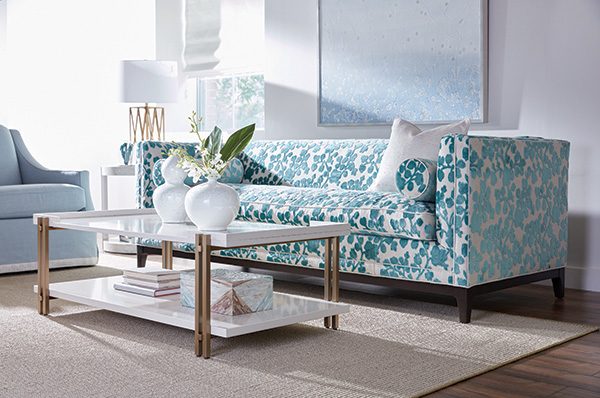
Others concur that brass is a universal mixer. “Our designers like to integrate brass into their designs, whether it’s an accent like a decorative bowl, object of art, light fixture, or metal base on an end table,” says Julie Sprouse, design sales manager at Ethan Allen, the home furnishings chain based in Danbury, Conn.
Caitie Smithe, a design coordinator and stylist at the Walter E. Smithe Furniture + Design retailer based in Itasca, Ill., also considers brass a material that can be used throughout a home, including light fixtures, hardware, and even light switches and vent controls. Other good places to use brass include bathroom hardware, plumbing fixtures such as sinks, and accessory details like candleholders or picture frames.
Here are five tips for using brass.
1. Use sparingly. Brass works best when used in small doses. Too much can create a “too matchy-matchy” look, according to Smithe. Overuse can make it start to look cheap, says Segal. “Moderation is key,” he says.
2. Mix finishes. Brass appears more timeless rather than trendy when it’s matte, brushed, or aged, which helps soften its sheen, Segal says. But be careful, Smithe says, when mixing brasses in a single space from different manufacturers. “There is a huge range in color and brightness. Some take on a bright yellow color while others can be more of an aged gold,” she says.
3. Combine warm metal colors. Brass, gold, and bronze can work well together since they share similar warm values versus shiny nickel, which leans toward the colder side, says Sprouse.
4. Mix metals. Some designers also think brass, satin, brushed nickel, stainless steel, and oil-rubbed bronze can be used together. But Imhoff still offers some caution. “Go with similar warm, muted undertones for some consistency,” she says. Chicago designer Summer Thornton likes mixing metals, particularly in kitchens and bathrooms where she might use brass, nickel, and steel combinations.
5. Consider longevity. How long brass will stay fashionable is unknown. When it becomes too ubiquitous in retail stores, shelter magazines, and on design websites, it may be time to move on. The good news is that brass touches are easy to add in and switch out.
Barbara Ballinger is a freelance writer and the author of several books on real estate, architecture, and remodeling, including The Kitchen Bible: Designing the Perfect Culinary Space (Images Publishing, 2014). Barbara’s most recent book is The Garden Bible: Designing Your Perfect Outdoor Space, co-authored with Michael Glassman (Images, 2015).


 By
By 



 � � �
� � �